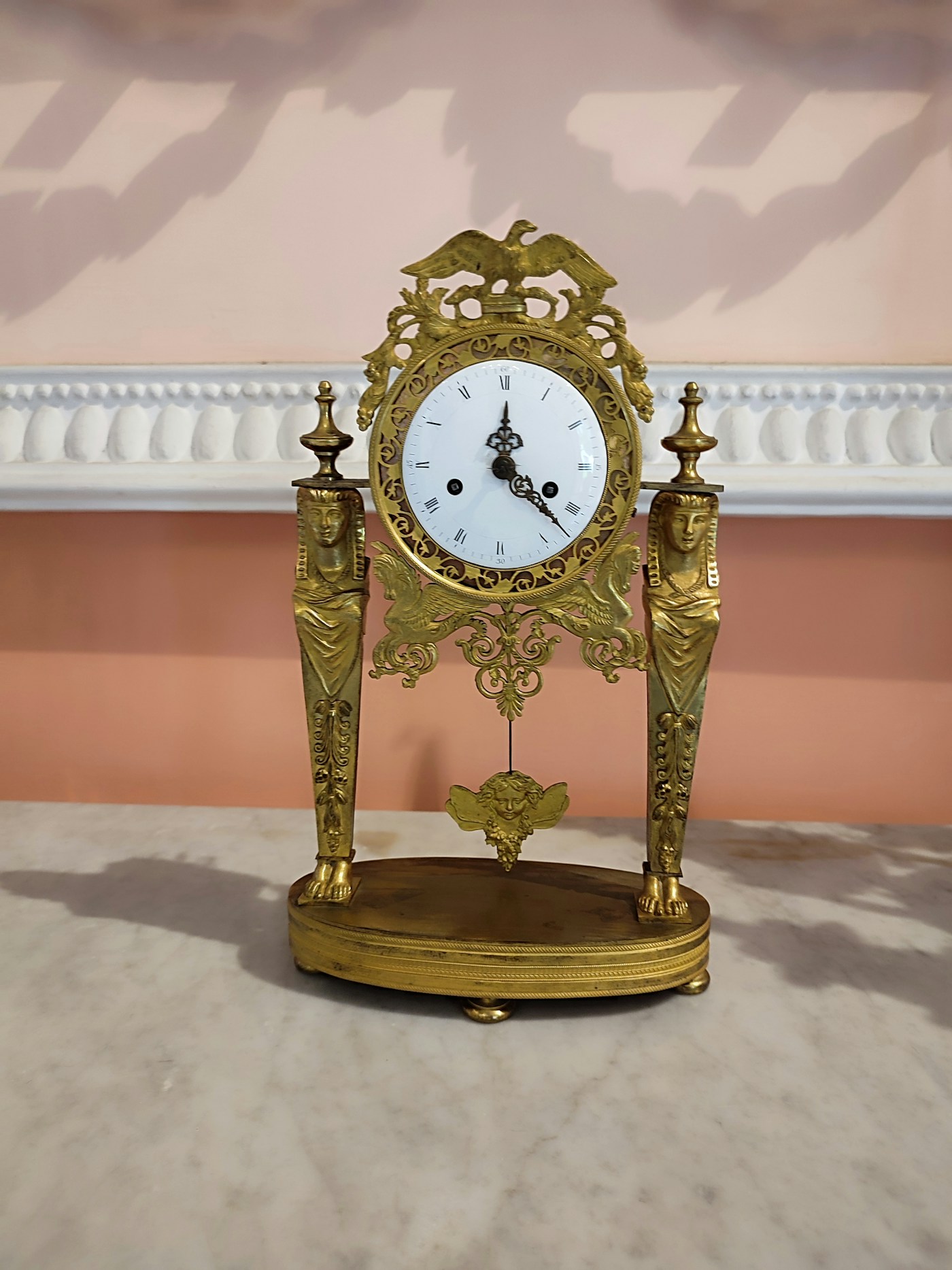
Antique clocks: what determines the value?
Antique clocks are a unique category: they are furniture, art object and mechanical instrument all at once. Three elements determine the value — and they can compensate or reinforce each other.
The movement: the heart of the clock
A clock is first and foremost a timekeeper. The movement — the mechanical interior — is the most important element for connoisseurs.
- Maker and signature: renowned clockmakers (Bréguet, Tompion, Mudge, but also regional masters) add a premium to the movement’s value
- Complexity: a simple timekeeping mechanism is worth less than a striking movement, a repeater, a perpetual calendar or a minute repeater
- Condition: have screws been opened? Have original parts been replaced? That lowers the value
- Original parts: a movement with all original wheels, springs and escapement is worth more than a partially replaced one
The case: material and style
The case gives the clock its visual identity and places it in a period and style.
- Original wood (walnut, ebony, marquetry) versus later painted or veneered makes a big difference
- Bronze ornaments: originally cast ornament versus later additions — look at the attachment and the patina of the ornaments versus the case itself
- Style consistency: a Louis XV case with Empire ornaments is a later marriage — less valuable than a consistent whole
Note: A clock whose case and movement do not date from the same period is a ‘marriage’ — this significantly reduces the value, even when both components are good on their own.
Restoration: what helps and what hurts
A clock that runs again after professional servicing is worth more than one that stands still. Mechanical maintenance — cleaning, oiling, replacing worn parts with correct replicas — is normal and accepted.
What hurts the value: replacement of original parts with non-authentic ones, overpainting of dials, modern electroplating over original gilding, and non-original keys or weights.
Rarity and provenance
A clock that demonstrably sat in a famous collection, is mentioned in a historical document or has a direct link to a historical figure or period carries a premium beyond its intrinsic qualities.
Provenance is difficult to verify but enormously valuable. Always keep the papers that come with a clock — even if they seem unimportant.
What is my clock worth?
That depends on the combination of movement, case and condition. An exceptional movement in a damaged case is worth more than a fine movement in a perfectly restored but non-original case.
The best reference: comparable pieces in recent auction results from specialised clock auctions. Look at the actual hammer prices, not the estimates.
Want to have an antique clock analysed?
Upload a photo and get an instant AI analysis via AntiqBot. Know what you have before you sell or buy.
Analyse your clock