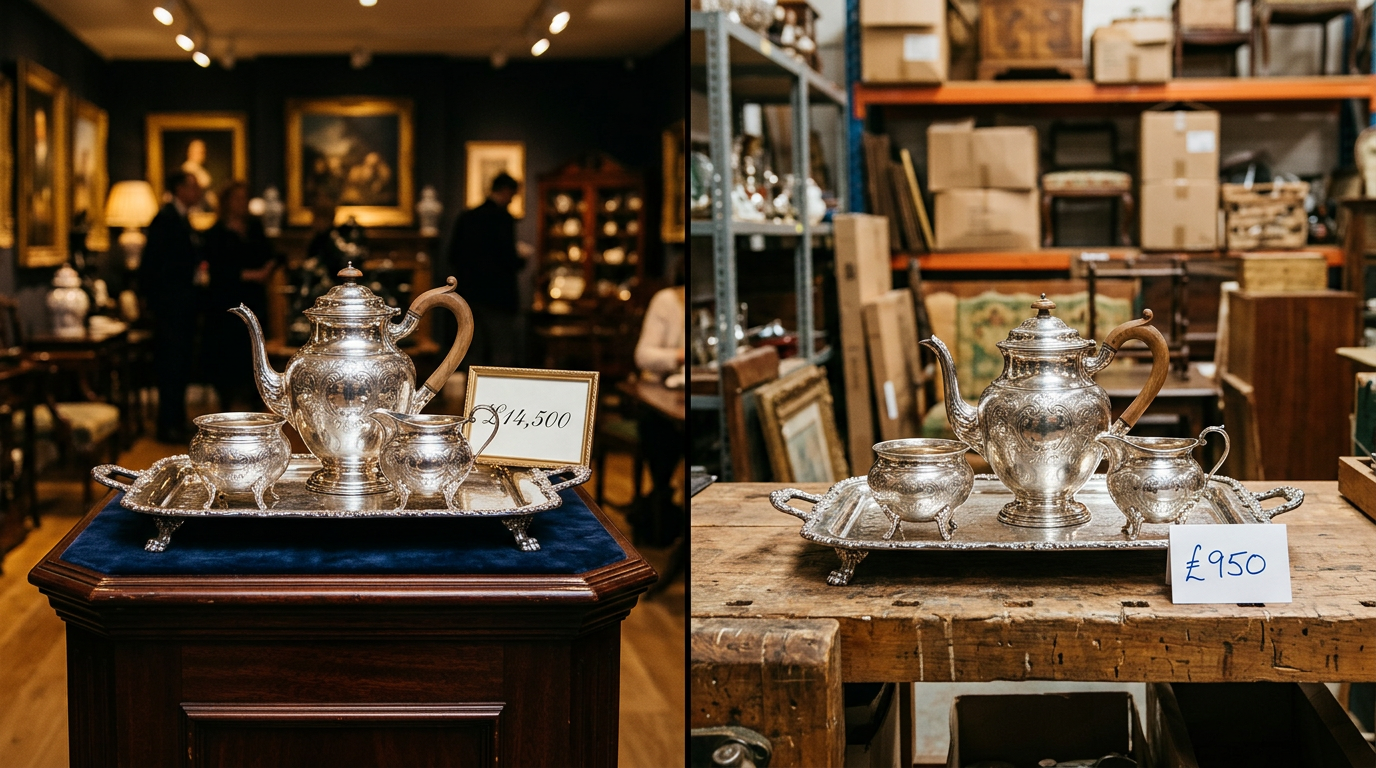
What Is Your Antique Really Worth? Appraisal Value vs Market Value
“The expert said it was worth €5,000, but I can’t get more than €800 for it anywhere.” This is one of the most frustrating experiences in the antiques world — and it happens more often than people think.
The cause is almost always the same: confusion between two terms that sound identical on paper but can be far apart in practice.
Appraisal Value: What It Is and What It’s For
An appraisal value is a professional estimate of what a piece is worth under certain circumstances. But which circumstances? That depends on the purpose of the appraisal.
- Insurance purposes: the replacement value — what it would cost to find a comparable piece on the retail market. This is always the highest number.
- Estate division: a fair market value for legal purposes — averaged between buying and selling price.
- Gift tax: a fiscally acceptable value, often conservatively estimated.
An appraisal for your insurer gives you a different number than an appraisal for sale. Neither is “wrong” — they simply measure different things.
Market Value: What the Piece Actually Fetches
The market value is what a willing buyer is prepared to pay at a given moment. It depends on:
- Demand for that specific category at that moment
- Who the potential buyers are and how you reach them
- The condition of the piece
- Whether provenance or documentation is available
- The sales channel — auction, antiques dealer, online, direct sale
Chinese porcelain that fetched €8,000 at a European auction ten years ago may fetch €2,000 today — not because it’s become less valuable as an object, but because the market has shifted.
The Dealer Effect
A dealer clearing an estate pays wholesale price, not market price. They have costs: storage, transport, restoration, selling time, risk. A fair dealer offers 30 to 50% of market value. That’s not fraud — that’s their business model.
If you have time and know where to sell, you can get closer to market value. If you want to sell quickly or don’t want the hassle, a dealer is a legitimate choice — but go in with open eyes.
The Auction Premium People Forget
Auction prices you see online at Christie’s, Sotheby’s, or Bonhams are hammer prices — before the buyer’s premium. That premium adds 20 to 28% on top of the hammer price. A piece that sells for €10,000 actually costs the buyer €12,000 to €12,800.
As a seller, you also pay a seller’s premium to the auction house. Net proceeds at a major auction can be 60 to 75% of the hammer price.
Want an Objective First Indication?
Start a free analysis at AntiqBot. AI-powered valuation based on 30+ years of expertise.
Start Free AnalysisWhat Should You Remember?
- Appraisal value ≠ selling value
- Condition matters more than most people think
- The sales channel makes a factor 2 to 3 difference
- Always ask what the appraisal is for before drawing conclusions from it
Beyond pure market value, curatorial authority also plays a role in how a work is valued. A painting that once stood at a major exhibition gains a layer of attention that the price does not always immediately reflect. We worked out that distinction in Venice Biennale 2026: In Minor Keys.