Buying Antiques at a Flea Market: What to Bring, What to Leave Behind
A flea market is one of the last places where you can still make genuine finds. But also one of the places where you can most easily overpay for too little. The difference lies in preparation and discipline.
After thirty years of markets in Belgium, the Netherlands, and the United Kingdom, a few things always come back.
What to Bring
- Your phone — for reference images, comparison prices, and a quick photo of the underside
- A small flashlight — for reading marks in shadow or on dark silver
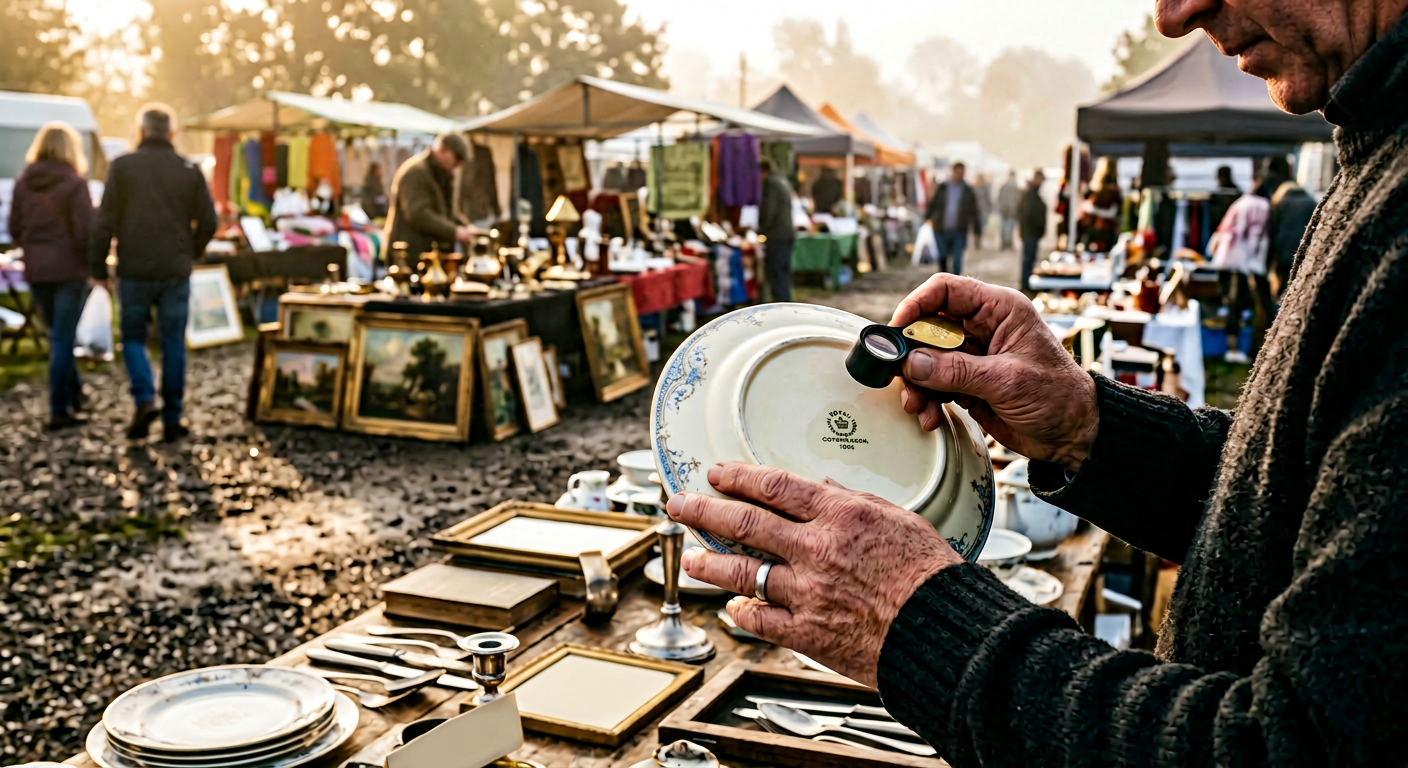
- A loupe (10x) — indispensable for signatures, pottery marks, and texture analysis
- Cash in small bills — price negotiation works better without waiting for change
- A sturdy backpack or bag with some protection — porcelain doesn’t survive a plastic bag on a cobblestone market
What to Leave Behind
At least as important as what you buy.
- Anything that’s too good for the price without explanation
- Porcelain that’s just a bit too white — new Chinese export porcelain sometimes looks “antique” but isn’t
- Silver without hallmarks or with unclear stamps the seller can’t explain
- Signed paintings by “famous” artists from a seller who has no provenance
- Pieces with fresh restoration the seller didn’t mention
The Golden Quarter-Hour Rule
Professional buyers know this: the best finds disappear in the first 15 to 20 minutes after opening. If you want to buy seriously, be there early. Not one hour earlier — two hours earlier.
At large markets like Kempton or Ardingly, the difference between arriving at 6am and 8am is the difference between making finds and browsing leftovers.
How to Negotiate
Always ask the price before showing interest. Whoever asks “how much?” first lays their cards on the table. Start by looking, feeling, examining the underside — then ask the price.
A bid of 60 to 70% of the asking price is normal and not insulting. Combine multiple pieces from one seller for a better discount. And be prepared to walk away — that is the strongest negotiating position there is.
What Does “Authentic” Mean at a Flea Market?
Nothing. A flea market seller rarely has the expertise to confirm what they’re selling. “This is old Chinese” may mean their grandmother had it, not that it’s 18th-century Kangxi.
Verify afterwards, not before. Buy what you find beautiful for the price you’re willing to pay regardless of authenticity — or do your verification before buying with a quick photo analysis.
Spotted Something Interesting?
Take a photo and get an instant AI analysis at AntiqBot. Know what you’re buying before you pay.
Analyse Your Find