|
Edition #13 · Week 20, May 2026 |
|||||
|
|||||
|
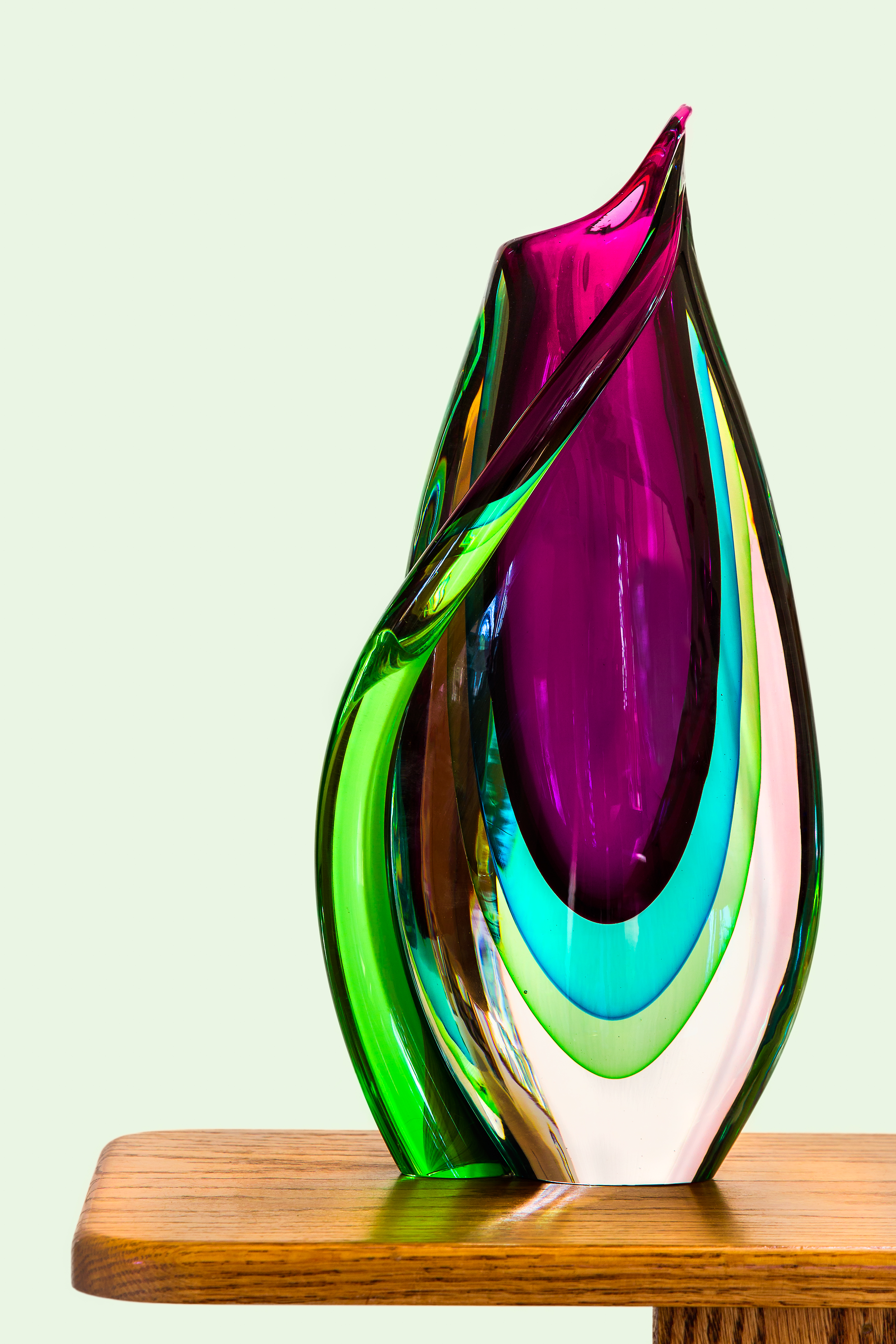
Hand-blown Murano sommerso vase, mid-20th century, showing the layered colour technique that Carlo Scarpa refined for Venini in the 1930s and that defined the postwar Italian glass aesthetic. / Handgeblazen Murano sommerso-vaas, midden 20e eeuw, met de gelaagde kleurentechniek die Carlo Scarpa voor Venini in de jaren 1930 verfijnde en die de naoorlogse Italiaanse glas-esthetiek bepaalde. |
|||||
|
|
|||||
Topic of the WeekMurano Glass: Venice, Murrine and the Modern Counterfeit WaveHow a 1291 Venetian decree built the most secretive luxury industry in Europe, and why most "Murano" on the market today never touched a Venetian furnace. In 1291 the Venetian Republic issued a decree that forced every glass furnace off the main islands of Venice and onto the small island of Murano, a kilometre across the lagoon. The official reason was fire safety, the dense wooden city of Venice burning regularly from kiln sparks. The real reason was control. Glass was the Republic's most lucrative export, and the secrets of Venetian glassmaking, alkaline soda-lime composition, decolouring agents, the techniques of cristallo and lattimo and filigrana, were too valuable to leave dispersed. Concentrating the industry on a single small island made surveillance simple. Murano glassmakers were given a paradoxical status: ennobled, allowed to marry into the patriciate, granted privileges that no other tradesmen in the Republic possessed, but forbidden to leave the island under threat of death. Several who defected to France or to the Habsburg lands in the 16th and 17th centuries were tracked by Venetian agents and assassinated. The Republic protected its glass with the seriousness of a state secret. For roughly five centuries Murano dominated European luxury glass. The technical breakthroughs were Venetian: cristallo, the perfectly clear glass invented by Angelo Barovier around 1450; lattimo, the milky white opaque glass; filigrana, the white-cane decoration that imitates lace inside the glass body; calcedonio, the marbled imitation chalcedony. Every European court bought Murano. The decline began with Napoleon's occupation of Venice in 1797 and the abolition of the guild system, accelerated through the 19th century as French Saint-Gobain plate glass, Bohemian crystal and English lead crystal displaced the Murano product from the high end of the market. The revival came in two waves. First, in 1859, Antonio Salviati founded a glasshouse that revived historic Venetian techniques (millefiori, mosaic, filigrana) for the Victorian luxury market. Many of the 19th-century "Murano" pieces visible in European antique shops today are Salviati production, and they are genuine. Second, the 20th century brought the modernist transformation. Venini was founded in 1921 by the Milanese lawyer Paolo Venini and the antiquarian Giacomo Cappellin. Their decision to hire architects and designers, rather than working only with traditional master glassblowers, transformed Murano from a craft tradition into a design field. Barovier & Toso, the continuous family workshop traced back to 1295, modernised under Ercole Barovier from the 1930s onward. Seguso Vetri d'Arte was founded in 1932 by Antonio Seguso and Napoleone Martinuzzi. Archimede Seguso established his own studio in 1946. Cenedese opened in 1946. Each developed a recognisable style and a documented archive. The market today is sharply tiered. Period Murano from the 15th through the 19th centuries is largely in museum collections, with the Museo del Vetro di Murano holding the reference collection. Surviving private examples are rare and trade at the top of the market when they appear. Early-to-mid 20th-century Murano (1920 to 1970) is the active collector segment, with the Venini, Barovier & Toso, Seguso and Cenedese names commanding documented prices at Christie's, Sotheby's, Bonhams and the specialist design auctions. Late 20th-century Murano (1970 to 2000) shows declining design innovation and broader quality range, with genuine pieces still authentic but the price ceiling lower. The fourth tier is the Chinese reproduction industry, established in factories in Pujiang in Zhejiang province and elsewhere since roughly 2005, producing glass in Murano-style techniques at a fraction of the Italian cost and selling worldwide under "Murano" labels. The designer differential matters. A Venini vase from the 1950s without designer attribution trades in a different band than the same vase documented to Carlo Scarpa, who served as artistic director at Venini from 1932 to 1947, or to Fulvio Bianconi, who designed for Venini from 1948 to roughly 1965. Scarpa's experimental techniques (sommerso, the submerged colour layers; battuto, the hammered surface; corroso, the corroded matte finish; murrine, the cane-slice mosaic technique) defined a vocabulary that every subsequent Murano designer worked within or against. Bianconi's playful figurative work, especially the Pezzato (patchwork) series, is documented in the Le Stanze del Vetro foundation archive on San Giorgio Maggiore in Venice. Designer-attributed pieces from these years clear five and six-figure prices at Christie's, Sotheby's and the major design sales. Anonymous Venini from the same period clears one or two orders of magnitude lower. In this edition we walk the authentication in layers. We begin with how to read Murano signatures across the major workshops, because signature literacy resolves more pieces than any single technical test. We then walk five practical red flags that separate authentic Murano from Chinese reproduction. We look more deeply at the 20th-century renaissance and the Chinese wave. We close with the market bands across the four tiers, the AntiqBot analysis framework, a reader question, and the iOS update. |
|||||
|
|
|||||
Item of the WeekReading Murano Signatures: Venini, Barovier, Seguso, CenedeseVenini is the most documented Murano workshop and the most useful starting point for signature literacy. The marks evolved by period and serve as a rough dating tool. Between 1925 and 1932 Venini pieces were typically labelled with paper or foil stickers reading "Venini Murano", many of which are now lost. From 1932 onward, when Paolo Venini took sole control of the company, an acid-etched three-line mark reading "venini murano MADE IN ITALY" appears on the base of standard production pieces. From 1949 a diamond-point engraved "venini italia" replaced the acid stamp on most pieces, with finer pieces engraved in a more elaborate cursive. From around 2001 onward Venini pieces carry an engraved year code, allowing precise dating. Designer-attributed pieces are documented in the Le Stanze del Vetro archive in Venice, which has digitised significant portions of the historic Venini production records. A Venini piece described as a Carlo Scarpa design should have an archive reference number that can be verified. Barovier & Toso is the oldest continuous family workshop on Murano, with documented production traced back to 1295 through the Barovier family records. Historic period pieces are often unsigned. From the 1930s onward, when Ercole Barovier led the modernisation of the workshop, some pieces carry engraved signatures, but many do not. Authentication of period Barovier & Toso pieces depends heavily on the Catalogo Ragionato published by Editoriale del Vetro and on the Barovier family archive itself, located on Murano. Ercole Barovier's documented designs (the Aborigeni series, the Eugenei vases, the Intarsio pieces) trade as named designer work; undocumented production sits in a separate market band. Seguso Vetri d'Arte was founded in 1932 with Napoleone Martinuzzi as artistic director through the 1930s. Pieces from this period are sometimes engraved, more often labelled, and many are unsigned. Archimede Seguso founded his own studio in 1946 and produced under the Archimede Seguso name from then forward. His murrine work, particularly the Composizioni series of the 1950s, is among the most technically refined Murano output of the period. The Fondazione Archimede Seguso maintains the archive of his production. Pieces with an Archimede Seguso engraved signature, ideally with a recognised series name (Composizione, Polveri, Merletto), are documentable; pieces with only a generic "Murano" sticker are not. Cenedese, founded in 1946 by Gino Cenedese, is most easily recognised by the red foil sticker on the base of period pieces. The sticker reads "Vetri d'Arte CENEDESE Murano" in white lettering on a red oval. These stickers are widely faked, and the presence of a red Cenedese sticker on a piece of obviously poor quality glass is now a red flag rather than a guarantee. Genuine Cenedese pieces from the studio years (Antonio da Ros as designer from 1958, Riccardo Licata, Napoleone Martinuzzi in his later phase) are documented in design literature and trade at recognisable prices. Salviati, the 19th-century revival house, still operates and produced both historicist work for the Victorian market and 20th-century continuation pieces. A "Salviati" attribution requires documentation of which Salviati period and which production line. The uncomfortable truth is that many authentic Murano pieces are unsigned and many fakes carry impressive-looking stickers and acid-etched stamps. Signature alone is never sufficient evidence. The combined diagnostic test requires body weight assessment (period Murano is consistently heavier than its volume suggests, because of the high lead and barium content of traditional Murano cristallo), pontil mark inspection (the rough or slightly polished circular scar on the base where the piece was held during finishing), bubble pattern analysis under magnification (hand-blown shows irregular size distribution; machine production shows uniform 1 to 2 mm bubbles), and technique recognition (a piece described as murrine should show the discernible cane structure under loupe inspection). Signature is one of five inputs, not the primary one. |
|||||
|
|
|||||
Quick Check5 Red Flags on Murano Glass
Signature, bubble pattern, sticker reliability, pontil mark, weight. Five axes. A genuine Murano piece passes most or all of them. Failure on one is possibly explainable. Failure on two is structural. Failure on three means the piece is most likely a reproduction marketed as Murano. |
|||||
|
|
|||||
Did You Know
|
|||||
|
|
|||||
Looking DeeperThe 20th-Century Renaissance and the Chinese WaveThe Salviati revival of 1859 set the template. Antonio Salviati, a Vicenza lawyer turned entrepreneur, founded a glasshouse on Murano that revived dormant Venetian techniques (millefiori, mosaic, filigrana, mosaic glass for ecclesiastical work) and commercialised them for the Victorian luxury market. Salviati production filled English country houses, Italian palazzos and the windows of major British churches through the late 19th century. Much of what is now in European antique shops labelled "antique Murano" in the 80 to 1,500 euro band is in fact Salviati or Salviati-school production from 1860 to 1910. It is honest 19th-century work, properly attributed, but it should not be confused with either period Renaissance Murano or with 20th-century modernist Venini. The 1921 Venini founding was the second turn. Paolo Venini brought a corporate structure and a designer-led model that broke with the traditional master-glassblower workshop model. From 1932 to 1947 the architect Carlo Scarpa served as artistic director. Scarpa is the central figure in 20th-century Murano. His experimental techniques redefined what was possible in the medium: sommerso, the submersion of one colour layer inside another to create depth; battuto, the cold-worked hammered surface; corroso, the acid-corroded matte finish; inciso, the engraved linear decoration; and the systematic use of murrine, the cane-slice mosaic technique that produces patterned glass. Each of these techniques is documented in the Le Stanze del Vetro foundation archive on San Giorgio Maggiore island in Venice, which holds the historic Venini production records and runs regular exhibitions of period pieces. After Scarpa, Fulvio Bianconi joined Venini and worked there from roughly 1948 to 1965. His Pezzato vases, the patchwork pieces composed of irregular coloured squares fused together, are the iconic postwar Venini design. The Pezzato series, the Fazzoletto (handkerchief) vases, the Arlecchino figures and the harlequin-themed pieces are all Bianconi work. Documented Bianconi Venini pieces are at the top of the postwar Italian design market and clear five and six-figure prices at the major design auctions. Tobia Scarpa, son of Carlo, succeeded as Venini designer in the 1950s and 1960s. Ettore Sottsass designed for Venini in the 1980s. Each generation extended the design vocabulary without breaking from the technical tradition. Parallel to Venini, the other major 20th-century workshops developed their own designer programmes. Barovier & Toso under Ercole Barovier produced the Aborigeni, Intarsio and Eugenei series from the 1930s through the 1950s. Seguso Vetri d'Arte ran with Flavio Poli as designer from the 1930s onward, and his sommerso vases of the 1950s are highly collected. Archimede Seguso ran his own studio from 1946 and produced refined murrine and filigrana work into the 1990s. Cenedese hired Antonio da Ros, Riccardo Licata and Napoleone Martinuzzi as designers across the 1950s and 1960s. The volume of high-quality designer Murano produced between 1930 and 1970 is enormous, and the market still rewards documented attribution within that period. The decline post-2000 has multiple causes. Competition from cheaper production sources, fragmentation of the Murano industry into smaller and less capitalised workshops, the difficulty of training new master glassblowers when the economics of the craft no longer support long apprenticeships, and the rise of Chinese reproduction at scale. The Chinese factories, concentrated in Pujiang in Zhejiang province, produce glass in Murano-style techniques (sommerso, millefiori, filigrana, pulegoso) at one-tenth the Italian cost. The output is sold worldwide via eBay, Catawiki, Amazon, regional online marketplaces and physical antique shops, labelled with "Murano" stickers and acid-etched "Made in Murano Italy" stamps. Industry observers estimate that a majority of online "Murano" listings under 300 euros today are Chinese-made. The Venetian Glass Association (Consorzio Promovetro Murano) launched the "Vetro Artistico Murano" trademark in 2001 as a defensive measure, certifying authentic Murano production, but enforcement against misuse of "Murano" as a descriptive term in foreign markets has been limited. |
|||||
|
|
|||||
Market & ValueWhat Murano Glass is Worth, ActuallyThe Murano market is stratified by workshop, by designer attribution, by period and by technical quality. Approximate bands, based on results at Christie's, Sotheby's, Bonhams, Drouot, Bernaerts and Veilinghuis AAG over the past decade, look as follows. Anonymous mid-20th-century Murano of standard quality, no signature and no archive trace, trades on Catawiki and regional sales in the 40 to 200 euro band for vases and bowls. This is the volume segment. It is genuine Murano in most cases (or Chinese reproduction in many), and the price reflects the absence of attribution that would lift it into a higher band. Documented Venini production without designer attribution sits in the 300 to 1,500 band depending on size, technique and condition. Standard Venini with engraved signature and standard archive reference trades 500 to 3,000. Designer-attributed Venini is where the prices climb. A signed Carlo Scarpa Venini piece from the 1930s or 1940s, in a recognised series and in good condition, clears 5,000 to 80,000 euros depending on which design and which technique. Specific Scarpa works (the corroso pieces, certain murrine compositions, the rare hand-built figural pieces) reach six figures at Christie's and Sotheby's design sales. Fulvio Bianconi Pezzato vases from the late 1940s and 1950s, with provenance, regularly clear 10,000 to 60,000. Barovier & Toso documented period work trades 200 to 5,000 for standard pieces, more for archive-attributable Ercole Barovier designs in named series. Aborigeni and Eugenei pieces from the 1950s clear 3,000 to 15,000 in good condition. Seguso Vetri d'Arte with Flavio Poli attribution clears 500 to 8,000 for sommerso vases, more for documented exhibition pieces. Archimede Seguso period murrine work clears 500 to 6,000. Cenedese designer pieces with Antonio da Ros attribution clear 800 to 5,000. Salviati 19th-century revival production trades in its own segment. A documented Salviati millefiori or filigrana piece from 1870 to 1910 clears 500 to 5,000 depending on form and technical complexity. Larger Salviati mosaic panels and goblets reach higher. Salviati 20th-century continuation pieces (the company still operates) trade lower than the 19th-century revival work and are usually within the 200 to 1,500 band. Chinese reproductions are the parallel volume market. Actual factory cost is 5 to 20 euros per piece. Wholesale to European and American distributors is 15 to 60. Retail at brick-and-mortar tourist shops in Venice itself, where Chinese reproductions are sometimes sold to tourists as "Murano" alongside genuine Murano, runs 80 to 300. Online listings on Catawiki, eBay and Amazon vary widely. The price tell is direct. If a piece is offered as "Venini" or "Barovier" or "Murano" with attribution at 100 to 200 euros, it is almost certainly a reproduction or a misattribution. Genuine Venini does not appear at that price band. Period documented Murano with attribution starts in the high hundreds and runs into the thousands. The Belgian and Dutch market shows the same regional discount of 15 to 30 percent on equivalent quality as in other categories. A Venini at Bernaerts in Antwerp or a Salviati at Veilinghuis AAG in Amsterdam can offer the documented piece at a lower hammer than the same provenance would clear in London or Paris. The investment band has been firm. Designer Venini from 1932 to 1965, with documented provenance and good condition, has appreciated steadily for two decades. Carlo Scarpa pieces in particular have outperformed the broader 20th-century design market. Anonymous Murano has held flat. Chinese reproductions have negative resale value once recognised. The two extremes of the Murano market move in opposite directions, and the gap is widening. |
|||||
|
|
|||||
Behind the ScenesAntiqBot analyses Murano glass across seven dimensions. Signature reading, where present: the mark is examined for period appropriateness, workshop attribution and consistency with documented archive forms. Body weight assessment: photographs are evaluated for scale, and weight is requested where it can be measured, since Murano cristallo is consistently denser than reproduction glass. Pontil mark inspection: the base is scored for the presence and form of the pontil, with rough pontil, ground pontil and absent pontil treated as separate diagnostic categories. Bubble pattern analysis: where photography permits magnified inspection, bubble size distribution is scored, with hand-blown irregular distribution distinguished from machine production uniform pattern. Technique recognition: the piece is matched against the documented Murano technique repertoire (sommerso, murrine, filigrana, pulegoso, battuto, corroso, inciso, calcedonio, lattimo, zanfirico) and the technique is verified for internal consistency. Form and design analysis: the silhouette is matched against documented designer vocabulary, with attention to period typology and designer-specific signatures (the Scarpa profiles, the Bianconi figural language, the Martinuzzi vocabulary). Condition assessment: rim chips, internal cracks, surface scratches and restoration are scored for impact on value within the relevant tier. We produce a five-tier verdict and a coherent narrative. Where photography is insufficient or a piece is borderline between Murano and a high-quality Bohemian, French or Chinese reproduction, we say so. We do not speculate beyond what the object and its documentation support. |
|||||
|
|
|||||
Question of the Week"I bought a Murano vase at a Belgian flea market for 40 euros. It has a small foil sticker reading 'Genuine Murano Glass Italy' and an acid-etched stamp on the base. The colours are bright and the form is good. Is it real Murano?" Three home tests, in order of speed. First, weight it. A 25 cm Murano vase weighs at least 800 grams, usually closer to 1.2 kg. If the piece feels light for its size, in the 300 to 500 gram range, the body composition is wrong and the piece is almost certainly Chinese reproduction. Second, flip it over and look at the base under good light. A genuine pontil mark, the circular scar where the piece was held during finishing, will be present as either a rough circle or a slightly polished but discernible circular depression. A perfectly flat, evenly polished base is machine production. Third, take a 10x loupe (a 25 euro purchase that pays for itself the first time you flea market) and look at the bubbles in the glass body. Hand-blown shows irregular size distribution, with some areas dense and some clear. Machine production shows uniform 1 to 2 mm bubbles evenly through the body. If two of these three tests indicate machine production, the piece is almost certainly a reproduction regardless of the sticker. If all three indicate hand-blown, you may have a piece worth keeping, though without a master signature or workshop attribution it stays in the anonymous Murano band of 40 to 200 euros. For 40 euros at a flea market, you have not lost on either outcome, and you have learned the tests for next time. Send your question to info@antiqbot.com |
|||||
|
|
|||||
|
Have a Murano piece you want to authenticate? Sign up and get 1 free credit for your first analysis. After that, buy credit packs starting from €0.60 per analysis.
|
|||||
|
|
|||||
AntiqBot on iOSThe AntiqBot iOS app is live in the App Store. Pricing matches the web: 5 credits for €4.99, 10 for €8.99, 25 for €17.99, 50 for €29.99, with one free credit on registration. Search "AntiqBot" in the App Store, or use the web application at antiqbot.com. |
|||||
|
|
|||||
Next WeekFlemish Wooden Religious Sculpture: The Mechelse Popjes and the Hof van Busleyden |
|||||
|
|||||
Het onderwerp van de weekMurano-glas: Venetië, murrine en de moderne namaakgolfHoe een Venetiaans decreet uit 1291 de meest geheime luxe-industrie van Europa opbouwde, en waarom het meeste "Murano" op de markt vandaag nooit een Venetiaanse oven heeft gezien. In 1291 vaardigde de Venetiaanse Republiek een decreet uit dat alle glasovens van de hoofdeilanden van Venetië verbande naar het kleine eiland Murano, op een kilometer afstand in de lagune. De officiële reden was brandveiligheid, want de dichte houten stad Venetië brandde regelmatig door vonken uit de ovens. De echte reden was controle. Glas was het meest lucratieve exportproduct van de Republiek, en de geheimen van het Venetiaanse glaswerk, de alkalische soda-kalk-samenstelling, de ontkleuringsmiddelen, de technieken van cristallo en lattimo en filigrana, waren te waardevol om verspreid te laten. De industrie concentreren op één klein eiland maakte toezicht eenvoudig. Murano-glasblazers kregen een paradoxale status: in de adelstand verheven, toegelaten om in patricische families te trouwen, voorzien van privileges die geen andere ambachtslieden in de Republiek bezaten, maar verboden om het eiland te verlaten op straffe van de dood. Verschillende glasblazers die in de 16e en 17e eeuw uitweken naar Frankrijk of naar de Habsburgse landen werden opgespoord door Venetiaanse agenten en omgebracht. De Republiek beschermde haar glas met de ernst van een staatsgeheim. Ongeveer vijf eeuwen lang domineerde Murano het Europese luxeglas. De technische doorbraken waren Venetiaans: cristallo, het perfect heldere glas uitgevonden door Angelo Barovier rond 1450; lattimo, het melkachtig witte ondoorzichtige glas; filigrana, de witte-rietdecoratie die kant nabootst binnenin het glaslichaam; calcedonio, de gemarmerde imitatie chalcedoon. Elk Europees hof kocht Murano. De achteruitgang begon met de bezetting van Venetië door Napoleon in 1797 en de afschaffing van het gildensysteem, en versnelde door de 19e eeuw heen toen Frans Saint-Gobain spiegelglas, Boheems kristal en Engels loodkristal het Murano-product verdrongen uit het topsegment van de markt. De heropleving kwam in twee golven. Eerst, in 1859, richtte Antonio Salviati een glasfabriek op die historische Venetiaanse technieken (millefiori, mozaïek, filigrana) heropleefde voor de Victoriaanse luxemarkt. Veel van de 19e-eeuwse "Murano"-stukken die vandaag in Europese antiekzaken zichtbaar zijn, zijn Salviati-productie, en ze zijn authentiek. Tweede, de 20e eeuw bracht de modernistische transformatie. Venini werd opgericht in 1921 door de Milanese advocaat Paolo Venini en de antiquair Giacomo Cappellin. Hun beslissing om architecten en ontwerpers in te schakelen, in plaats van enkel met traditionele meester-glasblazers te werken, transformeerde Murano van een ambachtelijke traditie naar een ontwerpveld. Barovier & Toso, het continue familieatelier dat teruggaat tot 1295, moderniseerde onder Ercole Barovier vanaf de jaren 1930. Seguso Vetri d'Arte werd opgericht in 1932 door Antonio Seguso en Napoleone Martinuzzi. Archimede Seguso richtte zijn eigen studio op in 1946. Cenedese opende in 1946. Elk ontwikkelde een herkenbare stijl en een gedocumenteerd archief. De markt vandaag is scherp gelaagd. Periode-Murano uit de 15e tot 19e eeuw zit grotendeels in museumcollecties, met het Museo del Vetro di Murano dat de referentiecollectie houdt. Overlevende particuliere voorbeelden zijn zeldzaam en verhandelen aan de top van de markt wanneer ze opduiken. Vroeg-tot-midden 20e-eeuwse Murano (1920 tot 1970) is het actieve verzamelaarssegment, met de namen Venini, Barovier & Toso, Seguso en Cenedese die gedocumenteerde prijzen halen bij Christie's, Sotheby's, Bonhams en de gespecialiseerde design-veilingen. Laat-20e-eeuwse Murano (1970 tot 2000) toont afnemende design-innovatie en bredere kwaliteitsspreiding, met authentieke stukken nog steeds echt maar het prijsplafond lager. De vierde laag is de Chinese reproductie-industrie, gevestigd in fabrieken in Pujiang in de provincie Zhejiang en elders sinds ongeveer 2005, die glas produceren in Murano-stijl technieken aan een fractie van de Italiaanse kostprijs en wereldwijd verkopen onder "Murano"-labels. Het ontwerper-verschil telt zwaar. Een Venini-vaas uit de jaren 1950 zonder ontwerper-toeschrijving verhandelt in een andere band dan dezelfde vaas gedocumenteerd aan Carlo Scarpa, die artistiek directeur was bij Venini van 1932 tot 1947, of aan Fulvio Bianconi, die voor Venini ontwierp van 1948 tot ongeveer 1965. Scarpa's experimentele technieken (sommerso, de ondergedompelde kleurenlagen; battuto, het gehamerde oppervlak; corroso, de verroeste matte afwerking; inciso, de gegraveerde lineaire decoratie; en het systematisch gebruik van murrine, de rietsnede-mozaïektechniek die gepatroneerd glas produceert) definieerden een vocabulaire waarbinnen elke volgende Murano-ontwerper werkte of waartegen hij zich afzette. Bianconi's speelse figuratieve werk, vooral de Pezzato-serie (lappendeken-stukken), is gedocumenteerd in het archief van de Fondazione Le Stanze del Vetro op San Giorgio Maggiore in Venetië. Ontwerper-toegeschreven stukken uit deze jaren halen vijf- en zescijferige prijzen bij Christie's, Sotheby's en de grote design-veilingen. Anonieme Venini uit dezelfde periode haalt één tot twee orden van grootte minder. In deze editie doorlopen we de authenticatie in lagen. We beginnen met hoe je Murano-handtekeningen leest in de grote ateliers, omdat handtekening-geletterdheid meer stukken oplost dan welke enkele technische test ook. We lopen vervolgens vijf praktische rode vlaggen langs die authentiek Murano scheiden van Chinese reproductie. We kijken dieper naar de 20e-eeuwse renaissance en de Chinese golf. We sluiten af met de marktbanden over de vier lagen, het AntiqBot analyse-kader, een lezersvraag, en de iOS-update. |
|||||
|
|
|||||
Item van de weekMurano-handtekeningen lezen: Venini, Barovier, Seguso, CenedeseVenini is het meest gedocumenteerde Murano-atelier en het meest nuttige startpunt voor handtekening-geletterdheid. De merken evolueerden per periode en dienen als ruwe dateringstool. Tussen 1925 en 1932 werden Venini-stukken doorgaans gelabeld met papieren of folie-stickers met "Venini Murano", waarvan veel nu verloren zijn. Vanaf 1932, toen Paolo Venini alleen de leiding nam, verschijnt een drielijnig zuur-gegraveerd merk dat luidt "venini murano MADE IN ITALY" op de onderkant van standaardproductiestukken. Vanaf 1949 verving een diamantpunt-gegraveerd "venini italia" de zuur-stempel op de meeste stukken, met fijnere stukken gegraveerd in een meer uitgewerkt cursief schrift. Vanaf ongeveer 2001 dragen Venini-stukken een gegraveerde jaarcode, wat precieze datering toelaat. Ontwerper-toegeschreven stukken zijn gedocumenteerd in het Le Stanze del Vetro-archief in Venetië, dat aanzienlijke delen van de historische Venini-productieverslagen heeft gedigitaliseerd. Een Venini-stuk beschreven als een Carlo Scarpa-ontwerp zou een archief-referentienummer moeten hebben dat geverifieerd kan worden. Barovier & Toso is het oudste continue familieatelier op Murano, met gedocumenteerde productie die teruggaat tot 1295 via de Barovier-familieverslagen. Historische periode-stukken zijn vaak ongesigneerd. Vanaf de jaren 1930, toen Ercole Barovier de modernisering van het atelier leidde, dragen sommige stukken gegraveerde handtekeningen, maar veel niet. Authenticatie van periode Barovier & Toso-stukken hangt sterk af van de Catalogo Ragionato uitgegeven door Editoriale del Vetro en van het Barovier-familiearchief zelf, gevestigd op Murano. Ercole Barovier's gedocumenteerde ontwerpen (de Aborigeni-serie, de Eugenei-vazen, de Intarsio-stukken) verhandelen als benoemde ontwerper-werken; ongedocumenteerde productie zit in een aparte marktband. Seguso Vetri d'Arte werd opgericht in 1932 met Napoleone Martinuzzi als artistiek directeur door de jaren 1930. Stukken uit deze periode zijn soms gegraveerd, vaker gelabeld, en velen zijn ongesigneerd. Archimede Seguso richtte zijn eigen studio op in 1946 en produceerde van dan af onder de naam Archimede Seguso. Zijn murrine-werk, vooral de Composizioni-serie van de jaren 1950, behoort tot de technisch meest verfijnde Murano-output van de periode. De Fondazione Archimede Seguso houdt het archief van zijn productie bij. Stukken met een Archimede Seguso gegraveerde handtekening, idealiter met een erkende serie-naam (Composizione, Polveri, Merletto), zijn documenteerbaar; stukken met enkel een generieke "Murano"-sticker niet. Cenedese, opgericht in 1946 door Gino Cenedese, is het gemakkelijkst te herkennen aan de rode folie-sticker op de basis van periode-stukken. De sticker luidt "Vetri d'Arte CENEDESE Murano" in witte letters op een rood ovaal. Deze stickers worden op grote schaal nagemaakt, en de aanwezigheid van een rode Cenedese-sticker op een stuk van duidelijk lage kwaliteit glas is nu eerder een rode vlag dan een garantie. Authentieke Cenedese-stukken uit de studio-jaren (Antonio da Ros als ontwerper vanaf 1958, Riccardo Licata, Napoleone Martinuzzi in zijn latere fase) zijn gedocumenteerd in design-literatuur en verhandelen aan herkenbare prijzen. Salviati, het 19e-eeuwse heroplevingshuis, opereert nog steeds en produceerde zowel historisch werk voor de Victoriaanse markt als 20e-eeuwse voortzettingsstukken. Een "Salviati"-toeschrijving vereist documentatie van welke Salviati-periode en welke productielijn. De ongemakkelijke waarheid is dat veel authentieke Murano-stukken ongesigneerd zijn en veel namaakstukken indrukwekkend uitziende stickers en zuur-gegraveerde stempels dragen. Handtekening alleen is nooit voldoende bewijs. De gecombineerde diagnostische test vereist gewichtsbeoordeling van het lichaam (periode-Murano is consistent zwaarder dan het volume suggereert, door het hoge lood- en bariumgehalte van traditionele Murano cristallo), inspectie van het pontiel-merk (het ruwe of licht gepolijste cirkelvormige litteken op de basis waar het stuk werd vastgehouden tijdens de afwerking), analyse van het belpatroon onder vergroting (handgeblazen toont onregelmatige groottespreiding; machineproductie toont uniforme bellen van 1 tot 2 mm), en techniek-herkenning (een stuk beschreven als murrine zou de te onderscheiden rietstructuur moeten tonen onder loupe-inspectie). Handtekening is één van vijf inputs, niet de primaire. |
|||||
|
|
|||||
Snelle check5 rode vlaggen bij Murano-glas
Handtekening, belpatroon, sticker-betrouwbaarheid, pontiel-merk, gewicht. Vijf assen. Een authentiek Murano-stuk slaagt op de meeste of alle. Falen op één is mogelijk verklaarbaar. Falen op twee is structureel. Falen op drie betekent dat het stuk hoogstwaarschijnlijk een reproductie is die als Murano wordt aangeboden. |
|||||
|
|
|||||
Wist je dat
|
|||||
|
|
|||||
Dieper kijkenDe 20e-eeuwse renaissance en de Chinese golfDe Salviati-heropleving van 1859 zette de toon. Antonio Salviati, een advocaat uit Vicenza die ondernemer werd, richtte een glasfabriek op Murano op die slapende Venetiaanse technieken (millefiori, mozaïek, filigrana, mozaïekglas voor kerkelijk werk) heropleefde en commercialiseerde voor de Victoriaanse luxemarkt. Salviati-productie vulde Engelse landhuizen, Italiaanse palazzo's en de ramen van grote Britse kerken door de late 19e eeuw heen. Veel van wat nu in Europese antiekzaken gelabeld staat als "antiek Murano" in de band 80 tot 1.500 euro is in feite Salviati of Salviati-school productie uit 1860 tot 1910. Het is eerlijk 19e-eeuws werk, correct toegeschreven, maar het mag niet verward worden met periode-Renaissance-Murano of met 20e-eeuws modernistisch Venini. De Venini-oprichting van 1921 was de tweede draai. Paolo Venini bracht een bedrijfsstructuur en een ontwerper-gestuurd model dat brak met het traditionele meester-glasblazer-ateliermodel. Van 1932 tot 1947 was de architect Carlo Scarpa artistiek directeur. Scarpa is de centrale figuur in 20e-eeuws Murano. Zijn experimentele technieken herdefinieerden wat mogelijk was in het medium: sommerso, de onderdompeling van één kleurenlaag in een andere om diepte te creëren; battuto, het koud-bewerkte gehamerde oppervlak; corroso, de zuur-aangetaste matte afwerking; inciso, de gegraveerde lineaire decoratie; en het systematische gebruik van murrine, de rietsnede-mozaïektechniek die gepatroneerd glas produceert. Elk van deze technieken is gedocumenteerd in het archief van de Fondazione Le Stanze del Vetro op het eiland San Giorgio Maggiore in Venetië, dat de historische Venini-productieverslagen bewaart en regelmatig tentoonstellingen organiseert van periode-stukken. Na Scarpa kwam Fulvio Bianconi bij Venini en werkte daar van ongeveer 1948 tot 1965. Zijn Pezzato-vazen, de lappendeken-stukken samengesteld uit onregelmatige gekleurde vierkanten samengesmolten, zijn het iconische naoorlogse Venini-ontwerp. De Pezzato-serie, de Fazzoletto (zakdoek)-vazen, de Arlecchino-figuren en de harlekijn-thematische stukken zijn allemaal Bianconi-werk. Gedocumenteerde Bianconi Venini-stukken bevinden zich aan de top van de naoorlogse Italiaanse design-markt en halen vijf- en zescijferige prijzen op de grote design-veilingen. Tobia Scarpa, zoon van Carlo, volgde op als Venini-ontwerper in de jaren 1950 en 1960. Ettore Sottsass ontwierp voor Venini in de jaren 1980. Elke generatie verlengde het ontwerp-vocabulaire zonder te breken met de technische traditie. Parallel aan Venini ontwikkelden de andere grote 20e-eeuwse ateliers hun eigen ontwerper-programma's. Barovier & Toso onder Ercole Barovier produceerde de Aborigeni, Intarsio en Eugenei-series van de jaren 1930 tot de jaren 1950. Seguso Vetri d'Arte werkte met Flavio Poli als ontwerper vanaf de jaren 1930, en zijn sommerso-vazen van de jaren 1950 worden sterk verzameld. Archimede Seguso leidde zijn eigen studio vanaf 1946 en produceerde verfijnd murrine- en filigrana-werk tot in de jaren 1990. Cenedese huurde Antonio da Ros, Riccardo Licata en Napoleone Martinuzzi als ontwerpers in de jaren 1950 en 1960. Het volume aan hoogwaardig ontwerper-Murano geproduceerd tussen 1930 en 1970 is enorm, en de markt beloont gedocumenteerde toeschrijving binnen die periode nog steeds. De achteruitgang na 2000 heeft meerdere oorzaken. Concurrentie van goedkopere productiebronnen, versnippering van de Murano-industrie in kleinere en minder gekapitaliseerde ateliers, de moeilijkheid om nieuwe meester-glasblazers op te leiden wanneer de economie van het ambacht geen lange leertijden meer ondersteunt, en de opkomst van Chinese reproductie op schaal. De Chinese fabrieken, geconcentreerd in Pujiang in de provincie Zhejiang, produceren glas in Murano-stijl technieken (sommerso, millefiori, filigrana, pulegoso) aan een tiende van de Italiaanse kost. De output wordt wereldwijd verkocht via eBay, Catawiki, Amazon, regionale online-marktplaatsen en fysieke antiekzaken, gelabeld met "Murano"-stickers en zuur-gegraveerde "Made in Murano Italy"-stempels. Industrie-waarnemers schatten dat een meerderheid van online "Murano"-listings onder 300 euro vandaag van Chinese makelij is. De Venetiaanse glasvereniging (Consorzio Promovetro Murano) lanceerde het "Vetro Artistico Murano"-handelsmerk in 2001 als verdedigende maatregel, ter certificering van authentieke Murano-productie, maar de handhaving tegen misbruik van "Murano" als beschrijvende term in buitenlandse markten is beperkt geweest. |
|||||
|
|
|||||
Markt & WaardeWat Murano-glas werkelijk waard isDe Murano-markt is gelaagd naar atelier, naar ontwerper-toeschrijving, naar periode en naar technische kwaliteit. Benaderende banden, gebaseerd op resultaten bij Christie's, Sotheby's, Bonhams, Drouot, Bernaerts en Veilinghuis AAG over het voorbije decennium, zien er als volgt uit. Anonieme midden-20e-eeuwse Murano van standaardkwaliteit, geen handtekening en geen archiefspoor, verhandelt op Catawiki en regionale veilingen in de band 40 tot 200 euro voor vazen en schalen. Dit is het volumesegment. Het is in de meeste gevallen authentiek Murano (of Chinese reproductie in veel gevallen), en de prijs weerspiegelt de afwezigheid van toeschrijving die het in een hogere band zou tillen. Gedocumenteerde Venini-productie zonder ontwerper-toeschrijving zit in de band 300 tot 1.500 afhankelijk van grootte, techniek en toestand. Standaard Venini met gegraveerde handtekening en standaard archief-referentie verhandelt 500 tot 3.000. Ontwerper-toegeschreven Venini is waar de prijzen klimmen. Een gesigneerd Carlo Scarpa Venini-stuk uit de jaren 1930 of 1940, in een erkende serie en in goede toestand, haalt 5.000 tot 80.000 euro afhankelijk van welk ontwerp en welke techniek. Specifieke Scarpa-werken (de corroso-stukken, bepaalde murrine-composities, de zeldzame handgebouwde figuurstukken) bereiken zescijferige getallen bij Christie's en Sotheby's design-veilingen. Fulvio Bianconi Pezzato-vazen uit de late jaren 1940 en 1950, met provenance, halen regelmatig 10.000 tot 60.000. Barovier & Toso gedocumenteerd periodewerk verhandelt 200 tot 5.000 voor standaardstukken, meer voor archief-toegeschreven Ercole Barovier-ontwerpen in benoemde series. Aborigeni- en Eugenei-stukken uit de jaren 1950 halen 3.000 tot 15.000 in goede toestand. Seguso Vetri d'Arte met Flavio Poli-toeschrijving haalt 500 tot 8.000 voor sommerso-vazen, meer voor gedocumenteerde tentoonstellingsstukken. Archimede Seguso periode murrine-werk haalt 500 tot 6.000. Cenedese ontwerper-stukken met Antonio da Ros-toeschrijving halen 800 tot 5.000. Salviati 19e-eeuwse heroplevingsproductie verhandelt in zijn eigen segment. Een gedocumenteerd Salviati millefiori- of filigrana-stuk uit 1870 tot 1910 haalt 500 tot 5.000 afhankelijk van vorm en technische complexiteit. Grotere Salviati mozaïekpanelen en bokalen bereiken hoger. Salviati 20e-eeuwse voortzettingsstukken (de firma opereert nog steeds) verhandelen lager dan het 19e-eeuwse heroplevingswerk en zitten doorgaans binnen de band 200 tot 1.500. Chinese reproducties zijn de parallelle volumemarkt. Werkelijke fabriekskost is 5 tot 20 euro per stuk. Groothandel naar Europese en Amerikaanse distributeurs is 15 tot 60. Retail in toeristische winkels in Venetië zelf, waar Chinese reproducties soms aan toeristen worden verkocht als "Murano" naast authentiek Murano, loopt 80 tot 300. Online listings op Catawiki, eBay en Amazon variëren sterk. De prijs-tell is direct. Als een stuk wordt aangeboden als "Venini" of "Barovier" of "Murano" met toeschrijving aan 100 tot 200 euro, is het bijna zeker een reproductie of een verkeerde toeschrijving. Authentiek Venini verschijnt niet in die prijsband. Periode gedocumenteerd Murano met toeschrijving begint in de hoge honderden en loopt op tot duizenden. De Belgische en Nederlandse markt toont dezelfde regionale korting van 15 tot 30 procent op equivalente kwaliteit als in andere categorieën. Een Venini bij Bernaerts in Antwerpen of een Salviati bij Veilinghuis AAG in Amsterdam kan het gedocumenteerde stuk aanbieden tegen een lagere hamerprijs dan dezelfde provenance zou halen in Londen of Parijs. De investeringsband is stevig geweest. Ontwerper-Venini van 1932 tot 1965, met gedocumenteerde provenance en goede toestand, is twee decennia lang gestaag in waarde gestegen. Carlo Scarpa-stukken in het bijzonder hebben de bredere 20e-eeuwse design-markt overtroffen. Anonieme Murano is vlak gebleven. Chinese reproducties hebben negatieve herverkoopwaarde eens ze herkend zijn. De twee uitersten van de Murano-markt bewegen in tegenovergestelde richtingen, en de kloof wordt groter. |
|||||
|
|
|||||
Achter de schermenAntiqBot analyseert Murano-glas over zeven dimensies. Handtekening-lezen, waar aanwezig: het merk wordt onderzocht op periode-passendheid, atelier-toeschrijving en consistentie met gedocumenteerde archiefvormen. Gewichtsbeoordeling van het lichaam: foto's worden geëvalueerd op schaal, en gewicht wordt opgevraagd waar het kan worden gemeten, aangezien Murano cristallo consistent dichter is dan reproductieglas. Inspectie van het pontiel-merk: de basis wordt gescoord op de aanwezigheid en vorm van het pontiel, met ruw pontiel, geslepen pontiel en afwezig pontiel als aparte diagnostische categorieën. Analyse van belpatroon: waar fotografie vergrote inspectie toelaat, wordt belgrootteverdeling gescoord, met handgeblazen onregelmatige verdeling onderscheiden van machineproductie uniform patroon. Techniek-herkenning: het stuk wordt afgestemd op het gedocumenteerde Murano-techniekrepertoire (sommerso, murrine, filigrana, pulegoso, battuto, corroso, inciso, calcedonio, lattimo, zanfirico) en de techniek wordt geverifieerd op interne consistentie. Vorm- en design-analyse: het silhouet wordt afgestemd op gedocumenteerd ontwerper-vocabulaire, met aandacht voor periode-typologie en ontwerper-specifieke handtekeningen (de Scarpa-profielen, de Bianconi figuratieve taal, het Martinuzzi-vocabulaire). Conditie-beoordeling: rand-chips, interne barsten, oppervlaktekrassen en restauratie worden gescoord op impact op waarde binnen de relevante laag. We leveren een vijf-tier verdict en een coherent verhaal. Waar fotografie onvoldoende is of een stuk grenst tussen Murano en een hoogwaardige Boheemse, Franse of Chinese reproductie, zeggen we dat. We speculeren niet voorbij wat het object en zijn documentatie ondersteunen. |
|||||
|
|
|||||
Vraag van de week"Ik kocht een Murano-vaas op een Belgische rommelmarkt voor 40 euro. Hij heeft een kleine folie-sticker met 'Genuine Murano Glass Italy' en een zuur-gegraveerd stempel op de bodem. De kleuren zijn helder en de vorm is goed. Is dit echt Murano?" Drie thuistests, in volgorde van snelheid. Eerst, weeg hem. Een Murano-vaas van 25 cm weegt minstens 800 gram, doorgaans dichter bij 1,2 kg. Als het stuk licht aanvoelt voor zijn grootte, in de band 300 tot 500 gram, klopt de lichaamssamenstelling niet en is het stuk bijna zeker Chinese reproductie. Tweede, draai het om en kijk naar de bodem onder goed licht. Een echt pontiel-merk, het cirkelvormige litteken waar het stuk werd vastgehouden tijdens de afwerking, zal aanwezig zijn als een ruwe cirkel of als een licht gepolijste maar te onderscheiden cirkelvormige indeuking. Een perfect vlakke, gelijkmatig gepolijste bodem is machineproductie. Derde, neem een 10x loupe (een aankoop van 25 euro die zichzelf de eerste keer op een rommelmarkt terugbetaalt) en kijk naar de bellen in het glaslichaam. Handgeblazen toont onregelmatige groottespreiding, met sommige zones dicht en sommige helder. Machineproductie toont uniforme bellen van 1 tot 2 mm gelijkmatig door het lichaam. Als twee van deze drie tests machineproductie aangeven, is het stuk bijna zeker een reproductie ongeacht de sticker. Als alle drie handgeblazen aangeven, kan je een stuk hebben dat het bewaren waard is, hoewel het zonder meesterhandtekening of atelier-toeschrijving in de anonieme Murano-band van 40 tot 200 euro blijft. Voor 40 euro op een rommelmarkt heb je in beide gevallen niet verloren, en heb je de tests geleerd voor de volgende keer. Stuur je vraag naar info@antiqbot.com |
|||||
|
|
|||||
|
Heb je een Murano-stuk dat je wilt laten authenticeren? Maak gratis een account aan en doe je eerste analyse zonder kosten. Daarna koop je credits per pakket, vanaf €0,60 per analyse.
|
|||||
|
|
|||||
AntiqBot op iOSDe AntiqBot iOS-app is live in de App Store. De prijzen zijn gelijk aan het web: 5 credits voor €4,99, 10 voor €8,99, 25 voor €17,99, 50 voor €29,99, met één gratis credit bij registratie. Zoek "AntiqBot" in de App Store, of gebruik de webapplicatie op antiqbot.com. |
|||||
|
|
|||||
Volgende weekVlaamse houten religieuze beelden: de Mechelse popjes en het Hof van Busleyden |
|||||
|
|
|||||
|
AntiqBot.com · AI-Powered Antique Identification You receive this newsletter because you signed up via AntiqBot.com. Je ontvangt deze nieuwsbrief omdat je je hebt aangemeld via AntiqBot.com. © 2026 AntiqBot · Erwin Truyts · KBO 0826.004.290. All rights reserved. |