| ||
Rolex: genuine, super clone or frankenwatch?From rehaut to warranty card: five checks before you pay. | ||
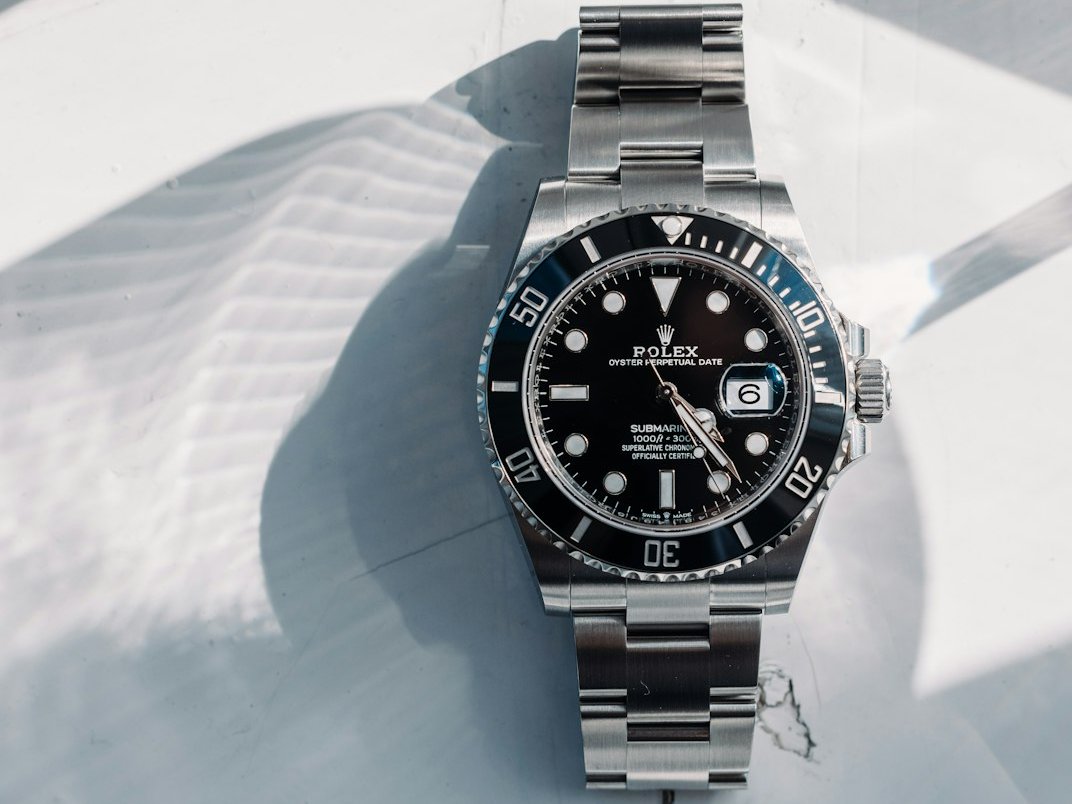
Rolex Submariner Date, Oystersteel, current generation. Photo: Patrick Langwallner, Unsplash. | ||
No watch is copied more often than a Rolex. For decades that was easy to see: a ticking seconds hand, a crooked dial, a case that sat too light in the hand. Those days are over. Today's so-called super clones copy the steel, the ceramic bezel, the weight and even the sweeping seconds hand. Whoever picks up a Rolex no longer asks whether it looks real, but where the difference sits that a factory cannot copy. That difference exists, and it sits in five places. | ||
|
Topic of the week
Rolex has existed since 1905, has worked from Geneva since 1919 and today makes well over a million watches a year, each with its own serial number and chronometer certificate. Three things made the brand: the waterproof Oyster case of 1926, the self-winding Perpetual rotor of 1931 and a production in which almost everything, from the steel to the hairspring, is made in-house. Since 2003 all steel models have been made of 904L steel, which Rolex calls Oystersteel. Since 2005 the rehaut, the inner ring between crystal and dial, carries the engraved text ROLEXROLEXROLEX with the serial number at six o'clock, and since 2002 a tiny crown has been laser-etched into the sapphire crystal at six o'clock. Against the genuine Rolex stand three impostors. The cheap fake at 50 to 200 euros: quartz or a rough automatic movement, a light case, a date lens that magnifies nothing; anyone with a loupe spots it. The super clone at 600 to 2,000 euros, from Chinese factories known under names such as Clean and VS: 904L steel, ceramic bezel, a 2.5x cyclops, a clone of calibre 3135 or 3235 beating at 28,800 vibrations an hour. And the frankenwatch: a genuine case with a replaced dial, bezel or movement, or a genuine movement in a fake case, sold with genuine papers from another watch. | ||
|
Object of the week
What you will meet in practice: a Submariner, Datejust or GMT-Master II from an estate, from an uncle who worked at sea, without box or papers. A Daytona on a classifieds site at a price that is just slightly too good. A Datejust with a diamond dial that was once upgraded in Antwerp. And, more and more often, a watch that looks right in every photo and that the seller got from a friend. The pattern never changes: the better the copy, the harder the seller leans on the story and the less willing he is to let the watch out of his hands. Know the checks and you leave the story for what it is and look at the watch. Skip them and you pay ten thousand euros for eight hundred euros of Chinese steel. | ||
| ||
|
Did you know
Rolex casts its own gold and buys its steel in an alloy almost nobody else in watchmaking uses. 904L steel resists corrosion better than the usual 316L, is harder to machine and shines just a shade whiter after polishing. For years that was a reliable check. Not any more: super clones have been made in 904L too for several years now. What the copy factories cannot get their hands on is the hairspring. | ||
|
Deeper dive
Among collectors the greatest danger is not the copy but the frankenwatch: a genuine case with a genuine movement, but with a replaced dial, from steel to diamonds or from black to a rare colour, a different bezel or later hands. Strictly speaking that is not a fake, and yet the watch has lost a large part of its value. The answer is consistency: reference, serial, calibre, dial text and bezel must belong to the same years. A dial reading SWISS MADE at the bottom belongs to 1998 or later; from around 1964 to 1997 it read SWISS - T<25, the code for tritium. A 1998 dial in a 1972 case is therefore no longer a vintage watch but an assembly. Since late 2022 Rolex has entered the game itself with Rolex Certified Pre-Owned: watches at least two years old are inspected at an authorised dealer, certified and sold with a two-year international guarantee. Dearer than the grey market, but the only route on which Rolex itself signs for authenticity. For everything else the rule holds: authenticity is a chain of evidence, never a single feature. | ||
|
Market & value
Retail prices rose again in January 2026: a Submariner without date costs 9,850 euros, a Submariner Date 11,100 euros, a Datejust 41 in steel with white-gold bezel 11,700 euros and a steel Daytona 16,550 euros, each with a waiting list at the dealer. On the second-hand market the steel sports models, Submariner, GMT-Master II and Daytona, usually sit 20 to 50 percent above retail; a Datejust or Oyster Perpetual sits below it. Vintage: a Datejust 1601 from the sixties or seventies fetches roughly 3,000 to 6,000 euros at auctions such as Catawiki, a Submariner 5513 or 1680 in original condition 15,000 to 30,000 euros. A super clone costs 600 to 2,000 euros to buy and is worth nothing as a Rolex; whoever resells it as genuine commits fraud. A frankenwatch sits in between: usually 30 to 60 percent below an untouched example, depending on what was replaced. The pattern is the one we know from bronzes and icons: the difference sits not in the photo but in the object, and on a Rolex it sits under the case back. | ||
|
Behind the scenes
On a watch, AntiqBot looks at what a photo can verify: the rehaut, the cyclops, the dial text, the reference and whether serial and production years fit together. The movement remains the watchmaker's job, and the report says so. The full archive, from African masks to Gallé and Russian icons, lives at antiqbot.com/weekly and grows every Sunday. | ||
|
Question of the week
“I inherited a Rolex without box or papers. Is it worth much less because of that, and can I still get papers?” Less, but not dramatically so: on a modern model the market deducts 10 to 20 percent for the missing box and card, and on vintage the original condition weighs more than the box. Rolex does not issue replacement warranty cards. What you can do is have the watch inspected at a Rolex Service Centre or an authorised dealer. The service document you receive confirms reference, serial and authenticity, and to a buyer that is worth more than a loose card. In the meantime, do not have it polished: original edges and sharp lugs are money to collectors. A question about an object of your own? Write to info@antiqbot.com | ||
| ||
|
Next week
Next week in AntiqBot Weekly #31 we put a new object on the table, again with five checks to separate genuine from fake. | ||
|
AntiqBot Weekly appears every Sunday. All editions |