| ||
Louis Vuitton: genuine, replica or superfake?From canvas to date code: five checks before you pay. | ||
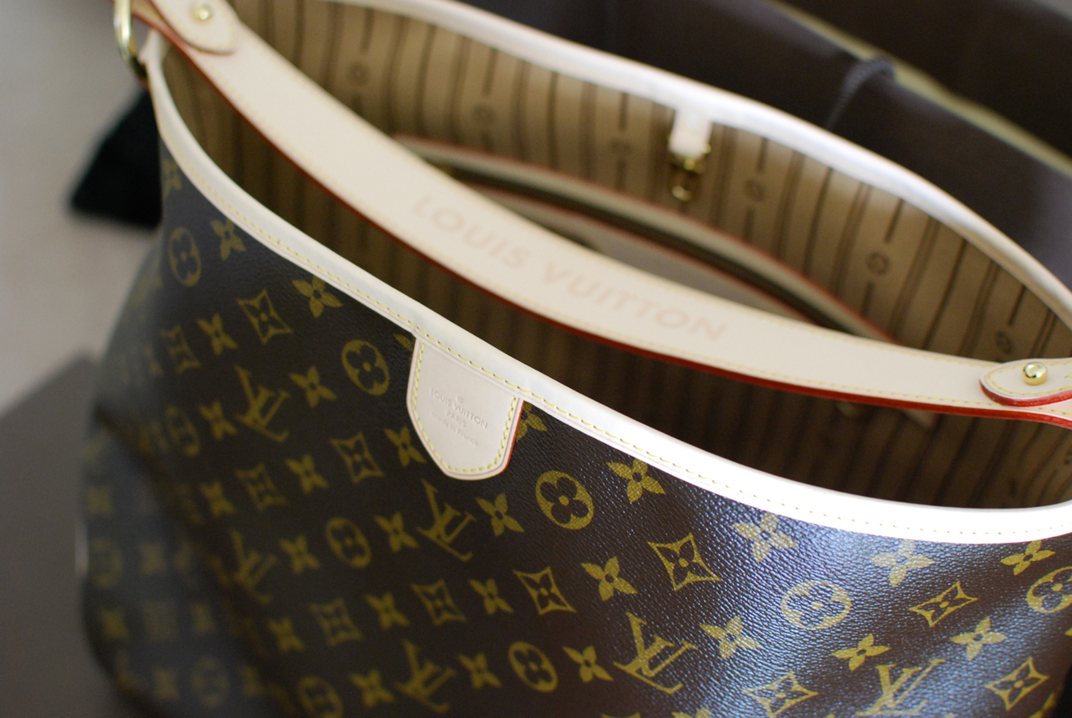
Louis Vuitton Delightful MM, Monogram canvas with vachetta. Photo: Janine (love.jsc), Flickr, CC BY 2.0. | ||
No brand is copied more often than Louis Vuitton. The Monogram canvas was designed in 1896 precisely to stop counterfeiters, and 130 years later it is the most copied pattern in the world. The cheap market replica anyone can spot: smooth plastic, a painted edge, a smell of glue. The so-called superfake is another story. It comes from factories in Guangzhou, costs 150 to 400 euros and copies the canvas, the printing, the hardware and even the date code. Whoever picks up a Louis Vuitton no longer asks whether it looks genuine, but where the difference sits that a factory does not reproduce: leather that lives, handwork that is consistent, and coherence. That difference exists, and it sits in five places. | ||
|
Topic of the week
Louis Vuitton started in Paris in 1854 as a malletier, a trunk maker. The Damier check dates from 1888, the Monogram canvas from 1896, drawn by his son Georges Vuitton. The canvas is coated cotton, toile enduite, and the edges, handles and trim are vachetta: undyed natural cowhide that starts pale and mellows to a honey colour over the years. The icons followed one another: the Keepall travel bag in 1930, the Speedy in the same year, first under the name Express, the Noé in 1932 as a bag for five bottles of champagne, the Alma, and in 2007 the Neverfull. Since 1987 the house has been part of LVMH. What every buyer needs to know: Louis Vuitton has no outlets, never discounts and does not sell through third parties. Every 'outlet Louis Vuitton' and every 'new bag at a discount' is therefore wrong by definition. Against the genuine bag stand three impostors. The market replica at 20 to 60 euros: plastic-like canvas, a painted edge posing as vachetta, a chemical smell of glue; anyone who has ever held a real bag spots it. The superfake at 150 to 400 euros: the right canvas texture, engraved hardware, a convincing heat stamp and a date code that looks right at first glance. And the 'restored' genuine bag: original canvas, but with replaced or dyed vachetta, new handles or parts from another bag, sold as untouched. | ||
|
Object of the week
What you will meet in practice: a Speedy 30 from an estate, without dust bag, with handles that have gone dark. A Neverfull from a classifieds site, with receipt and dust bag, at a price that is just slightly too good. A Keepall from a flea market whose seller no longer remembers where it came from. And an Alma that came from a friend in Paris and was hardly ever carried. The pattern never changes: the better the copy, the heavier the story and the more complete the paperwork. A receipt, a dust bag and a box are all cheaper to fake than the bag itself, and superfakes come with them as standard. Know the checks and you leave the papers for what they are and look at the bag. Skip them and you pay eight hundred euros for two hundred euros of Chinese canvas. | ||
| ||
|
Did you know
Georges Vuitton drew the Monogram in 1896 explicitly as an anti-counterfeiting measure, with flowers and stars beside his father's initials, and in 2026 the house celebrates 130 years of Monogram with the Monogram Origine releases. Louis Vuitton does not authenticate bags for third parties and issues no certificates of authenticity. Whoever wants certainty takes the bag to a boutique for a repair: only genuine pieces are accepted. | ||
|
Deeper dive
The superfake is the real problem. Since around 2018 factories in Guangzhou have copied the canvas with the same grain, engraved hardware and even the heat stamp in the correct typeface; photos alone no longer suffice. What remains is what a factory cannot copy in one go: the behaviour of the materials over time, vachetta that does not patinate, edge paint that cracks, canvas that starts to shine; the consistency of the handwork across the whole bag, because one deviating row of stitches is enough; and the coherence between model, workshop, date code and the detailing of that production year. Dealers and auction houses therefore work with Entrupy, a microscopic AI check that compares the material at fibre level. The second danger is the refurbished genuine bag: replaced vachetta, dyed handles, a new zip, sold as original. Not fake, but worth less, and recognisable by new leather next to old canvas: pale, dry handles on a bag whose canvas shows twenty years of use cannot have been born together. Whoever buys the bag honestly as restored does well. Whoever pays the price of an untouched example for it does not. | ||
|
Market & value
In the boutique a Speedy Bandoulière 25 in Monogram sits at around 1,600 to 1,800 euros in 2026, a Neverfull MM above that; prices rise almost every year. Second-hand, on Catawiki, Vestiaire Collective or at Belgian specialists such as Labellov, a vintage Speedy 30 in Monogram in good condition fetches 400 to 800 euros, a Keepall 50 or 55 600 to 1,200 euros, a Neverfull MM 900 to 1,400 euros, an Alma PM 500 to 900 euros and a Noé 400 to 700 euros. Hard cases such as the Alzer and the Bisten sit at 3,000 to 6,000 euros, and historic travel trunks from before 1930 with the first owner's name plate reach 5,000 to 20,000 euros and more. A replica or superfake is worth nothing as a Louis Vuitton: Catawiki and the big platforms refuse them, and whoever resells one as genuine commits fraud. A refurbished genuine bag usually sits 20 to 40 percent below an untouched example, depending on what was replaced. The pattern is the one we know from Rolex and icons: the difference sits not in the photo but in the object, and on a Louis Vuitton it sits in the leather and in the coherence. | ||
|
Behind the scenes
On a bag, AntiqBot looks at what a photo can verify: pattern flow and symmetry, stitching, heat stamp, hardware, the place and format of the date code and its consistency with the model. Patina behaviour and smell remain work for the hand, and the report says so. The full archive, from African masks to Rolex and Russian icons, lives at antiqbot.com/weekly and grows every Sunday. | ||
|
Question of the week
“I have my mother's Speedy from the eighties, but I cannot find a date code anywhere. Is it fake?” Not necessarily. Bags from before around 1980 have no code, and in the early eighties it is three or four loose digits on a small leather tab, often faded or hidden behind the lining. Look at the rest instead: evenly patinated vachetta, mustard-yellow stitching, brass hardware and a correct heat stamp. If you want certainty, take the bag to a Louis Vuitton boutique for a handle replacement. If they accept the repair, the bag is genuine. A question about an object of your own? Write to info@antiqbot.com | ||
| ||
|
Next week
Next week in AntiqBot Weekly #32 we put a new object on the table, again with five checks to separate genuine from fake. | ||
|
AntiqBot Weekly appears every Sunday. All editions |