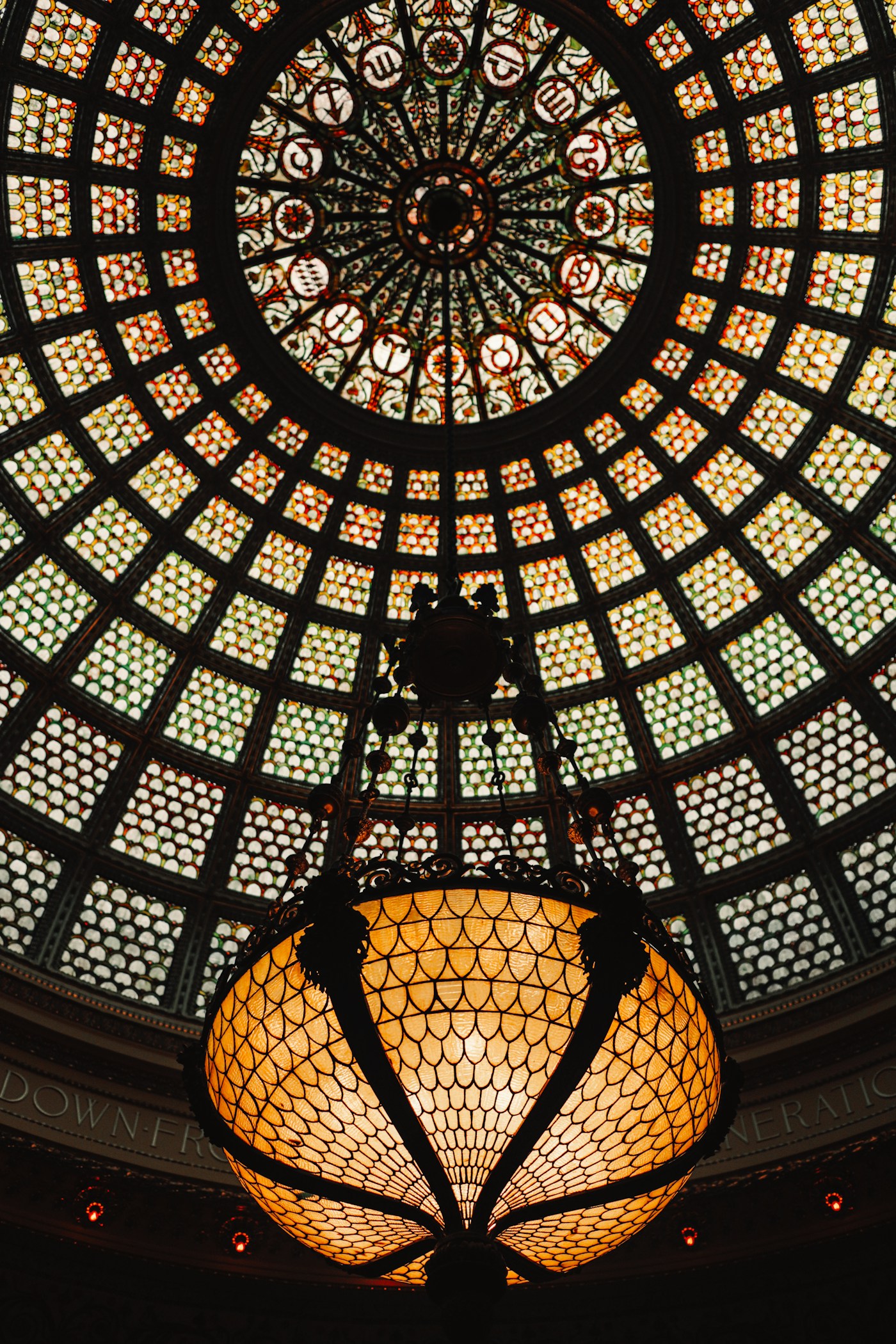
Het onderwerp van de week
Tiffany-lampen — Origineel of reproductie?
Glas, lood en de sporen van echtheid
Een Tiffany-lamp op een rommelmarkt, in een nalatenschap, of op een veilingsite. De naam alleen al doet dromen. Maar hoeveel van wat als «Tiffany» wordt aangeboden, is ook werkelijk Tiffany Studios?
Het antwoord is ontnuchterend. Tienduizenden reproducties zijn in omloop — sommige decoratief bedoeld, andere bewust misleidend. De naam wordt losjes gebruikt door fabrikanten van Tiffany-stijl lampen die nooit de werkplaats in New York hebben gezien.
Een stempel op de voet is geen bewijs. Een mooi glas-in-loodpatroon is geen bewijs. Authenticatie vereist het samenspel van meerdere indicatoren — en soms de eerlijkheid om te zeggen: dit kan ik niet vaststellen op basis van een foto.
Item van de Week
De lamp die zichzelf niet bewijst
Tiffany Studios, opgericht door Louis Comfort Tiffany in New York, produceerde tussen circa 1893 en 1930 enkele van de meest iconische glas-in-loodlampen ooit gemaakt. De technieken waren baanbrekend: gekleurd glas dat zijn kleur niet door verf kreeg maar door metaaloxiden in het glas zelf, gevat in koperen folie volgens een methode die Tiffany perfectioneerde.
Vandaag brengen originelen op veilingen zes- tot zevencijferige bedragen op. In december 2025 ging een Magnolia-vloerlamp voor 4,4 miljoen dollar onder de hamer bij Sotheby’s. Die prijzen trekken vervalsers aan — en het probleem is structureel.
Anders dan bij Warhol bestaat er geen Foundation of Authentication Board. De markt valt terug op fysiek onderzoek, catalogusvergelijking en de expertise van een handvol specialisten. Dat maakt het voor de gemiddelde koper extra lastig.
Snelle Check
5 Rode Vlaggen bij Tiffany-lampen
01
Het glas is geverfd, niet gekleurd in de massa — Bij echte Tiffany-lampen zit het kleurpigment in het glas zelf. Een wattenstaafje met aceton over het oppervlak: als er kleur loskomt, kijk je naar een reproductie.
02
De kap rammelt niet — Door hun leeftijd (90–130 jaar) hebben authentieke Tiffany-kappen licht losgeraakt glas. Een zachte tik moet een subtiel ratelend geluid produceren. Strakke, stille kappen wijzen op nieuwe productie.
03
De voet voelt licht of goedkoop aan — Originele voeten zijn van brons met een natuurlijke patina die over decennia ontstaat. Reproducties gebruiken zink, hars of hard plastic. Het gewicht verraadt veel.
04
Het stempel ziet er te nieuw uit — Authentieke stempels lezen «TIFFANY STUDIOS NEW YORK» in hoofdletters, met een modelnummer eronder. De patina op het stempel moet overeenkomen met de rest van de voet.
05
De schakelaar klopt niet — Originelen hebben een draaischakelaar (paddle switch). Sommige vroege modellen waren olielampen. Een trekschakelaar, drukknop of moderne dimmer wijst op reproductie of zware wijziging.
Vijf indicatoren. Geen enkele is op zichzelf beslissend. Het is het samenspel dat het verhaal vertelt.
Wist je dat
Het Tiffany Studios-archief bevat modelnummers voor honderden lampontwerpen, uitgebreid gecatalogiseerd door Alastair Duncan en andere specialisten. Als een lamp een modelnummer draagt dat niet bestaat in bekende catalogussen — of een bestaand nummer combineert met een kap die niet bij dat ontwerp hoort — is dat een ernstig waarschuwingssignaal. Confetti-glas (kleine spikkels kleur in het glas) is een ander kenmerk dat moeilijk te vervalsen is.
Dieper kijken
Waarom foto-analyse niet genoeg is
Bij Tiffany-lampen is eerlijkheid belangrijker dan zekerheid. Veel van de betrouwbaarste authenticatietests zijn fysiek: het gewicht van de voet, de rateltest op de kap, de acetonetest op het glas. Geen enkele foto kan dat vervangen.
Wat een foto wél kan vertellen: de vorm van de kap, het type schakelaar, de zichtbare patina, de stempelmarkering. Dat zijn waardevolle eerste indicatoren — genoeg om te bepalen of verder fysiek onderzoek zinvol is.
Daarom geven we bij lampen altijd het advies: als de foto-indicatoren positief zijn, laat het stuk door een specialist in handen nemen.
Achter de Schermen
AntiqBot analyseert Tiffany-lampen op vier assen: glasstructuur (kleurintegratie, confetti-glas, oppervlaktetextuur), voetmateriaal en patina, stempelconsistentie, en schakelaartype. We vergelijken met bekende modelnummers uit de Duncan-catalogus. Maar we communiceren altijd de grenzen: foto-analyse kan het gewicht niet voelen en de rateltest niet uitvoeren.
Vraag van de Week
“Hoe herken je een authentiek Delfts blauw bord van een toeristenreproductie?”
Delfts aardewerk is een van de meest gekopieerde categorieën ter wereld. Het verschil zit in merken, kleuren en productietechnieken die je kunt leren onderscheiden. Volgende week meer.
Stuur jouw vraag naar info@antiqbot.com
Volgende Week
Delfts Blauw — Echt of toeristentroep?
De Porceleyne Fles, Makkum, en tientallen imitatiestempels. Hoe scheid je het echte Delfts aardewerk van de souvenirwinkel-reproductie?
Volgende week in AntiqBot Weekly #7: merken, kleuren en de fijne lijn tussen erfgoed en decoratie.
Topic of the Week
Tiffany Lamps — Original or reproduction?
Glass, lead and the traces of authenticity
A Tiffany lamp at a flea market, in an estate, or on an auction site. The name alone sparks dreams. But how much of what is offered as “Tiffany” actually came from Tiffany Studios?
The answer is sobering. Tens of thousands of reproductions are in circulation — some intended as decorative homage, others deliberately misleading. The name is used loosely by manufacturers of Tiffany-style lamps that never saw the New York workshop.
A stamp on the base is not proof. A beautiful leaded glass pattern is not proof. Authentication requires the interplay of multiple indicators — and sometimes the honesty to say: this cannot be determined from a photograph.
Item of the Week
The lamp that doesn’t prove itself
Tiffany Studios, founded by Louis Comfort Tiffany in New York, produced some of the most iconic leaded glass lamps ever made between approximately 1893 and 1930. The techniques were groundbreaking: colored glass that got its color not from paint but from metal oxides within the glass itself, set in copper foil using a method Tiffany perfected.
Today, originals fetch six- to seven-figure sums at auction. In December 2025, a Magnolia floor lamp sold for $4.4 million at Sotheby’s. Those prices attract forgers — and the problem is structural.
Unlike with Warhol, there is no Foundation or Authentication Board. The market falls back on physical examination, catalogue comparison and the expertise of a handful of specialists. That makes it especially difficult for the average buyer.
Quick Check
5 Red Flags with Tiffany Lamps
01
The glass is painted, not colored in the mass — In genuine Tiffany lamps, the color pigment is embedded in the glass itself. A cotton swab with acetone across the surface: if color comes off, you’re looking at a reproduction.
02
The shade doesn’t rattle — Due to their age (90–130 years), authentic Tiffany shades have slightly loosened glass pieces. A gentle tap should produce a subtle rattling sound. Tight, silent shades point to new production.
03
The base feels light or cheap — Original bases are bronze with a natural patina that develops over decades. Reproductions use zinc, resin, or hard plastic. Weight reveals a lot.
04
The stamp looks too new — Authentic stamps read “TIFFANY STUDIOS NEW YORK” in capital letters, with a model number below. The patina on the stamp should match the rest of the base.
05
The switch is wrong — Originals have a turn-paddle switch. Some early models were oil lamps. A pull switch, push button, or modern dimmer points to a reproduction or heavily modified piece.
Five indicators. None is decisive on its own. It’s the interplay that tells the story.
Did You Know
The Tiffany Studios archive contains model numbers for hundreds of lamp designs, extensively catalogued by Alastair Duncan and other specialists. If a lamp carries a model number that doesn’t exist in known catalogues — or combines an existing number with a shade that doesn’t belong to that design — that’s a serious warning sign. Confetti glass (small specks of color within the glass) is another hallmark that is difficult to forge.
Looking Deeper
Why photo analysis isn’t enough
With Tiffany lamps, honesty is more important than certainty. Many of the most reliable authentication tests are physical: the weight of the base, the rattle test on the shade, the acetone test on the glass. No photograph can replace that.
What a photo can tell you: the shape of the shade, the type of switch, the visible patina, the stamp marking. These are valuable first indicators — enough to determine whether further physical examination is worthwhile.
That’s why we always advise with lamps: if the photo indicators are positive, have the piece examined by a specialist in person.
Behind the Scenes
AntiqBot analyses Tiffany lamps across four axes: glass structure (color integration, confetti glass, surface texture), base material and patina, stamp consistency, and switch type. We cross-reference against known model numbers from the Duncan catalogue. But we always communicate the limits: photo analysis cannot feel the weight or perform the rattle test.
Question of the Week
“How do you tell an authentic Delft Blue plate from a tourist reproduction?”
Delft pottery is one of the most copied categories in the world. The difference lies in marks, colors and production techniques that you can learn to distinguish. More next week.
Send your question to info@antiqbot.com
Next Week
Delft Blue — Authentic or tourist trap?
De Porceleyne Fles, Makkum, and dozens of imitation stamps. How do you separate genuine Delft pottery from the souvenir shop reproduction?
Next week in AntiqBot Weekly #7: marks, colors and the fine line between heritage and decoration.