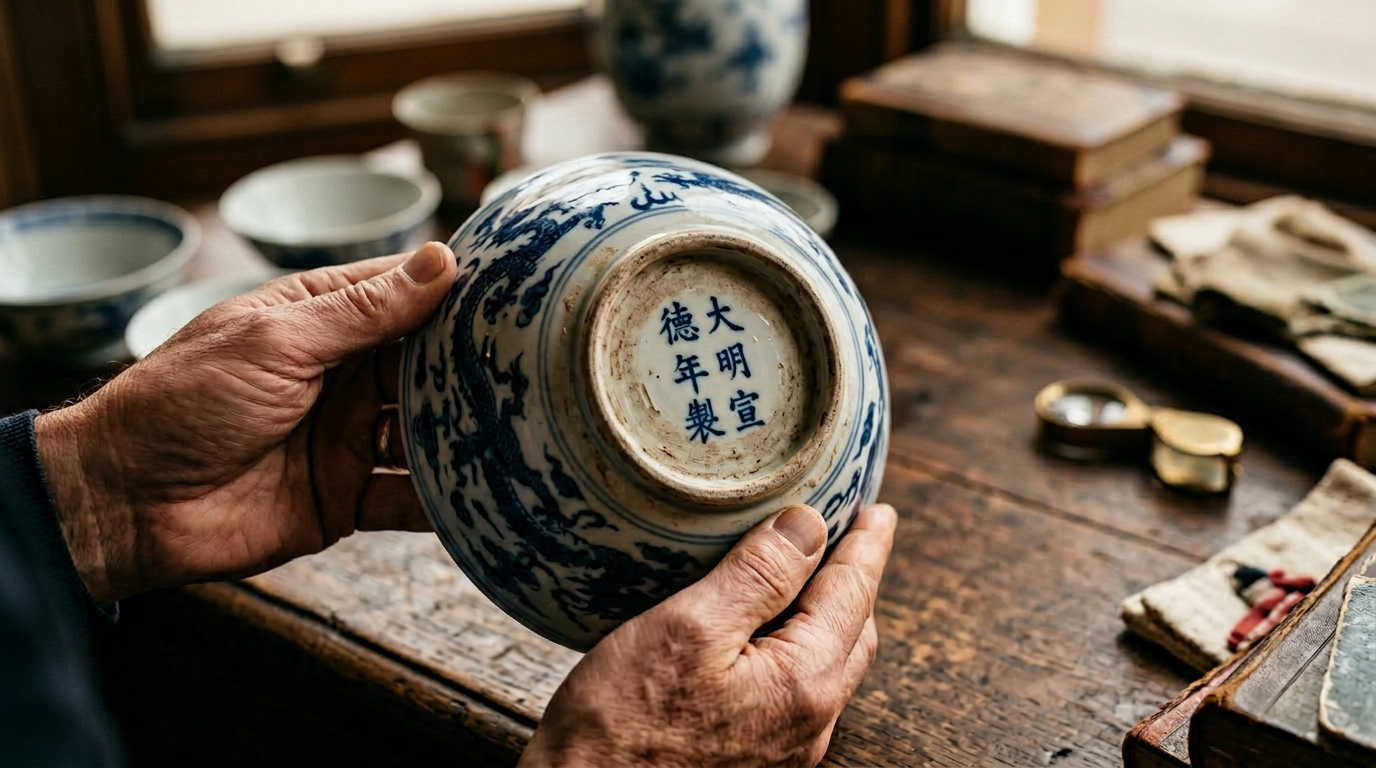
Can't Read the Chinese Marks on Your Antiques? AntiqBot Can
I spent years as an antique dealer. I knew how to inspect a foot ring, feel a glaze, place a style in its period. But those characters on the bottom? That's where I stood still. Six marks in a square, and I had no idea what they meant. I'm not the only one.
The problem nobody talks about
A huge part of the antiques world revolves around Asian art. Chinese porcelain, Japanese woodblock prints, Korean celadon — these are pieces that show up at every auction, flea market and attic cleanout. And almost always, there's something written on them. A reign mark. An emperor's name. A workshop stamp.
The problem: most Western dealers, collectors and heirs can't read those marks. Not a little — not at all. And that's no shame, because you don't learn to read Chinese over a weekend.
The result is that people have been buying, selling and appraising pieces for years without knowing what's written on the bottom. They rely on images in reference books, on a colleague's opinion, or simply on gut feeling. Sometimes they're right. Often they're not.
Did you know? More than 80% of Chinese reign marks on porcelain refer to an earlier emperor or period than when the piece was actually made. This isn't forgery — it was a centuries-old tradition of homage. But if you can't read the mark, you don't know that.
What AntiqBot does that most experts can't
AntiqBot reads Chinese, Japanese and Korean characters. Not as a translation machine that converts isolated words, but in context. The system recognizes the mark, translates the characters, and places them in their historical context.
In practice: you upload a photo of the bottom of a plate, vase or figurine. AntiqBot recognizes the characters and tells you:
- What characters are present and what they literally mean
- Which period or emperor they refer to
- Whether it's a genuine reign mark, a workshop mark, or an apocryphal mark
- What that means for the dating and provenance of your piece
This isn't a trick. It's a fundamental advantage. A Western antique dealer with thirty years of experience might recognize twenty marks from memory. AntiqBot knows thousands — across multiple scripts and dialects.
Not just Chinese
Asian art isn't limited to China. AntiqBot also reads:
- Japanese — kanji, hiragana and katakana. From Imari porcelain to Meiji bronzes, from Satsuma ware to woodblock prints. Japanese marks often combine Chinese characters with Japanese syllabaries, making them especially difficult to decipher.
- Korean — hangul and hanja (the Korean variant of Chinese characters). Korean celadon and Joseon-period ceramics often bear subtle marks that are easily overlooked.
A personal story
When I started out as a dealer, I bought a beautiful blue-and-white vase at auction. Good form, lovely glaze, convincing wear. On the bottom: six Chinese characters in two columns. I had no idea what they meant, but the vase looked right. I bought it.
It wasn't until years later that I discovered the mark referred to the Kangxi period (1662–1722), but the piece was likely from the late 19th century. Not a forgery — an homage piece. But the difference in value? Significant.
If I could have read what it said back then, I would have made a better informed decision. Not necessarily a different one — but a conscious one.
The point: You don't need to learn Chinese. You just need to know what it says. That's exactly what AntiqBot does.
What this means for you
Whether you're an experienced collector, an heir sorting through a collection, or someone who found something beautiful at a flea market: the characters on your piece tell a story. And until now, that story was inaccessible to most people.
AntiqBot makes it readable. No Mandarin course needed. No appointment with a specialist. Just upload a photo.
Chinese marks on your piece?
Upload a photo and AntiqBot translates and interprets the marks — in seconds.
Analyze your pieceFrequently asked questions
Should I photograph the entire bottom or just the mark?
Preferably the entire bottom. AntiqBot analyzes not just the mark, but also the foot ring, glaze and other details that help with dating.
Does it work with handwritten characters?
Yes. AntiqBot recognizes printed, hand-painted and incised marks. Hand-painted marks in cobalt blue under glaze are actually the most common type on Chinese porcelain.
How reliable is the translation?
AntiqBot gives you a strong first indication. For high-value pieces, we always recommend confirming the result with a specialist. But for the vast majority of pieces people have at home, the AI analysis is more than sufficient as a starting point.