| ||
Real Baccarat or just heavy glass? Five checks before you payFrom the acid-etched roundel to the ground stopper: how to read French crystal. | ||
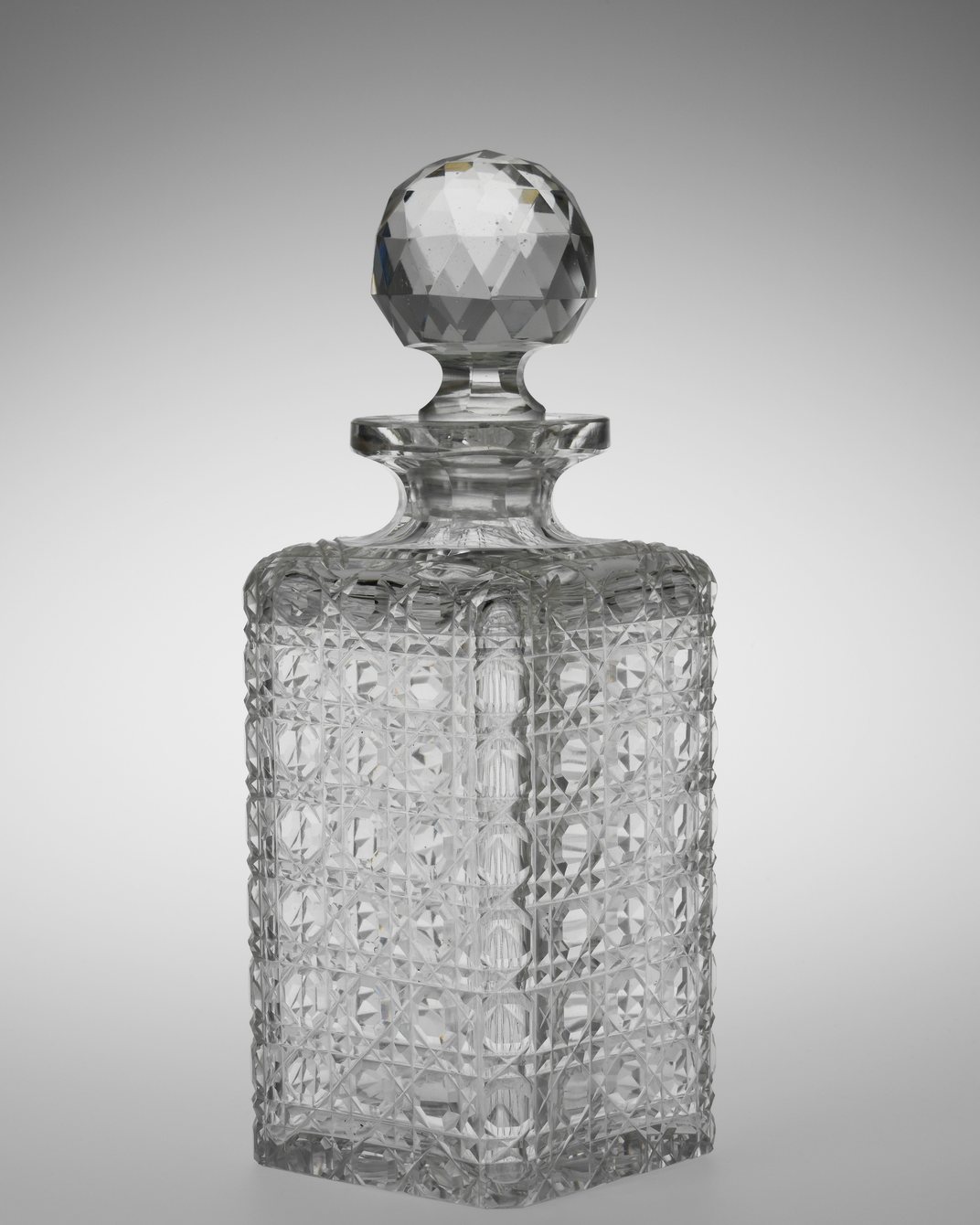
Baccarat, decanter with stopper, 1890-1900, wheel-cut crystal, 22.5 cm, unmarked. The Metropolitan Museum of Art, gift of The Museum of the City of New York, 2008, public domain. | ||
No crystal name appears in more auction listings than Baccarat, and no name is used more loosely. At flea markets, in charity shops and on Catawiki, any heavy cut glass quickly becomes Baccarat, and sometimes the mark is even there underneath. Yet the mark says less than most buyers think: plenty of genuine Baccarat carries none, and a mark is quickly applied with a little acid and a stencil. The difference lies in the crystal itself, in the cutting and in whether mark, model and period belong together. This edition teaches you to read those five things. | ||
|
Topic of the week
Baccarat began in 1764 as a glassworks in Lorraine, founded with the permission of Louis XV at the initiative of the Bishop of Metz. Crystal came later: in 1816 the industrialist Aimé-Gabriel d'Artigues bought the business, and in 1817 the first crystal furnace was fired. From then on Baccarat made lead crystal, the heavy, clear glass with a high lead oxide content that refracts light more strongly and rings for a long time. The firm supplied kings, emperors and sultans, won medals at the world fairs and became the benchmark for French table crystal. That is exactly why the name is so coveted and so often misused. On the market you meet four kinds. Genuine Baccarat, with or without a mark. Crystal from other good houses, such as Saint-Louis or Val Saint Lambert, that a seller or a previous owner called Baccarat. Ordinary pressed or machine-cut glass from the 20th century, sold with the word in the title. And pieces with a false mark: crystal or glass from elsewhere with a Baccarat stamp added afterwards. The first group is worth the money, the second has its own market, the last two are decoration. | ||
|
Object of the week
The decanter in the photo is a Baccarat from the 1890s, now in the Metropolitan Museum in New York. Square, 22.5 centimetres tall, with a faceted ball stopper, and across the whole body a fine diamond pattern cut into the crystal on the wheel. It carries no mark. That is no flaw: in those years Baccarat table crystal received at most a paper label, and it usually disappeared at the first wash. What makes the piece recognisable as Baccarat is what you see in the photo: sharp, deeply cut lines that meet exactly at the corners, crystal without a grey or yellow cast, and a stopper that belongs to the neck. A decanter of the same type with a recent acid stamp under the foot should raise more suspicion on the market than this one, not less. | ||
| ||
|
Did you know
Baccarat became a crystal maker because of a border. Around 1800 Aimé-Gabriel d'Artigues ran a thriving crystal works at Vonêche, near Beauraing, then French territory. After Napoleon's fall in 1815, Vonêche suddenly lay outside France, and d'Artigues lost his main market behind a customs wall. His solution: in 1816 he bought the Baccarat glassworks, just on the French side, and took the crystal trade with him. Ten years later, in 1826, two former Vonêche employees founded a crystal works at Seraing near Liège: Val Saint Lambert. The two great names of French and Belgian crystal thus come out of the same Walloon workshop. | ||
|
Deeper dive
What makes crystal crystal? European rules have given the answer since 1969. Full lead crystal, in French cristal au plomb supérieur, contains at least 30 percent lead oxide; lead crystal at least 24 percent; crystal glass without that lead has lower thresholds. Baccarat works with full lead crystal. The lead makes the glass heavier, softer to cut, clearer and more strongly refractive, and it gives the long ring. It also means that a well-cut Baccarat piece can be cut deeper and sharper than ordinary glass, and that is exactly what you check with eye and fingertip. The mark is a later aid. The device of decanter, glass and tumbler was registered as a trademark in the 19th century, but it was only acid-etched systematically on table crystal from the 1930s. What was made before went out into the world with a paper label or with no marking at all. That is why a specialist judges 19th-century Baccarat on model, cutting and crystal, not on the mark. And that is why the acid stamp is also the first thing a forger adds: it is the only sign a buyer without knowledge recognises. | ||
|
Market & value
The market pays for three things: authenticity, model and completeness. Single Harcourt glasses and other classic models in good condition usually sell on Catawiki and at auction houses for tens of euros each, and a complete, undamaged set of one model fetches noticeably more per glass than the same glasses sold singly. Cut decanters from the late 19th and early 20th century are often in the hundreds of euros, depending on model, condition and stopper. The top segment is paperweights from the classic period: a millefiori paperweight with a B 1846 date cane sold at Bonhams in London in 2018 for 1,375 pounds, and specialist dealers today regularly ask between 1,500 and 2,500 pounds for dated examples. At the bottom sits glass with a false mark: it is worth what it is worth as glass, often a few euros, and the mark makes it harder to sell rather than easier. | ||
|
Marks through time: a short timeline
| ||
|
Paperweights: the most expensive Baccarat
The top segment of the Baccarat market is not a glass to drink from but a solid crystal half-sphere. Between about 1845 and 1860 Baccarat, Saint-Louis and Clichy made the paperweights collectors today call the classic period: millefiori of hundreds of thin glass canes, flowers, butterflies and snakes, enclosed in clear crystal. Baccarat dated some of them with a cane showing the letter B and a year, mainly 1846 to 1849. That very cane is copied. Recent paperweights from Asian and other workshops sometimes carry a B with a 19th-century year, or an etched or pressed Baccarat mark on the base, which a classic weight never had. So look at the quality of the canes themselves: on a classic Baccarat they are fine, sharp and regular, the colours pure, the crystal of the dome clear without a yellow cast. Coarse, smeared canes, harsh synthetic colours and many air bubbles point to a younger piece. The base speaks too. A weight that has stood on desks for a century and a half shows fine wear on the lower edge. A freshly ground or polished base can hide damage and lowers the value. And note that Baccarat made paperweights again from the 1950s, with a modern year and often in a numbered edition: genuine Baccarat, but a different market from the classic ones. | ||
|
Baccarat or its neighbours: what it gets confused with
Much crystal offered as Baccarat is good crystal from another house. That is no disgrace, but it is a different market. Saint-Louis. Also from Lorraine, making crystal since 1781 and the oldest crystal maker in France. Paperweights with an SL cane and a year. Acid mark with St Louis. Often just as good, sometimes dearer, but not the same. Val Saint Lambert. Seraing, since 1826. A major Belgian house with its own models, coloured crystal and Art Deco. Marked Val St Lambert, often with Belgique or Belgium, or just a label. A household name in Belgium, cheaper than Baccarat internationally. Daum and Lalique. Nancy and Alsace. Known for pâte de verre, satin-finished and moulded crystal, not for classic cut table crystal. Signed Daum France or Lalique France, usually engraved. Cristal d'Arques. Industrial lead crystal from Arques, made in huge runs since the late 1960s. Often in Baccarat-like shapes, recognisable by machine-made, shallower cutting and a sticker. It is the glass most often wrongly called Baccarat. Bohemian and Asian crystal. Czech crystal is often well cut and can carry a false Baccarat stamp; so can recent Asian crystal. Here the combination of checks 2, 4 and 5 decides. | ||
|
Reading the cutting
Cutting is a crystal house's handwriting. With Baccarat you see deep, sharp cuts with brightly polished facets. Diamond patterns, fans and stars run right into the corners and join there exactly, with no overrunning lines or double cuts. Look at the bottom of a cut with a loupe: on hand-cut and hand-polished crystal it is bright; on acid-polished or machine work it is sometimes slightly matt or irregular. Pressed glass shows itself differently. The edges of the pattern are round, the surface between the motifs is slightly wavy, and a mould seam often runs over the side, the shoulder or the underside of the foot. The inside of a pressed bowl sometimes follows the shape of the pattern outside, which is never the case with cut crystal. Feel with your fingertip: cut crystal almost cuts, pressed glass strokes. Watch the wear too. A genuinely old glass has fine scratches under the foot, in a ring where it slid across a table hundreds of times. A foot without any trace on a piece said to be 19th century, or scratches that are equally dense everywhere and all run in one direction, are a reason to look harder. | ||
|
How to buy Baccarat at the market and online
At the market: take the piece in your hand before you talk price. Feel the weight, tap the rim gently and listen to the ring. Turn it over, find the mark and look at it with a loupe: matt and sharp, or scratched and blurred. Run your finger over the cutting, look at rim and foot for reground chips, and on a decanter take the stopper out. Online: ask for a close photo of the underside of the foot with the mark, in raking light, and for a photo against a light background. Ask for height and diameter in centimetres and compare them with the model's dimensions. Read the description for the words that make the difference: Baccarat is not the same as in the style of Baccarat, Baccarat type or French crystal. And for a set, ask how many pieces carry a mark. At auctions and on platforms such as Catawiki: a good description names the model, period, mark, dimensions and condition, especially chips and reground rims. If one of those five is missing, ask before you bid. And remember that a box and certificate add value to recent Baccarat, but do not exist for old crystal. | ||
|
Frequently asked questions
Is crystal without a Baccarat mark fake? No. Baccarat table crystal from the 19th and early 20th century is often unmarked or carried only a paper label. The acid-etched mark was only used systematically from the 1930s. Without a mark, the crystal, the cutting, the model and the dimensions decide. What does the genuine Baccarat mark look like? The classic mark is a small, matt, acid-etched roundel with a decanter, a wine glass and a tumbler, and the words BACCARAT FRANCE, under the foot. Recent pieces carry the word BACCARAT, applied by laser, often with a red label. A handwritten signature does not belong on Baccarat table crystal. How do I recognise lead crystal? Lead crystal is heavier than ordinary glass, clear without a grey or green cast, refracts light more strongly and rings long and clear when you tap the rim gently. Under the European standard, full lead crystal contains at least 30 percent lead oxide. Weight and ring show that it is crystal, not that it is Baccarat. What is my Baccarat glass worth? That depends on model, period, condition and completeness. Single glasses of classic models usually sell for tens of euros, decanters often for hundreds, dated paperweights from the classic period for one to several thousand euros. A complete, undamaged set fetches more per piece. Can Baccarat crystal go in the dishwasher? Better not. Heat and detergent dull the surface over time and can damage the mark. Rinse by hand in lukewarm water with a mild washing-up liquid, dry with a lint-free cloth, and never store glasses upside down on their rim. | ||
|
Behind the scenes
On crystal, AntiqBot reads what a photo shows: the mark and its form, the cutting and the sharpness of the edges, the model and its proportions, the stopper and the condition of rim and foot, and lays that next to documented models and auction results. What a photo cannot show, weight and ring, remains work for the hand, and the report says so. Tip: photograph the piece from the side against a light background, the underside of the foot with the mark close up in raking light, and for a decanter the stopper separately. | ||
|
Question of the week
“I bought six Harcourt glasses, but only four carry the Baccarat mark. Are the other two fake?” Not necessarily. Sets are topped up over the years, marks wear away with heavy use, and in some periods not every piece was marked. Put the two glasses next to the other four: same height, same bowl, same number of facets, same weight and the same ring? Then they are probably genuine Harcourts from another delivery. If a glass is lighter, rings shorter or has softer facets, it is a replacement from another maker, and it does not belong in the price of the set. A question about an object of your own? Write to info@antiqbot.com | ||
| ||
|
Next week
Next week in AntiqBot Weekly #35 we put a new object on the table, again with five checks to tell genuine from fake. | ||
|
AntiqBot Weekly appears every Sunday. All editions · Also read edition 25: Gallé, real cameo glass or TIP |