| ||
Original print or reproduction? Five checks on an etching or engravingFrom the plate mark in the paper to the pencil in the margin: how to read a sheet of printmaking. | ||
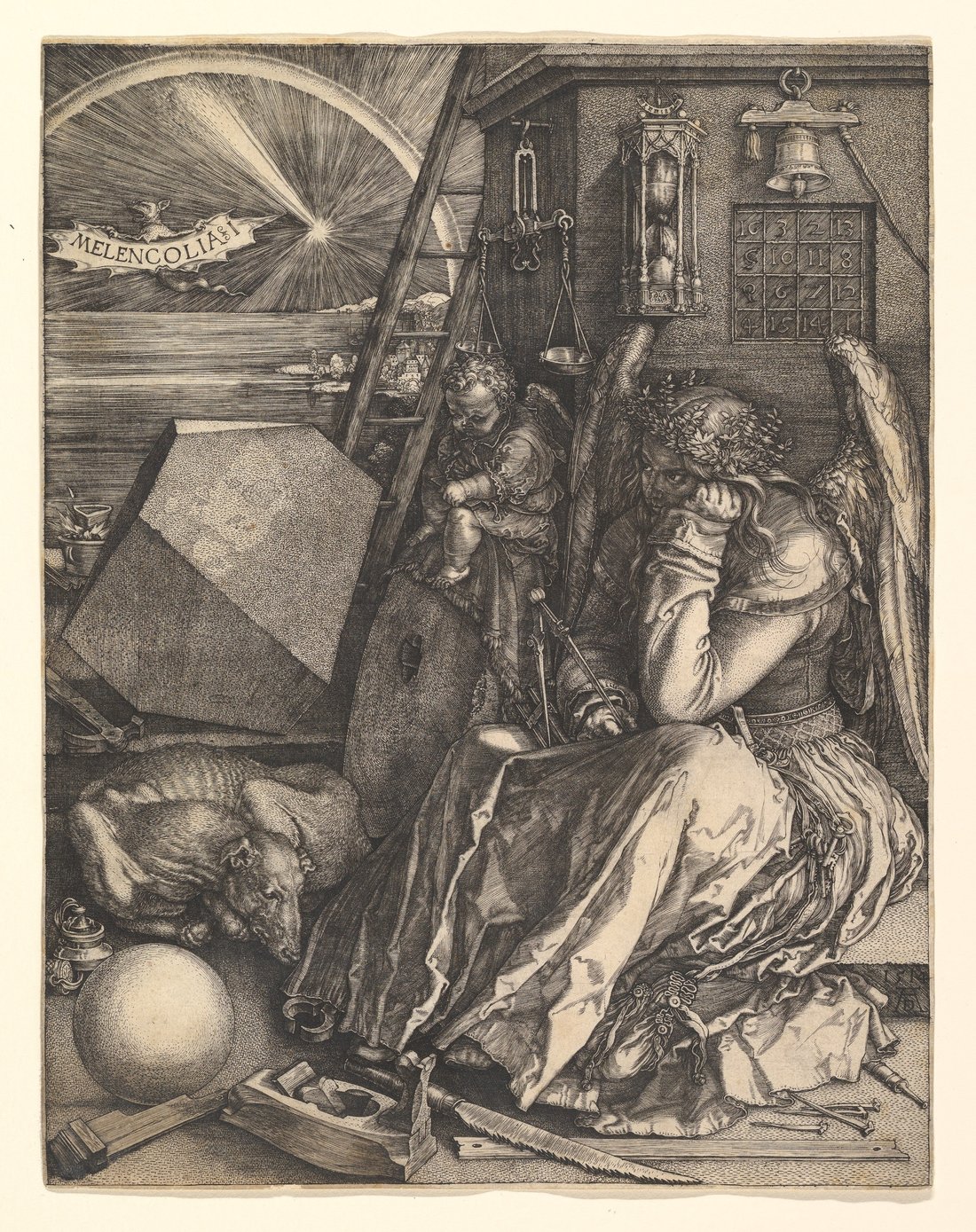
Albrecht Dürer, Melencolia I, 1514, engraving, sheet 24.1 x 18.7 cm. The Metropolitan Museum of Art, Harris Brisbane Dick Fund, 1943, public domain. | ||
Last week you learned to tell a painted canvas from a print. This week we go one layer deeper: the print itself. Because not every impression is a reproduction. An etching by Rembrandt, a woodcut by Dürer or a lithograph by Toulouse-Lautrec is an original work of art, conceived by the artist to be printed. Alongside them circulate millions of photomechanical copies, later restrikes from worn plates and sheets with a signature that does not belong there. They hang in the same frames and lie in the same folders at the flea market. A loupe, a look at the paper and a little knowledge of technique usually settle it. This edition teaches you the five checks. | ||
|
Topic of the week
An original print is an impression from a printing matrix that the artist made, or had made under his supervision: a copper plate that was engraved or etched, a block of wood that was cut, a stone that was drawn on. Every impression is an original, even if dozens or hundreds exist. A reproduction is something else: a photographic or digital copy of an existing image, printed with a technique that has nothing to do with the original work of art. Between those two poles lies a grey zone, and that is where the money and the confusion are. Later editions from original plates, printed after the artist's death. Copies by other engravers, some made as early as the 16th century. Photogravures, a photomechanical technique that imitates an etching almost perfectly. And modern sheets with a printed or even genuine signature on an image the artist never intended as a print. Whoever can read the technique sees the difference. | ||
|
Object of the week
The print in the photo is Melencolia I by Albrecht Dürer, engraved in copper in Nuremberg in 1514, now in the Metropolitan Museum in New York. Everything on this sheet was cut with the burin: a steel cutting tool that ploughs a V-shaped groove into the copper. Look at the shadow on the robe and on the wall: no flat areas, but lines that swell and thin, cross and end in dots. Look at the polyhedron and the hourglass: every form is built up from hatching that follows the curve. Under the loupe this is the difference with any reproduction. An engraved line has a sharp start, a full belly and a pointed end, and the ink stands slightly raised on the paper. A photographic copy of the same print shows under magnification either a screen of dots or lines with soft, blurred edges and no relief. That is why Dürer is perfect teaching material: his sheets have been copied, re-engraved and reproduced for five centuries. | ||
| ||
|
Did you know
In the upper right corner of Melencolia I hangs a magic square of four by four numbers. Every row, every column and both diagonals add up to 34, as do the four corners and the four central squares. In the bottom row, in the middle, the numbers 15 and 14 stand side by side: the year in which Dürer engraved the plate. It is one of the oldest magic squares in Western art. Dürer was also one of the first artists to take a stand against copying. According to the art historian Vasari, the Italian engraver Marcantonio Raimondi copied Dürer's woodcut series on the Life of the Virgin in copper, complete with the AD monogram. Dürer is said to have travelled to Venice to complain. The ruling, as Vasari tells it: copying was allowed, using the monogram was not. Whether it happened exactly that way is not certain among historians. But the copies exist, and they turn up on the market to this day. | ||
|
Deeper dive
There are four great families of printing techniques, and each leaves its own trace. In relief printing, such as woodcut and linocut, the image stands raised on the block and the ink is rolled onto the highest parts. The impression shows bold blacks, sometimes with a darker rim, and the image is often pressed slightly into the paper. In intaglio, such as engraving, etching, drypoint, aquatint and mezzotint, the ink sits in grooves in a metal plate. Under high pressure the paper is forced into those grooves: the ink stands raised on the sheet and the plate leaves a border. In planographic printing, lithography, the artist draws with greasy crayon or ink on a stone or plate. Grease repels water and attracts ink, so only the drawing holds ink. There is no relief and no plate mark, but there is a typical grain. In stencil printing, screenprint, ink is pushed through a fine mesh: even, thick areas with sharp edges. Within each family there are variants. A drypoint scratches directly into the copper and throws up a burr that gives a velvety, dark line in the first impressions. That burr wears quickly, which makes early drypoint impressions far more valuable than later ones. | ||
|
Market & value
The market draws a big distinction between these categories. Photomechanical reproductions of old masters usually sell at markets and online for a few to a few tens of euros, and often the frame is the most expensive part. Later impressions from original plates, such as the reprints of Goya's Los Caprichos by the Spanish state printing house or 18th- and 19th-century impressions from Rembrandt plates, have a market of their own, usually in the hundreds of euros, depending on the quality of the impression. Old copies by other engravers are often in the same range. An original print from the edition made during the artist's lifetime is another world. For good impressions of key sheets by Dürer or Rembrandt, the major auction houses see prices well into the tens of thousands of euros, and more for exceptional impressions. With modern prints the name, the edition, the state and the authenticity of the signature determine the price. What almost never adds up: a high price for a sheet that shows a screen under the loupe, or an old master with a pencil signature. | ||
|
Techniques: a small guide
| ||
|
States, editions and later impressions
An artist often kept working on a plate while already pulling impressions. Each intermediate phase is called a state. Rembrandt made four, five or more states of some etchings, with figures added or scraped away. Collectors look up the states in a catalogue raisonné, and a rare early state is worth much more than a later one. Plates also often outlive their makers. Rembrandt's copper plates passed from hand to hand after his death and were printed again into the 20th century. The plates of Goya's Los Caprichos and Disasters of War were printed in several editions after his death by the Spanish state printing house. Such later impressions are genuine impressions from the original plate, but not impressions from the artist's time. They are honest to sell when described as such, and become a problem when they are sold as early impressions. How do you recognise a later impression? By its crispness: a tired plate gives grey, thin lines and loses the fine hatching first. By the paper: a 19th-century impression from a 17th-century plate is usually on different paper from an early impression. And by traces of reworking: hard, new lines next to worn old ones. | ||
|
Signed and numbered: what it does and does not mean
The pencil signature and the edition number are an invention of the modern print market. From the end of the 19th century artists began to sign and number their impressions by hand, to show that they approved the impression and that the edition was limited. With that came abbreviations such as E.A. or A.P., the artist's proofs, and H.C., hors commerce, outside the trade. Those marks are useful, but they are also the easiest to fake. A pencil signature can be added later. A number means nothing if the image itself is an offset print. And with some artists it went badly wrong: in his later years Salvador Dalí signed large numbers of blank sheets, on which images were printed afterwards that he had never worked on. His print market is therefore a minefield, and without watertight documentation a signed Dalí print remains a question mark. The rule is simple. Look first at the technique of the image, only then at the signature. A genuine original print stays original without a signature. A reproduction stays a reproduction with one. | ||
|
Reading the paper
Paper is the silent witness of a print. Until the end of the 18th century paper was made by hand from linen and cotton rags. Hold the sheet against the light and you see the laid pattern: fine lines close together and, at right angles to them, every two to three centimetres, the chain lines. A watermark, such as a coat of arms, a hand or a jug, can help to date the paper. Old impressions are often trimmed in the margin, sometimes to the plate mark or the image. From the 19th century machine-made paper appeared, uniform in structure, and later paper with optical brighteners that glow blue under UV light. A print that claims to be from the 17th century and fluoresces blue under a UV lamp is on modern paper. Also look at spots, foxing and discolouration: they are normal on old paper, but they should be spread logically across the whole sheet, not only around the edge as if they had been added. | ||
|
How to buy prints at the market and online
At the market: bring a 10x loupe, a small torch and, if you have one, a UV lamp. Take the sheet out of the frame if you can, or at least look at an angle along the glass for the plate mark. Use the loupe in the shadow areas to look for lines or dots. Hold the paper against the light for chain lines and watermark. That takes three minutes. Online: ask for a photo of the whole sheet with the margins, a detail through a loupe or macro lens, and a photo against the light. Read the description for the words that make the difference: etching, engraving or woodcut is something else from reproduction, photogravure, after, or signed in the plate. Ask for the dimensions of image and sheet, and compare them with the catalogue raisonné. A seller who will not take a detail photo often has a reason. At auctions and on platforms such as Catawiki a good description names the technique, the state according to the catalogue, the paper, the margins, the condition and the provenance. If the technique or the catalogue reference is missing, ask before you bid. | ||
|
Frequently asked questions
How can I tell whether a print is an original or a reproduction? Look with a loupe in the dark areas. An original etching or engraving shows sharp lines with ink standing slightly raised on the paper, and a plate mark around the image. A lithograph shows a grain. An offset reproduction shows a regular screen of dots. Then look at the paper, and only last at the signature. Is a plate mark proof of authenticity? No. A plate mark shows that the sheet was printed in an intaglio press, but photogravures have one too and reproductions sometimes get a pressed border afterwards. The plate mark must match what you see under the loupe: genuinely etched or engraved lines. Why does an old print have no pencil signature? Because signing and numbering in pencil only became customary from the end of the 19th century. Old masters such as Dürer and Rembrandt signed in the plate or not at all. An old master with a pencil signature and an edition number is therefore suspect. What is a later impression or restrike? An impression from the original plate, made after the artist's death or long after the first edition. It is a genuine impression, but usually less crisp and less valuable than an early one. Restrikes of Rembrandt and Goya are well-known examples. What is my print worth? That depends first on whether it is an original print or a reproduction, and then on the artist, the state, the quality of the impression, the paper and the condition. Reproductions usually sell for a few to a few tens of euros, later impressions often for hundreds, early impressions of key sheets for much more. | ||
|
Behind the scenes
With prints, AntiqBot looks at what a photo can show: the technique of the lines, the plate mark and the margins, the paper, the signature and any numbering, and compares with known sheets and sales. What a photo shows poorly, such as the relief of the ink or the chain lines in the paper, calls for a detail photo. Tip: photograph the whole sheet straight from above with the margins, a detail of a shadow area as close as possible, and the sheet against the light. | ||
|
Question of the week
“I bought an etching with a signature and a number in pencil, 45/150. Then it must be original?” Not necessarily. Signature and number only mean something if the image itself was printed with an original technique. Take a loupe and look in the darkest areas. If you see sharp lines with ink standing slightly raised, and a plate mark around the image, it is probably a genuine etching. If you see a screen of dots, it is an offset print with a signature added: a signed reproduction, not an original print. Then check whether the signature really is in pencil, with sheen and pressure in the paper, or was printed along with the image. A question about an object of your own? Write to info@antiqbot.com | ||
| ||
|
Next week
Next week in AntiqBot Weekly #37 we put a new object on the table, again with five checks to tell genuine from fake. | ||
|
AntiqBot Weekly appears every Sunday. All editions · Also read edition 35: original painting or print |