| ||
Persian rug: hand-knotted or machine-made? Five checks before you buyFrom the back to the fringes: how to read an oriental rug. | ||
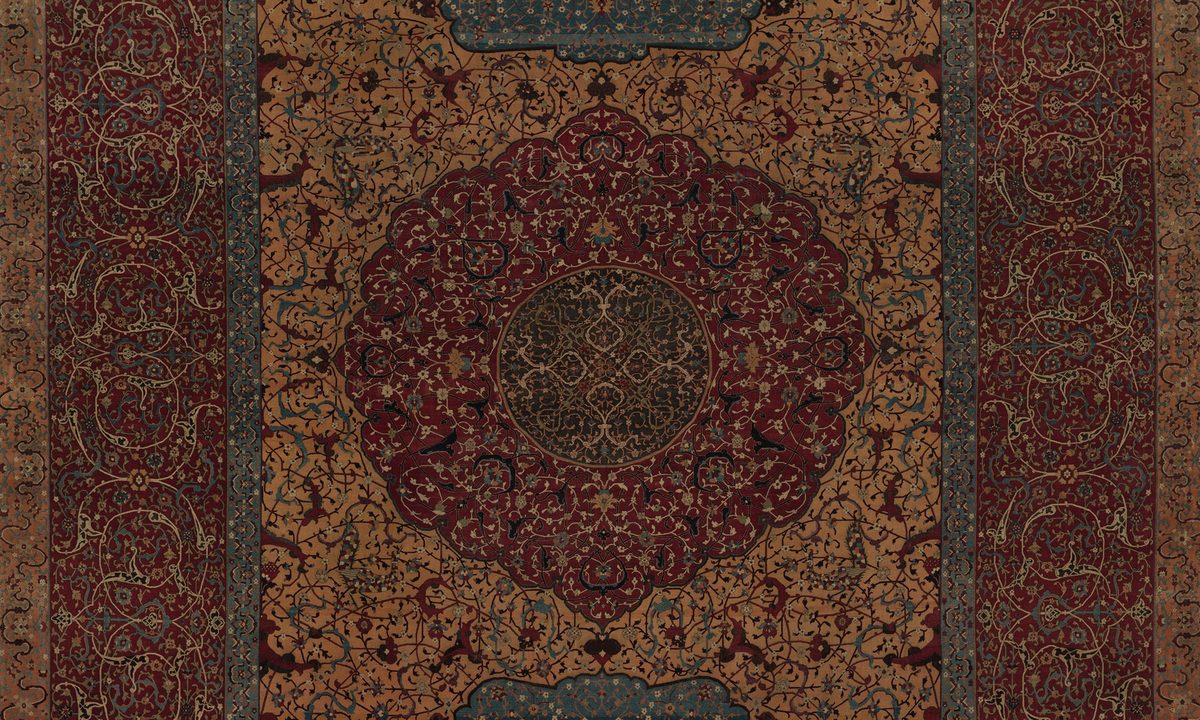
The Anhalt Medallion Carpet, Iran, probably first half of the 16th century, wool pile on cotton and silk, asymmetrically knotted, 792 x 419 cm (detail). The Metropolitan Museum of Art, Gift of Samuel H. Kress Foundation, 1946, public domain. | ||
Last week was about prints on the wall. This week we look down, at the object we literally stand on. The Persian rug lies in millions of living rooms, and it comes onto the market every week: from estates, from house clearances, on Catawiki and at the flea market. But the word Persian covers a lot. A rug hand-knotted in Iran, a rug with a Persian pattern from India, Pakistan or China, a tufted rug with a glued backing, or a machine-woven rug from Belgium. From above they can look surprisingly alike. Turn the rug over, and it almost always tells its own story. This edition teaches you the five checks. | ||
|
Topic of the week
A hand-knotted rug is made on a loom. Between the vertical threads, the warp, the weaver ties small pieces of wool or silk, row after row. After each row one or more horizontal threads, the weft, are passed through and beaten down. The pile, the soft top surface, consists of the cut ends of those knots. A medium-sized rug has hundreds of thousands to millions of knots, and a weaver works on it for months, sometimes years. A machine-made rug is produced on an industrial loom, often in the style of a Persian rug. In between sits the tufted rug: a gun shoots loops of yarn through a cloth, which are then glued in place at the back with latex and covered with a second cloth. It is fast and cheap, and from above it resembles a knotted rug. The word Persian on a label or in an advert therefore says little. What counts is the construction, and you read that on the back. | ||
|
Object of the week
The rug in the photo is the Anhalt Medallion Carpet, now in the Metropolitan Museum in New York. It was probably knotted in Iran in the first half of the 16th century, under the Safavid dynasty, when the court workshops made the great classical carpets. It measures almost eight metres by over four. The warp is cotton, the weft silk, the pile wool, and the knots are asymmetrical: the so-called Persian knot. The name refers to the German princely house of Anhalt, which owned the carpet for a long time. Look at the layout. In the centre a lobed medallion with a dark heart, above and below it a smaller cartouche, and all around a field full of fine vines, palmettes and cloud bands. That scheme of medallion, corner pieces and borders was repeated thousands of times in the centuries that followed, in cities such as Tabriz, Kashan and Isfahan, and later in factories all over the world. Anyone buying a medallion rug today buys an echo of carpets like this one. | ||
| ||
|
Did you know
The oldest dated Persian carpet to survive is the Ardabil Carpet in the Victoria and Albert Museum in London. In a cartouche it bears an inscription with the year 946 of the Islamic calendar, which is 1539 to 1540, and the name of its maker: Maqsud of Kashan. The carpet has a twin, now in the Los Angeles County Museum of Art. In the 19th century parts of one were used to repair the other. Another classical Persian carpet, the so-called Clark sickle-leaf carpet from the 17th century, was sold at Sotheby's in New York in 2013 for over 33 million dollars. To this day it is one of the highest prices ever paid for a carpet. It shows how great the distance is between a museum piece and the average Persian rug in a living room. | ||
|
Deeper dive: the knot and the count
There are two main knot types. The symmetrical or Turkish knot wraps a strand of wool around two adjacent warp threads, with both ends coming up in the middle. It is used mainly in Turkey, the Caucasus and in Turkish-speaking regions of Iran, such as around Tabriz and Heriz. The asymmetrical or Persian knot wraps around one thread and passes loosely under the other, with one end coming up between the two threads. That knot allows finer, more flowing patterns, and is widely used in central and eastern Iran, and in India and Pakistan. The knot type thus says something about the region, but on its own proves nothing: both are also used outside their traditional area. Knot density says a lot about fineness. On the back, count the number of knots horizontally over ten centimetres, and the number of rows vertically over ten centimetres. Multiply the two numbers, and you have the number of knots per hundred square centimetres. Multiply that by a hundred, and you have the number of knots per square metre. A coarse village or nomad rug is around a hundred thousand knots per square metre, good city rugs often between three hundred thousand and a million, and the finest silk rugs from Qom or Isfahan higher still. Higher is not automatically better. A coarsely knotted Heriz with beautiful colours and a strong design can be worth more than a fine but lifeless city rug. Also watch for the so-called jufti knot, in which the weaver ties one knot around four threads instead of two. It goes twice as fast, but the rug becomes thinner and wears faster. You recognise it on the back by knots that are noticeably wide compared with their height. | ||
|
Market & value
The market for the ordinary Persian rug has fallen sharply over recent decades. Decorative hand-knotted rugs from the second half of the 20th century, which once stood in shops for thousands of euros, today often go for a few hundred euros at auction and online, and small or worn pieces for less. Taste has shifted to sleek interiors, supply from estates is large, and transporting large rugs is expensive. Machine-made and tufted rugs rarely have more than a use value on the second-hand market. What does hold its value: old village and nomad rugs with natural colours and a strong design, good city rugs from before about 1930 in good condition, fine signed pieces from known workshops, and genuine silk. For such rugs, specialist auctions pay amounts from a few thousand to tens of thousands of euros, more for top pieces. Condition weighs heavily: pile worn down to the knots, holes, moth damage, discoloured stains or poor repairs can halve the value. One factor that plays outside Europe: the United States banned the import of Iranian rugs again in 2018, after a brief opening in 2016. An American buyer therefore cannot simply have an Iranian rug shipped. That ban does not apply to buyers and sellers in the European Union, but it makes the market for new Iranian work smaller. | ||
|
Origin names: a small guide
| ||
|
Colours: natural, synthetic and artificially aged
Until the end of the 19th century wool was dyed with plant and animal dyes: madder for red, indigo for blue, weld or pomegranate peel for yellow, and combinations of these for green and purple. From the second half of the 19th century synthetic aniline dyes appeared. The early versions proved neither lightfast nor colourfast: red faded to pink or grey, purple turned brown, and some colours ran when washed. In later decades better synthetic dyes came onto the market, and most 20th-century rugs are dyed with them. That in itself is not a flaw. The problem lies in the tricks used to make a new rug look old. A chemical wash with chlorine or acid softens bright colours and gives a silky sheen, but makes the wool brittle. A tea wash gives a yellowish, antique undertone. Rugs are sometimes also laid in the sun for months, or the pile is shorn short to suggest wear. And worn areas are sometimes touched up with felt-tip pen or paint. You recognise this by colours that are brighter at the base of the pile than at the tip, by a conspicuously even yellowing across the whole rug, and by colour that comes off on a damp white cloth. | ||
|
Silk, art silk and viscose
Silk rugs are the most expensive segment, so that is also where most cheating happens. Many rugs sold as silk are made of viscose, also called art silk or bamboo silk. Viscose has a strong sheen and feels cool and smooth, but is far weaker than silk. The pile creases and mats quickly, and on contact with water it goes limp and can discolour. The classic test is the burn test: pull a single thread from the fringe or an inconspicuous spot and hold it carefully in a flame. Genuine silk burns slowly, smells of singed hair and leaves a brittle, black bead of ash that you can crush. Viscose burns quickly with a flame, smells of burnt paper and leaves a fine grey ash. Only do this with the seller's permission, and never on the rug itself. Without a burn test the price already helps: a genuine, fine silk Qom of a decent size never costs a few hundred euros in a shop. | ||
|
How to buy a rug at the market and online
At the market: always turn the rug over, even if it is heavy. Look at the knots on the back, the fringes, the sides and the dimensions. Open the pile to see the knots. Rub a damp white handkerchief over a dark colour to see whether it comes off. Look against the light for thin spots and holes, and smell it: a musty odour can point to damp or mould. That takes five minutes, and it prevents most mistakes. Online: always ask for a photo of the entire back, a detail of the back with a ruler next to it, a photo of both fringes and of one side. With a ruler in the picture you can count the knots yourself. Read the description for the words that make the difference: hand-knotted is something else than handmade, hand-tufted or machine-made. Persian design or Persian style often means not from Iran. Ask for the exact dimensions of both ends. Think of the costs after the purchase. A large dirty or damaged Persian may need a professional wash, edge repair or new fringes, and that quickly costs more than the rug did at auction. Factor those costs into your bid. | ||
|
Frequently asked questions
How can I tell if a Persian rug is hand-knotted? Turn it over. On a hand-knotted rug the pattern on the back is sharp and built up from small, individual knots in rows. The fringes are the ends of the warp threads and run on into the rug. On a machine-made rug the back is tight and uniform; on a tufted rug a cloth or latex covers the back. What is the difference between hand-knotted and hand-tufted? In hand-knotted rugs every knot is tied separately around the warp threads, which takes months. In hand-tufted rugs a gun shoots loops of yarn through a cloth, which are glued at the back with latex. A tufted rug is much cheaper, less durable and has little value on the second-hand market. How do I count the knots of a rug? On the back, count the number of knots over ten centimetres of width and the number of rows over ten centimetres of height. Multiply the two numbers and then by a hundred: that is the number of knots per square metre. Coarse rugs are around a hundred thousand, fine city rugs often above three hundred thousand. Is my silk rug really silk? Many so-called silk rugs are viscose. With the seller's permission you can burn a loose thread from the fringe: silk smells of singed hair and leaves a brittle bead of ash, viscose smells of burnt paper and leaves fine grey ash. A very low price for a large silk rug is already a warning. What is my Persian rug worth? That depends first on whether it is hand-knotted, and then on the region, the age, the fineness, the colours and above all the condition. Ordinary decorative 20th-century rugs today often go for a few hundred euros. Old village and city rugs in good condition, fine signed pieces and genuine silk can fetch much more. Machine-made and tufted rugs usually only have a use value. | ||
|
Behind the scenes
With a rug, AntiqBot looks at what a photo can show: the pattern and composition, the colours, the borders, the fringes and, if you send them, the back and the knots. From that AntiqBot recognises the type and the region, and compares it with known sales. A photo of only the front is too little for a rug. Tip: photograph the whole rug straight from above, the entire back, a detail of the back with a ruler next to it, and a fringe up close. | ||
|
Question of the week
“I inherited a Persian rug with a label that says ‘100% wool, handmade’. So it must be knotted?” Not necessarily. Handmade is a broad word, and a hand-tufted rug falls under it too. Turn the rug over. If you see a sharp pattern of small knots in rows on the back, and the fringes run on as the ends of the warp threads, it is knotted. If you see a cloth or a layer of latex covering the whole back, it is tufted: made by hand, but not a knotted rug, and worth much less on the second-hand market. A label with the origin and the knot density is useful, but the rug itself is the most reliable document. A question about an object of your own? Write to info@antiqbot.com | ||
| ||
|
Next week
Next week in AntiqBot Weekly #38 we put a new object on the table, again with five checks to tell genuine from fake. | ||
|
AntiqBot Weekly appears every Sunday. All editions · Also read edition 36: original print or reproduction |