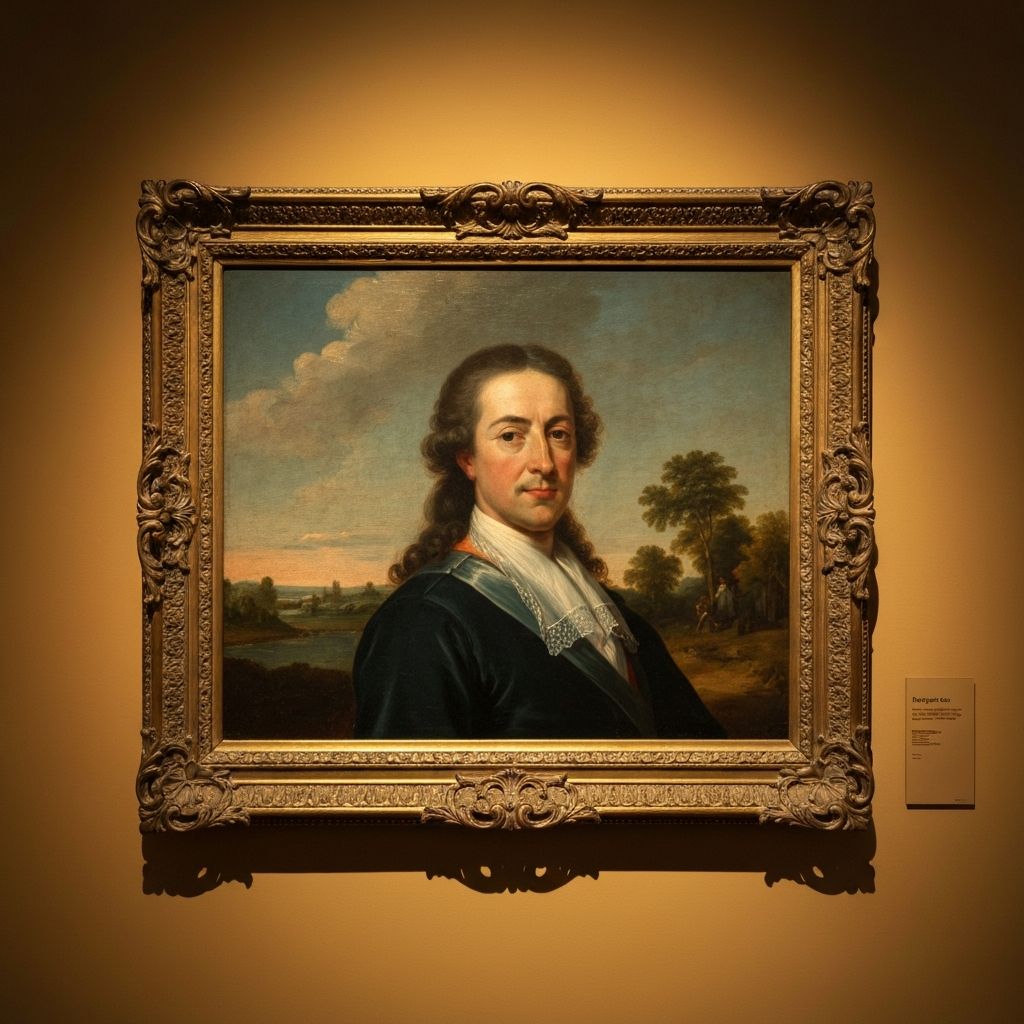
How to Identify a Painting Signature Online: The Expert's Method
You find a signed oil painting at an estate sale. The canvas is old, the varnish has yellowed, and in the lower right corner there is a signature you cannot quite read. It could be nothing. It could be a regional painter worth a few hundred euros. Or it could be the kind of discovery that changes an afternoon into a story you tell for years. Knowing how to identify a painting signature online, with accuracy, is what separates the buyer who walks away with a bargain from the one who overpays for a print.
Why Painting Signatures Matter More Than You Think
Attribution is the single largest driver of value in the secondary art market. A landscape painting in oil on panel, unsigned and unattributed, might sell for €200 at a provincial auction. The same painting, correctly attributed to a named artist in the RKD (Netherlands Institute for Art History), can command ten to fifty times that figure at Sotheby's or Christie's. The canvas, the paint, the composition: none of that changes. The name changes everything.
This is not speculation. Auction records from Bonhams and Christie's consistently show that attribution adds a multiplier effect that dwarfs condition upgrades or frame quality. A painting with a firm institutional attribution (backed by catalogue raisonné reference or museum exhibition history) typically fetches two to five times the estimate of an equivalent work listed as "attributed to" or "circle of." The gap between "signed and dated" and "unsigned, follower of" can be enormous even for mid-tier artists.
Provenance reinforces this further. A signed work with a paper trail connecting it to a documented collection carries what the trade calls "clean provenance," and buyers at the top end of the market pay a premium for that certainty. A signature alone does not guarantee provenance, but it is usually the starting point for reconstructing it.
The practical implication for collectors, dealers, and heirs is straightforward: before you price, donate, or discard a signed painting, invest the time to look up that signature properly. The tools available today, including free academic databases and AI analysis platforms, make this more accessible than ever before.
Where Artists Sign Their Paintings
Before you can identify a signature, you need to find it. This sounds obvious, but many signatures are not where you expect them to be, and some are not visible under normal lighting at all.
Lower right corner
The most common location in Western painting from roughly the 17th century onward. Academic painters trained in the French tradition, and most 19th-century salon artists, consistently signed lower right. If you are looking at an oil on canvas from 1800 to 1950, start here. The signature is often painted with a fine brush in a darker tone and then varnished over, which means it may be obscured by yellowed varnish or surface grime.
Lower left corner
Preferred by many Dutch and Flemish painters of the 17th century, and by a significant number of Impressionist and Post-Impressionist artists. Jan van Goyen, for instance, typically placed his monogram at lower left. Some artists alternated placement depending on the composition, choosing whichever corner had neutral, dark, or textured paint that would make the signature legible.
The back of the canvas or panel
Signatures on the reverse are common in several specific contexts. Portraits painted for private clients were sometimes signed on the back to avoid interrupting the composition. Many 20th-century artists also signed stretcher bars in pencil or ink, particularly for works they considered studio pieces rather than finished exhibition works. Turn every painting over before concluding that it is unsigned.
Hidden and integrated signatures
Some artists concealed their signatures within the composition itself, particularly in the 15th and 16th centuries, when self-referential inscriptions were embedded in painted books, scrolls, or architectural details. Holbein the Younger famously integrated his name into objects within portraits. For later periods, integration is less common, but it does occur: a signature disguised as a shadow line along a tree trunk, or worked into the texture of a tablecloth.
Studio stamps and blind stamps
Not all paintings are signed by hand. Many studios, particularly in the 17th and 18th centuries, used wax seals or ink stamps to identify their output. Rubens's studio, for example, used a stamp mark on works that passed through the atelier but were not personally finished by the master. These stamps are often found on the reverse and require knowledge of specific workshop marks to interpret correctly. The same logic applies to posthumous sales from an artist's estate, where a studio or estate stamp may replace or supplement a handwritten signature.
Types of Artist Signatures: Full Name, Monogram, Initials, Pseudonym
Recognizing what kind of signature you are looking at is the second step, and it determines which lookup strategy to use.
Full name signatures
The most legible category. The artist signs with surname alone (most common in Dutch and Flemish tradition: "Rembrandt," "Rubens") or with first name and surname. Even a full-name signature can be difficult to read if the handwriting is idiosyncratic or the paint has deteriorated. Rubens signed his panels in a clear Latin script; many 19th-century artists wrote in a flowing cursive that is nearly illegible without magnification.
Monograms
An interlocked or stacked arrangement of two or more initials. Albrecht Dürer's "AD" monogram is the most famous example in Western art, but thousands of lesser-known artists used monograms, particularly for prints, drawings, and smaller paintings. The challenge with monogram identification is that many combinations of initials are shared by multiple artists. "JH" alone appears in the Bénézit Dictionary of Artists under dozens of entries. Cross-referencing the monogram with medium, period, and regional origin narrows the field considerably.
Initials only
Some artists, particularly those active in the 17th century Low Countries, signed with a single initial or two initials without interlacing. These are statistically the hardest signatures to identify with certainty, because the disambiguation depends almost entirely on style analysis rather than the mark itself.
Pseudonyms and trade names
Commercial illustrators, decorative painters, and some academic artists worked under pseudonyms throughout their careers. The signature you see may be a studio name, a pseudonym adopted for a specific genre (many 19th-century academic painters used different names for their "serious" and "commercial" work), or an anglicized or latinized version of a foreign name. The Bénézit dictionary indexes pseudonyms and cross-references them to legal names, making it indispensable for this category.
Foundry marks on sculptural works
For bronze sculptures, the "signature" equivalent is often a foundry mark cast into the base alongside the artist's signature. The Barbedienne, Susse Frères, and Hébrard foundries each used distinctive marks that help authenticate 19th and early 20th-century bronzes. A Rodin sculpture cast by Alexis Rudier carries a different market weight than the same model cast later by Georges Rudier, even though both are legitimate Rodin casts. Foundry mark identification is a specialized skill, but the same photography and database principles that apply to paintings apply here.
How to Photograph a Signature for Identification
The quality of your photograph determines the quality of any identification attempt, whether you are using a free database, a specialist, or an AI tool. Three photographic techniques make the difference between a usable image and a useless blur.
Raking light technique
Raking light is the single most useful tool for revealing signatures that are not visible under normal overhead lighting. Position a single light source (a desk lamp, a phone flashlight, or a window) at a very low angle, almost parallel to the surface of the painting, from one side. This extreme oblique angle casts long shadows from even the slightest impasto relief, making brushstroke texture visible and bringing up signatures that have been painted over or are obscured by thick varnish layers.
To capture raking light properly, turn off all other light sources in the room. Hold your phone or camera steady (a tripod or bookend works well) and shoot in the darkest setting that still gives you a sharp image. Move the light source to the opposite side and shoot again: some signatures are only legible from one raking angle. The resulting photographs will show surface topography that is completely invisible in a flat, overhead photograph.
Practical tip: shoot the full painting first under raking light, then move in for a macro shot of the signature area. The full shot often reveals that there is a second signature or inscription you had not noticed.
UV (ultraviolet) light photography
Ultraviolet light causes old varnish layers to fluoresce with a characteristic greenish or bluish glow, while areas of retouching or later overpainting appear as dark, non-fluorescent patches. This is primarily a conservation tool, but it is also directly useful for signatures. A signature added later to a finished painting (a common forgery technique) will often appear as a dark, non-fluorescent shape against a glowing varnish background, because the later paint lacks the aged fluorescence of the original surface.
UV flashlights capable of producing useful fluorescence are available for under €20. Use them in a completely darkened room. Photograph on a tripod with a 2-3 second exposure. The images look dramatic and are immediately interpretable even without specialist training: if the signature glows with the same fluorescence as the surrounding varnish, it was applied at the same time. If it appears dark or purple against an orange or green background, it may be a later addition.
Macro mode and digital zoom
For signature legibility, a sharp macro photograph is essential. Most modern smartphones shoot excellent macro at 3 to 5 cm from the surface. For paintings behind glass, remove the glass if at all possible: reflections from glass at macro distances destroy the image. If the glass cannot be removed, position the camera perpendicular to the surface and use a polarizing filter if you have one.
Shoot in the highest resolution available and do not use digital zoom while shooting: zoom in on the resulting image afterward using your editing software. Crop to just the signature area and increase contrast slightly to make letterforms visible. Save both the uncropped original and the cropped, contrast-adjusted version.
Free Online Resources for Signature Lookup
Several genuinely useful free resources exist for painting signature identification, but each has real limitations that are worth understanding before you invest time in them.
RKD (Netherlands Institute for Art History)
The RKD at rkd.nl is the authoritative reference for Dutch, Flemish, and Belgian art from the 15th century onward, and its coverage extends meaningfully into European art broadly. The RKD Artists database allows free text search by name, monogram, or pseudonym, and returns standardized biographical data, signature examples where available, and links to documented works. For any painting that appears to be Dutch, Flemish, or Belgian in origin, the RKD should be the first stop.
The limitation is coverage: the RKD is comprehensive for artists active in the Low Countries but patchy for French, German, Scandinavian, and Eastern European artists. An artist not found in RKD is not necessarily obscure; they may simply fall outside the database's geographic focus.
Bénézit Dictionary of Artists
The Bénézit, published in its latest edition by Oxford University Press, is the most comprehensive multilingual reference for Western and some non-Western artists. It indexes over 170,000 artists and includes pseudonyms, nationality, medium, signature examples, and auction records. The full text is behind a subscription paywall (typically accessed through university or public library databases), but many public libraries in Belgium, the Netherlands, and the UK provide remote access to their patrons.
The Bénézit is particularly valuable for its monogram and pseudonym indexing. If you have a monogram you cannot identify, the Bénézit's index of monograms is the most systematic place to look after the RKD.
artsignaturedictionary.com
This specialist resource focuses specifically on artist signature identification, providing scanned signature examples for comparison. Its strength is the visual comparison it enables: rather than searching a text database for a name, you can compare the physical appearance of a signature against documented examples. The coverage is uneven and weighted toward artists with significant auction presence, but for 19th and 20th-century European painters it is a genuinely useful complement to the Bénézit and RKD.
The honest limitation of all three resources is the same: they require you to already have a hypothesis. You need a candidate name to look up. If you are starting from zero with an illegible signature, free databases can only confirm or deny a guess. They do not generate candidates from a photograph.
What Reverse Image Search Can and Cannot Tell You
Google Lens and TinEye are the two most commonly used reverse image search tools, and both are genuinely useful in specific situations. Understanding their architecture helps predict when they will work and when they will not.
Where reverse image search works well
If you have a painting by a well-known artist whose works are widely reproduced and indexed online, reverse image search can identify it rapidly. Upload an image of a Monet, a Vermeer, or a Dali and you will likely get an immediate match to a museum database or auction record. The same applies to prints, posters, and decorative reproductions that have been widely sold and photographed.
Google Lens has improved substantially since 2023 in its ability to handle partial matches. You can search on the signature area alone and sometimes get a match if the artist's name is associated with similar-looking handwriting in indexed content online.
Where reverse image search fails
For the vast majority of the secondary art market, reverse image search is close to useless. Regional painters, provincial academicians, minor decorative artists, and the enormous category of competent but commercially obscure artists whose work circulates at provincial auctions and estate sales have minimal online presence. Their paintings are rarely photographed, rarely indexed, and rarely described in text that search engines can associate with the image.
The problem compounds when the photograph is poor. A blurry smartphone shot of an oil painting under fluorescent light will rarely match even a well-indexed work, because image recognition depends on visual similarity to indexed photographs, not on the object's identity.
TinEye is specifically designed to find identical or near-identical images, making it useful for detecting whether a "painting" is actually a high-quality print reproduction of a known work. If a reverse TinEye search returns matches to a stock photography site or a decorative art retailer, you are almost certainly looking at a commercial reproduction rather than an original painting.
How AntiqBot's ArtCheck Module Identifies Painting Signatures from Photos
AntiqBot's ArtCheck module was built specifically to bridge the gap that free databases and reverse image search leave open: generating attribution hypotheses from a photograph, rather than confirming a guess you already have.
The module analyzes multiple layers of visual evidence from an uploaded photograph. Brushwork and paint application style are cross-referenced against documented characteristics associated with specific schools, periods, and individual artists. Compositional conventions, palette choices, and canvas or panel construction details (visible in high-resolution photographs) all contribute to the initial hypothesis generation.
The signature itself is analyzed for letterform characteristics, ink or paint consistency, and placement conventions. ArtCheck cross-references these against auction records from Christie's, Sotheby's, Bonhams, and Catawiki, as well as against the RKD and Bénézit reference frameworks built into the analysis prompts. For Dutch and Belgian artists, the module specifically uses RKD presence as a quality signal: an artist documented in the RKD carries institutional weight that shifts the authentication probability upward.
The output includes an attribution probability, a valuation range with market context, and where relevant, an RKD link for further verification. The module returns one of five verdict tiers: Authentic, Probably Authentic, Uncertain, Probably Not Authentic, or Not Authentic. The verdict and the supporting analysis are kept strictly coherent: red flags in the evidence lower the score and are named explicitly rather than softened by positive observations elsewhere in the analysis.
For signature identification specifically, ArtCheck performs best when provided with three photographs: a full image of the painting, a raking-light photograph of the surface, and a close macro shot of the signature. This three-image approach gives the model the visual information it needs to separate style analysis from signature analysis and cross-reference both.
Identify a Painting Signature with ArtCheck
Upload your painting photos and get an attribution probability, valuation range, and RKD reference in minutes.
Sign up and get 1 free credit for your first analysis. After that, buy credit packs starting from €0.60 per analysis.
Analyse My PaintingWhen a Signature Match Is Not Enough: Condition, Canvas, Craquelure, Pigment
Identifying the name behind a signature is necessary, but it is only the first question. The second, and equally important question is whether the signature is authentic to the painting, and whether the painting is what the signature claims it to be. These are different problems that require different evidence.
Canvas and panel construction
Canvas weave patterns, thread counts, and the type of linen or hemp used changed over time and by region in ways that can be verified. A painting attributed to a 17th-century Dutch master on a canvas with a synthetic fiber component is immediately disqualified regardless of what the signature says. Panel construction is similarly informative: oak panels with specific tongue-and-groove or cradle constructions are consistent with particular periods and workshops. If the support material is inconsistent with the claimed period or origin, the signature is either wrong or forged.
Ground and priming layers
The ground preparation applied to a canvas or panel before painting was standardized within specific traditions and periods. Flemish painters of the 17th century typically used a chalk ground with oil binder; 18th-century French academic painters often used lead white grounds. The lead white ground, in particular, disappeared from common use after the introduction of zinc white and later titanium white in the 19th and 20th centuries. A painting with an ostensibly 17th-century signature on a titanium white ground was not made in the 17th century.
Craquelure
Craquelure, the network of fine cracks that develops in old paint as it ages and contracts, is one of the most informative aging markers and one of the most-studied elements in forgery detection. Genuine craquelure in old paintings runs through both the paint layer and the varnish layer consistently, because both aged together. In a forgery that has been artificially aged, the craquelure pattern in the paint layer often contradicts the condition of the varnish above it, or shows mechanical regularity that is inconsistent with natural formation.
Craquelure also follows consistent regional patterns. Flemish panels tend to show a different crack morphology than Italian canvases of the same period, because the different support materials and humidity environments produce different stress patterns over centuries. An expert familiar with these patterns can identify anomalies without a laboratory, though cross-section analysis under microscopy provides the definitive answer.
Pigment analysis
Some pigments were simply not available before certain dates. Prussian blue was invented around 1704; a painting with Prussian blue that claims a 16th-century date is a forgery or a later copy. Synthetic ultramarine replaced natural lapis lazuli from the 1830s onward; its presence in a supposedly 17th-century work is a significant anomaly. Chrome yellow and cadmium yellow entered painters' palettes in the early 19th century. Titanium white became commercially available in the 1920s.
X-ray fluorescence (XRF) spectroscopy and Raman spectroscopy can identify pigments non-invasively without touching the painting surface. Major auction houses use these techniques as a matter of course for high-value attributions. For works where the signature is genuinely contested and the potential value is significant, pigment analysis is not an optional extra: it is the evidence that confirms or refutes what the photograph can only suggest.
Varnish layers
Old natural resin varnishes (mastic, dammar) fluoresce under UV light in characteristic ways that differ from modern synthetic varnishes. A painting with a signature that appears uniformly flat under UV light, while the surrounding paint layer shows strong fluorescence, suggests that the signature area was either overpainted or applied after the original varnish was laid down. This is not automatically damning (conservators sometimes clean and revarnish individual areas), but it requires explanation.
Red Flags for Forgeries and Copies
Most fakes circulating in the secondary market are not masterpieces with sophisticated scientific forgeries behind them. They are optimistic misattributions, later copies signed to suggest an original, or opportunistic additions of a famous signature to an anonymous period painting. Recognizing the common patterns protects you from the majority of what you will encounter.
The signature is too clean
On genuine old paintings, the signature has usually been varnished over and has aged with the surface. A signature that sits on top of the varnish, appears brighter or more saturated than the surrounding paint, or shows no craquelure in an area where the surrounding paint has a pronounced crack network was added after the varnish was applied. This is the most common and most detectable forgery method at the lower end of the market.
Wrong medium for the claimed period
Acrylic paint was not available before the 1940s. If a painting labeled as 19th-century shows acrylic paint under examination, it is not 19th-century. Similarly, the canvas itself carries information: a painting on a commercially pre-primed canvas on a machine-cut stretcher bar cannot predate the industrial production of those materials, regardless of what the surface suggests.
Anachronistic materials
Beyond pigments, other materials give away later origin. Zinc oxide in the ground layer post-dates 1840. Artificial resin in the binder post-dates 1900. Polyester or nylon canvas fibers post-date 1940. A single anachronistic material in a component that was not replaced during later conservation work is sufficient to reject the stated period attribution, whatever the signature says.
The signature style does not match documented examples
Most established artists have a recognizable and relatively consistent signature style across their documented works. Comparing the signature on an unknown work to verified examples in auction catalogues, the RKD database, or artsignaturedictionary.com often reveals discrepancies in letterform, spacing, or hand pressure that indicate a different hand. This comparison is most reliable when you can access multiple documented examples from different periods of the artist's career, because signature style does evolve over time.
The canvas back tells a different story
The reverse of a canvas is often more informative than the front. Old canvases develop a distinctive dark patina on the back from oxidation and accumulated dust. Canvas that appears artificially darkened (uniform staining rather than natural accumulation) or that shows modern staples under old-looking stretcher bars has been interfered with. Exhibition labels, customs stamps, and collection stamps on the back provide provenance evidence that should be consistent with the claimed age and history of the work. A painting supposedly 200 years old with a clean white canvas back has either been relined (which would be evident in other ways) or is not 200 years old.
Frequently Asked Questions
Can I identify a painting signature from a photo?
Yes, with the right photograph. A well-lit macro shot with raking light from one side will reveal brushstroke texture, ink consistency, and any underdrawing. AI tools such as AntiqBot's ArtCheck module can cross-reference the signature style against auction records and reference databases including RKD and Bénézit to give an attribution probability. The quality of the photograph is the single most important variable: blurry or poorly lit images limit any analysis, human or AI.
Where do artists usually sign their paintings?
Most Western painters from the 17th century onward signed in the lower right corner. Lower left is common in Dutch and Flemish work from the same period. Some artists signed on the back of the canvas or panel, on the stretcher bar, or used a blind stamp or studio seal instead of a handwritten signature. Always examine all four edges and the reverse before concluding that a painting is unsigned.
What is the difference between a monogram and a full signature on a painting?
A monogram is an interlaced or stacked arrangement of initials, often used on smaller works, prints, or drawings. A full signature gives the complete surname and sometimes first name. Many well-known artists used both conventions at different career stages, and some changed their signature style significantly over time, which itself can be useful for dating. Dürer's "AD" monogram is the canonical example: instantly recognizable, but only because it has been documented exhaustively across thousands of verified works.
How reliable is reverse image search for identifying painting signatures?
Reverse image search (Google Lens, TinEye) works well for identifying widely reproduced paintings by major artists. For secondary-market and regional painters it is largely ineffective because their works are rarely indexed online. Dedicated signature databases and AI tools trained on auction records perform substantially better for obscure attributions. TinEye is more useful for detecting commercial reproductions than for attributing genuine paintings.
What should I do if a painting is signed but the attribution is uncertain?
First document everything: photograph the signature under normal light, raking light, and UV light. Note the medium, canvas or panel construction, and any inscriptions on the back. Then cross-reference the signature against RKD (rkd.nl) and artsignaturedictionary.com. An AI analysis via AntiqBot's ArtCheck module can give an attribution probability and valuation range in minutes. For high-value attributions, follow up with a specialist auction house such as Sotheby's, Christie's, or Bernaerts, who can commission physical examination and, where warranted, scientific analysis.
Putting It Together: A Practical Workflow
The process outlined above is not as daunting as the full description makes it appear. For a painting you find at a flea market or estate sale, the practical workflow takes under an hour and requires nothing more expensive than a phone, a desk lamp, and a UV flashlight.
Start with the reverse. Before you do anything else, flip the painting and examine the back. Note any stamps, labels, inscriptions, or stretcher bar markings. Photograph everything. Canvas age and patina, stretcher construction, and any paper or wax labels on the back often tell you immediately whether you are looking at a 19th-century painting or a 1970s reproduction.
Then examine the front under raking light. Set up a single light source at 10 to 15 degrees from the surface and work across the entire picture, not just the signature area. Raking light reveals retouching, overpainting, and surface damage that is invisible under overhead lighting. It also makes the signature legible in cases where it is painted thinly over a dark ground.
Once you have legible signature photographs, move to the databases. RKD first for anything that looks Dutch, Flemish, or Belgian. Bénézit for everything else (via your library's database access). artsignaturedictionary.com for visual comparison. If you find a plausible candidate, note the artist's documented period, medium, and geographic activity and compare those against what you observe in the painting itself.
If the databases do not resolve the identification, use an AI analysis tool. AntiqBot's ArtCheck module is designed specifically for this step: upload your three photographs (full image, raking light surface detail, macro signature) and the module returns an attribution hypothesis with probability, a valuation range, and where relevant, RKD and auction record citations.
For paintings where the preliminary evidence suggests significant value (a plausible attribution to a known artist with a market presence, and no obvious red flags for forgery), the next step is a specialist. Bernaerts in Antwerp, Christie's and Sotheby's in their respective specialist departments, and Bonhams all offer appraisal services that can progress from visual examination to scientific analysis. The cost of a formal appraisal is trivially small compared to the value of a correct attribution, and indispensable if you intend to sell at a major venue.
Attribution is cumulative evidence, not a single test. No one piece of evidence, not the signature, not the canvas, not the pigment, is individually conclusive. What builds a convincing attribution is the consistent alignment of multiple independent lines of evidence, each pointing in the same direction. When they agree, the probability of correct identification is high. When they conflict, that conflict is itself important information.
The tools available today, from free academic databases to UV flashlights to AI modules, have democratized the first stages of this process in a way that would have been unimaginable twenty years ago. A collector at a provincial market now has access to reference resources that once required a specialist library and a trained eye to use. The expertise required to interpret those resources correctly is still valuable, but the barrier to entry has fallen dramatically.
For more on reading marks and symbols on antiques, see our guide to Chinese porcelain marks identification. If you are deciding whether to pursue a formal appraisal after identifying a signature, our guide to appraisal value versus market value for antiques explains what the different valuations mean and when each one is relevant.
Try ArtCheck on Your Painting
Upload your photos and receive an attribution probability, valuation range, and reference citations in minutes.
Sign up and get 1 free credit for your first analysis. After that, buy credit packs starting from €0.60 per analysis.
Start Your Analysis