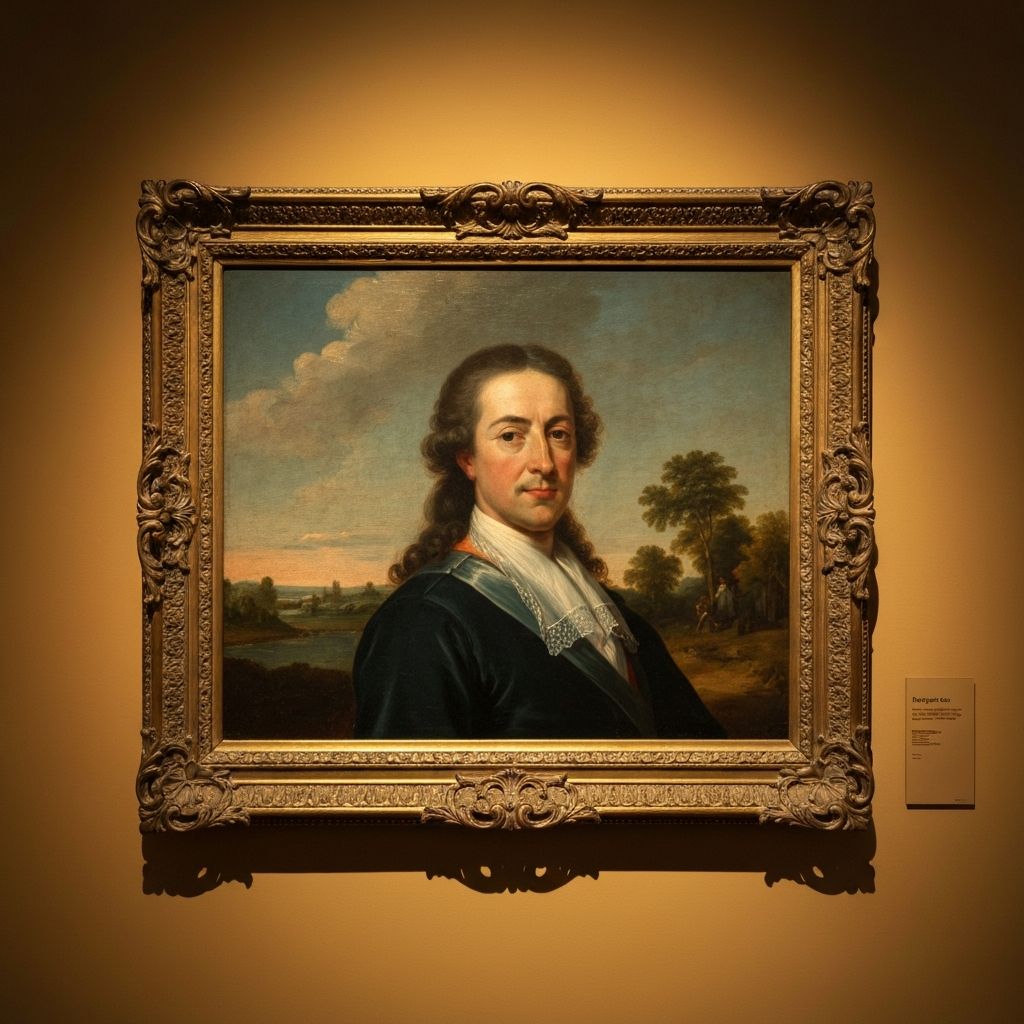
What Is My Oil Painting Worth? A Practical Guide to Valuing Old Paintings
You inherited a painting. Or you found one at an estate sale and now it hangs in your hallway while you wonder whether it cost you twenty euros or whether you have something genuinely significant on your hands. This guide walks through every factor a professional appraiser considers, the databases worth searching, the mistakes that lead people to wildly wrong estimates, and the point at which you should stop doing your own research and call in a specialist.
Three Values, Not One: Insurance Value, Replacement Value, and Market Value
Before anything else, understand that no painting has a single "worth." It has several values, each meaningful in a different context, and they can differ by a factor of three or more for the same work.
Insurance value (also called declared value) is the figure your insurer uses to calculate your premium. It typically reflects the cost to replace the painting with a comparable work of equivalent quality and period. Because that replacement cost includes dealer margins, restoration costs, and import duties, insurance values tend to run high. If your insurer asks for a valuation, a certified appraiser will provide an insurance certificate with the highest defensible number.
Replacement value is conceptually similar but more specific: what would you actually pay today, in the current market, to acquire an equivalent work from a reputable gallery or auction house? This figure includes buyer's premiums (typically 25 to 30 percent on top of the hammer price at major houses such as Christie's or Sotheby's) and reflects current supply and demand for a specific type of work.
Market value (also called fair market value or hammer value) is what a willing buyer, fully informed, would pay a willing seller in an arm's-length transaction. This is the figure that matters when you are considering selling. At a public auction, market value is the hammer price, before any buyer's premium. At a dealer, it is the price a knowledgeable buyer would negotiate after factoring in that the dealer needs a margin to survive.
A painting insured for €15,000 might realise €6,000 at auction and sell at a dealer for €9,000. None of those figures is wrong. They simply answer different questions.
This distinction matters practically. People who inherit paintings often receive insurance valuations from estate appraisers and then feel cheated when auction houses offer much less. The appraisal was not dishonest. The contexts were simply different. For a deeper exploration of this distinction in the context of antiques generally, see our article on appraisal value vs. market value.
Five Factors That Determine an Oil Painting's Value
Every painting question ultimately reduces to five variables. Get these right and you will have a reliable estimate. Get even one wrong and the number is meaningless.
Artist Attribution: Signed, Unsigned, School Of, Circle Of
Attribution is the single most powerful value driver in the painting market. The difference between a confirmed work by a listed artist and the same canvas attributed to their school can easily be a factor of ten or twenty.
The terminology follows a hierarchy that auction houses including Christie's, Sotheby's, and Bonhams have standardised and published in their conditions of sale:
- Full name attribution ("Jan van Goyen"): the house is confident the work is by the named artist.
- Attributed to ("Attributed to Jan van Goyen"): probably by the artist but not certain enough for the full name.
- Circle of ("Circle of Jan van Goyen"): made by someone working in close proximity to the artist, possibly a pupil or studio assistant, during the artist's lifetime.
- Follower of ("Follower of Jan van Goyen"): stylistically influenced by, but likely working at a later period or in a different place.
- School of ("Dutch School, 17th century"): consistent with the period and regional tradition but no specific attribution possible.
- After ("After Jan van Goyen"): a copy, likely later, of a known composition.
Each step down this ladder represents a significant reduction in value. A signed, documented Jan van Goyen river scene in good condition might sell at a specialist Dutch painting auction for €80,000 to €200,000. An unsigned work of equivalent quality attributed to his circle might achieve €8,000 to €25,000. A competent later copy, however charming, might sell for €500 to €2,000.
A signature on the front of a canvas is a starting point, not a conclusion. Signatures are the single most forged element in the painting market. A signed canvas requires corroborating evidence: stylistic consistency, period-appropriate materials, provenance documentation, and ideally catalogue raisonne entries or RKD artist records. The RKD (Rijksbureau voor Kunsthistorische Documentatie) in The Hague is the primary authority for Dutch and Flemish artists, and its artist database at rkd.nl is free to search. For non-Netherlandish painters, Bénézit's Dictionary of Artists (accessible through many library systems) covers over 170,000 artists worldwide and remains the standard reference in auction house research departments.
An unsigned painting is not automatically worthless. Many artists rarely signed their work (Vermeer signed selectively; Frans Hals signed inconsistently). Quality, subject, and technical analysis can support an attribution argument. But the burden of proof is higher and the transaction costs (expert opinions, technical analysis) are typically only justified when the work is already believed to have significant value.
Condition: Craquelure, Repaints, Relining, Varnish Yellowing
The condition of an oil painting affects both its monetary value and its attraction to buyers. Condition issues fall into two broad categories: those that are stable and acceptable, and those that represent ongoing damage or previous interference that compromises the original paint layer.
Craquelure (the fine network of cracks visible across the paint surface of old paintings) is, in itself, not a problem. It is simply the paint contracting and expanding over centuries as temperature and humidity fluctuate. Age craquelure follows the weave of the canvas or the grain of a panel and is remarkably regular in pattern. Artificial craquelure, induced in forgeries by baking or by the application of dilute acids, tends to be shallower, more uniform, and geometrically suspicious under a loupe.
Flaking or lifting paint is a critical condition issue. Even a small area of active flaking signals instability and potential loss. Conservation treatment is expensive (typically €500 to €3,000 for a moderate-sized canvas depending on severity) and any treatment, however skilled, leaves a trace visible under UV light or X-ray.
Repaints are areas where original paint has been replaced, whether to cover damage, to update a composition, or in some cases to obscure a different signature. Under ultraviolet light, repaints typically fluoresce differently from the aged original paint layer. Significant repaints in the main subject of a painting reduce value substantially. Repaints in the sky or background, if well executed, are more tolerable to buyers.
Relining refers to the process of attaching a new canvas to the back of the original when the original canvas has become fragile. Relining was standard practice through the mid-20th century and is not in itself a defect. However, it erases information on the back of the canvas (old labels, collector stamps, stretcher marks) that can be valuable for provenance research. It can also, if done poorly, flatten the impasto texture of the original paint. A relined painting is neither good nor bad until you examine the execution.
Yellowed varnish is one of the most misunderstood condition issues. An old, yellowed varnish layer makes a painting look darker and warmer than the artist intended. Removal by a conservator can dramatically alter the appearance and is sometimes described by sellers as a "restoration," though it is really cleaning. Cleaned paintings can look surprisingly different from expectations, for better or worse. Buyers at a major auction will pay more for a well-cleaned painting than a dirty one, but they want the cleaning to have been done before the sale, not promised.
Support also matters. Canvas is more common and more resilient to humidity fluctuations than panel. An oak panel in good condition, with no splits or warping, is essentially the original support the 15th or 16th century artist used. A panel with cradling (wooden battens applied to the back to prevent warping) has been treated, which can restrict natural movement and sometimes cause new cracking over time.
Provenance and Exhibition History
Provenance is the documented ownership history of a painting. It answers the question: where has this work been since it left the artist's studio?
Strong provenance has two functions. First, it corroborates attribution. A painting that appears in an artist's correspondence, is listed in a 19th-century collection catalogue, and then traces through a documented sequence of sales is far more likely to be genuine than one with no history before 1970. Second, provenance reassures buyers about legal title. The 1970 UNESCO Convention on cultural property is the standard benchmark: a painting with documented ownership before 1970 faces substantially fewer legal challenges than one that emerged from obscurity after that date.
Specific provenance elements that add value in the market:
- Named collections, particularly those of well-documented collectors or aristocratic families
- Exhibition labels on the back of the canvas (most European exhibitions stamped or labelled exhibited works)
- Auction house lot numbers on stretcher bars or canvas backs, particularly from established houses
- Period photographs showing the painting hanging in a documented interior
- Mentions in dealer stock books or gallery archives
War and displacement history is a separate but related concern. Under the 1998 Washington Principles, works looted during the Nazi period between 1933 and 1945 remain subject to restitution claims regardless of subsequent sales. Any painting with a gap in provenance between those years that was previously in a Central European or German-Jewish collection should be researched through the Art Loss Register (artloss.com) before any transaction.
Subject Matter and Period: Fashion Cycles in the Painting Market
The painting market has fashions, and they shift over decades. Understanding where a category currently sits in the cycle is essential to realistic valuation.
As of 2026, the strongest demand at auction falls in several specific areas. Contemporary and modern works (post-1960, blue-chip artists) continue to hold or appreciate. Old Masters with strong museum-quality attributions remain steady at the top end. Belgian and Dutch 19th-century genre painters are performing well at regional auction houses including Bernaerts in Antwerp, where well-attributed Flemish school works with documented provenance regularly achieve five-figure results.
Categories that are currently softer than their peaks of twenty or thirty years ago include Victorian narrative paintings, large-format academic salon paintings, and 18th-century decorative portraits of minor aristocracy. These works can still be beautiful, but market appetite is thinner than it was, and price expectations set during the peak years of the 1990s and 2000s are often no longer realistic.
Subject matter within a period matters too. For 17th-century Dutch painting, Italianate landscapes by Dutch artists who travelled to Rome (the so-called Italianisants) are valued differently from domestic interiors. Marines command different premiums from flower still lifes. Within flower still lifes, certain species and arrangements signal specific artists and therefore bring specific prices. This granularity is why specialist auction houses exist: a Flemish flower painting sold in a general sale will typically achieve less than the same work consigned to a dedicated Old Masters sale at Christie's or Bonhams London.
Portraiture presents a specific challenge. Unless the sitter is identified and historically significant, portraits are notoriously difficult to sell. A magnificent 18th-century portrait of an unknown gentleman may be technically superior to a modest landscape by a named artist but will likely sell for far less. Buyers want something to hang and talk about, and an anonymous face gives them nothing.
Size, Medium, and Support
Counterintuitively, larger does not mean more valuable in the painting market. Auction house specialists often describe this as the "interior size" problem: buyers are limited by the walls of their homes and offices. A 60 by 80 cm painting is far more flexible for a private buyer than a 200 by 300 cm canvas that requires an institutional setting. Very large paintings frequently underperform at auction relative to smaller works of equivalent quality by the same artist.
The optimal size range for the broadest buyer pool, in most periods and categories, runs from roughly 40 by 50 cm to 80 by 100 cm. Miniature paintings (under 20 cm) occupy a specialist niche with a dedicated collector base but a much smaller market overall.
Oil on canvas is the standard medium. Oil on panel (particularly oak, which was standard in Netherlandish painting before 1650) signals an earlier period and is appropriate for genuine Old Master attributions. Oil on copper was used by certain 16th and 17th century specialists and commands a premium when in good condition. Tempera, gouache, and watercolour are distinct techniques with different market dynamics and are not considered oil paintings in the standard classification.
How to Research Your Painting Before Paying for an Appraisal
Before commissioning a professional appraisal (which can cost €80 to €250 for a written certificate) there is significant research you can do for free. The goal is to narrow down the attribution, period, and approximate value range enough to decide whether a professional appraisal is worth the investment.
Step 1: Photograph everything. Front, back, all four corners, any signature or monogram, any labels on the stretcher bars or canvas back, the back of the frame, and any stamps or stickers. Work in natural light or with a neutral daylight lamp. These photographs will be the basis of every subsequent step.
Step 2: Research the signature. A legible signature is your most direct route to attribution. Search the exact spelling (accounting for handwriting ambiguity) on RKD Artists at rkd.nl for Dutch and Flemish painters. For broader coverage, the online Bénézit accessible through subscription services or via library access covers artists from most periods and nationalities. The Art Signature Dictionary at artsignaturedictionary.com allows comparison of handwritten signatures against a large database of indexed examples.
Step 3: Read the back of the canvas. Old auction house stickers carry lot numbers and often the name of the house and the year of the sale. Bernaerts (Antwerp), Hotel Drouot (Paris), Christie's, and Sotheby's all maintain records. If you can identify a lot number, the auction house archives department may be able to provide the original catalogue entry, which frequently names a previous owner and sometimes an attribution history.
Step 4: Search auction records. If you have a name, search that artist's auction history on Mutualart, Artprice, or Invaluable (details on each in the next section). Look for comparable works in terms of subject, size, and condition. This will give you a price range.
Step 5: Compare style and technique. If you have an attribution candidate, find good photographs of documented works by that artist in museum collections or catalogue raisonne entries. Look at brushwork, colour palette, how skies and water are handled, how faces are constructed. Stylistic analysis is not a substitute for expert opinion but it can quickly confirm or rule out a name.
Reading Auction Records: Hammer Price, Buyer's Premium, and Unsold Lots
Auction records are the most objective available evidence of market value. But they require careful reading.
The hammer price is the price the auctioneer's hammer falls at. It is what the buyer committed to pay before fees. This is the number most databases record and the one most relevant to understanding what a seller receives (minus the seller's commission, typically 10 to 15 percent of the hammer price).
The total buyer's cost is the hammer price plus buyer's premium. At Christie's and Sotheby's, the buyer's premium in 2026 runs at approximately 26 percent on the first portion of the price, tapering on higher lots. At regional houses such as Bernaerts or Catawiki, rates differ. When you read that a painting "sold for €50,000," the buyer may have paid €63,000 or more all in. This matters when comparing to retail or dealer prices.
Estimates are published pre-sale ranges reflecting the house's view of likely demand. A painting estimated at €10,000 to €15,000 that hammers at €8,000 has sold below estimate but has sold. A painting estimated at €10,000 to €15,000 that hammers at €22,000 has exceeded expectations significantly, usually because two or more determined bidders were competing. Neither result invalidates the estimate as a guide to typical value.
Unsold lots (described as "passed" or "bought in" or given as "no result" in databases) are critically important data. If the same artist's works appear repeatedly unsold in auction records, that is a market signal. Either the reserves (minimum prices set by sellers) are unrealistic, or current demand for that category is genuinely weak. A painting that fails to sell at auction is not worthless, but it signals that the market price is below what sellers have been asking.
Look for the sell-through rate when researching an artist. An artist whose works sell 80 percent of the time they appear at auction has healthy market demand. An artist with a 30 percent sell-through rate is in a thinner market and prices should be adjusted accordingly.
Free vs. Paid Resources for Auction Research
Being realistic about what each resource offers is more useful than pretending free databases are sufficient for everything.
Artprice (artprice.com) is the largest painting auction database globally, covering over 30 million auction results from more than 7,500 houses. The basic search (artist name, limited results) is free but gives partial information. Full access to price histories, detailed lot information, and trend analytics requires a subscription, starting at around €30 per month. For any painting where an attribution is possible, this is typically worth it for a one-month subscription.
Mutualart (mutualart.com) provides auction results with a comparable coverage to Artprice. A free tier exists with limited search results. Paid plans allow full record access. Mutualart's alert system (notifications when an artist appears at auction) is a useful tool for collectors tracking specific names over time.
Invaluable (invaluable.com) aggregates live and past auction results from over 5,000 auction houses, including many regional houses not covered by Artprice. Coverage of Belgian, Dutch, and German regional auctions is often better than the larger databases. Basic search results are free; detailed lot access may require registration.
RKD Netherlands Art History Institute (rkd.nl) is free and authoritative for Dutch and Flemish artists. Its artist database includes biography, bibliography, and in many cases linked auction and exhibition records. For any Dutch or Belgian painting, this should be the first stop.
Christie's and Sotheby's online sale archives are free to search and go back many years. Searching by artist name within the respective house's archives gives a focused view of how they have handled that category and at what levels.
Catawiki runs continuous online auctions with a specialist editorial team that assigns lots to expert-reviewed categories. Their past results are searchable and give a useful indication of middle-market prices for works that do not reach the threshold for Christie's or Bernaerts.
When to Call a Professional Appraiser vs. When AI Valuation Is Enough
A professional written appraisal is necessary in four specific situations:
- Legal proceedings: estate division, divorce settlement, tax reporting, or customs valuation all require a signed certificate from a certified appraiser. An AI assessment or online research does not satisfy this legal requirement.
- Insurance documentation: most insurers will accept a written appraisal from a certified appraiser for scheduling a painting on a fine art policy.
- Sale by a major auction house: Christie's and Sotheby's specialists will assess works themselves, but they are acting in the interest of the sale, not in yours as an independent party.
- Attribution dispute: if you believe you have a significant work and the attribution is contested, you need a physical inspection by a specialist who knows the catalogue raisonne and can commission technical analysis (pigment testing, dendrochronology, infrared reflectography).
Outside those four situations, an AI-based preliminary assessment from photographs is often entirely adequate. If you are deciding whether to bother with a paid appraisal, an informed AI estimate that suggests a market value of €300 to €600 answers your question: the appraisal fee is not justified. If the same analysis suggests €8,000 to €15,000 with strong attribution indicators, then the investment in a professional opinion and potentially a specialist auction is well worth making.
If you are simply curious about what is on your wall, for insurance planning purposes, or to inform a potential sale through a regional auction house or Catawiki, an AI valuation from clear photographs provides genuine value without the wait time and cost of a physical appraisal.
Get a First Valuation From Your Photos
Sign up and get 1 free credit for your first analysis. After that, buy credit packs starting from €0.60 per analysis.
Analyse Your PaintingHow AntiqBot's ArtCheck Module Values Oil Paintings from Photos
AntiqBot's ArtCheck module is built specifically for paintings, drawings, and works on paper. It does not use a generic image-recognition approach. The module is configured around the same external authoritative references that an expert appraiser consults: RKD for Dutch and Flemish attribution, Bénézit for broader artist identification, Mutualart and Artprice for market context, and specialist signature dictionaries for handwriting comparison.
When you upload photographs of a painting, the module analyses multiple layers simultaneously. It reads visible signatures or monograms and cross-references them against known handwriting patterns. It assesses stylistic elements (handling of light, compositional conventions, palette) against documented period characteristics. It evaluates condition indicators visible in the photographs: craquelure patterns, surface texture, any obvious retouching or darkening. And it generates a market valuation range based on comparable auction results, calibrated to the current market rather than historical peaks.
The output follows AntiqBot's standard five-tier verdict system, which runs from AUTHENTIC through to NOT AUTHENTIC, with intermediate levels for varying degrees of confidence. Each verdict is accompanied by the specific indicators that drove the conclusion, so you understand the reasoning rather than just receiving a number.
For oil paintings specifically, the module flags items that warrant in-person inspection: unusual craquelure patterns that might indicate later work on an aged support, signature placements inconsistent with the supposed period, compositional elements that suggest a copy rather than an original. These flags do not mean the work is inauthentic; they mean a photograph alone cannot resolve the question.
The valuation component outputs a market value range with reference to comparable auction results, specifying the confidence level and the factors that drive the range. A painting attributed with confidence to a listed artist will carry a tighter range than one categorised as "school of," where the range naturally spans a wider band.
Common Misconceptions About Painting Value
Age alone does not create value. This is the single most common misunderstanding. The antique trade is full of 18th and 19th century decorative paintings that are genuinely old, genuinely oil on canvas, and worth between €200 and €800. Age is a necessary condition for certain categories of value (a 17th-century Dutch master requires an old painting) but it is not sufficient. Hundreds of thousands of competent but unremarkable paintings were produced in every European century, and most of them trade at modest prices.
A beautiful or ornate frame does not make the painting more valuable. The frame and the painting are assessed separately. An original period frame in excellent condition (gilded French Louis XV, for example) can add €500 to €2,000 of independent value. A later reproduction frame, however impressive, adds essentially nothing to the painting's auction estimate. Appraisers routinely note when a painting would benefit from a better frame, and when a painting is in a frame that exceeds its own value.
Gallery stickers on the back do not confirm quality or value. A sticker from a 1970s gallery or a regional art fair simply records that the painting passed through that venue. It tells you something about provenance but nothing about artistic quality or current market value. Many galleries that exhibited and sold paintings are no longer in existence and their archives unavailable, making the sticker useful as a provenance record but not as a quality marker.
A painting does not need to be by a famous artist to have value. In the mid-market, many collectors specifically seek quality works by lesser-known but documented artists. A well-painted coastal scene by a good Belgian second-tier artist of the late 19th century (someone listed in Bénézit and with a handful of auction records) can regularly achieve €1,500 to €5,000 at Bernaerts or a similar specialist house. The work does not need to be a household name.
Paintings bought at large auction houses are not automatically worth more. A painting sold through Christie's or Sotheby's has passed their editorial threshold and benefits from their global marketing reach, which in competitive conditions drives prices higher. But works also pass through these houses that sell modestly. The auction house's name is not a quality guarantee; it is a distribution channel.
Cleaning a painting before a sale is not always beneficial. A heavy, yellowed varnish layer obscures colour and detail. But removal by an unskilled hand can permanently damage the paint layer beneath. Before any cleaning, a conservator should examine the work under ultraviolet light to assess the condition of the original paint surface and the nature of the varnish. Cleaning for resale is a decision to be taken by a conservator, not by the owner.
What to Do If Your Painting Turns Out to Be Valuable
If your research, an AI assessment, or a preliminary opinion from a specialist suggests that your painting may be worth more than you expected, a sequence of steps maximises the outcome.
Do not clean it or restore it. Any work done now, even well-intentioned, creates a new condition layer that obscures what was original. Buyers and auction house specialists prefer to see a painting in the condition it arrived in and make their own decisions about conservation.
Document everything you know. Write down the full provenance: who owned it before you, how you acquired it, whether you have any paperwork, photographs, or correspondence relating to it. Even partial provenance is valuable. Gaps should be acknowledged honestly rather than filled speculatively.
Register it with the Art Loss Register (artloss.com) if it has any possibility of a complicated history. This is a free check that confirms whether the work appears in the international database of stolen or looted art. A clean Art Loss Register certificate adds to buyer confidence and is required by some auction houses for higher-value lots.
Get a written specialist opinion before consigning anywhere. A written opinion from an independent specialist, ideally one who works on the relevant period or school, gives you an informed view before an auction house specialist sees the work. Auction houses have their own interests (they want works they can sell efficiently) and an independent opinion provides a useful counterpoint to their assessment.
Choose the right sales channel for the work. A strong Dutch 17th-century attribution belongs in a specialist Old Masters sale at Christie's, Sotheby's, or Bonhams London, where the global buyer pool for that category is concentrated. A quality 19th-century Belgian landscape belongs at Bernaerts in Antwerp, where that collector base is strongest. A decorative work of modest value may achieve a better net result at Catawiki than at a major house, where minimum lot value thresholds and commission structures would eat most of the return.
Consider timing. The painting market has seasonal rhythms. Major Old Masters sales at Christie's and Sotheby's are held in December and July in London and New York. Regional houses time their specialist sales to align with collector schedules. Consigning a painting for the right sale at the right time can make a meaningful difference to the final result.
If you are considering a sale and have questions about how to approach an estate or inherited collection more broadly, our guide on what to do when you inherit antiques covers the full process from initial inventory to final sale.
Frequently Asked Questions
Does an old painting automatically have value?
Age alone does not create value. A 19th-century decorative piece by an unknown provincial painter can sell for under €200, while a 20th-century work by a sought-after artist may reach six figures. Attribution, condition, and current market demand matter far more than age.
How do I find out who painted my oil painting?
Start by photographing any signature, monogram, or label on the front and back of the canvas. Compare against RKD (rkd.nl), Bénézit, and signature dictionaries. For Dutch and Flemish works, RKD Artists is the primary authority. If the signature is unclear, a specialist or AntiqBot's ArtCheck module can assist with comparison against documented examples.
What is the difference between insurance value and market value for a painting?
Insurance value (replacement value) is typically the highest figure: what it would cost to replace the painting with a comparable work today, including auction premiums and dealer margins. Market value is the realistic price a willing buyer pays a willing seller, usually 30 to 60 percent lower than the insurance figure. Both figures are legitimate; they serve different purposes.
Is a painting worth more if it has a frame?
An original period frame in good condition can add value, sometimes significantly so for Old Masters. However, a later replacement frame, however ornate, adds little to the painting's value. Appraisers assess the painting and frame separately. A very good painting in a mediocre frame remains a very good painting.
Can I get a painting valued from a photo?
A photo-based assessment can give a reliable first indication of condition, style, period, and approximate value range. It cannot fully substitute a physical inspection for issues like hidden repaints under varnish or structural canvas damage. AntiqBot's ArtCheck module provides an AI-powered valuation from photos, flagging areas that warrant in-person review. For legal, insurance, and high-value attribution purposes, a physical appraisal by a certified specialist remains the standard.
How much does a professional painting appraisal cost?
In Belgium and the Netherlands, a written appraisal from an independent expert typically costs between €80 and €250 for a single work. Major auction houses like Bernaerts or Sotheby's may offer free preliminary estimates for works they consider suitable for sale, but these estimates serve the house's interest in consigning the work and are not independent valuations. For legal or insurance purposes, use a certified independent appraiser.