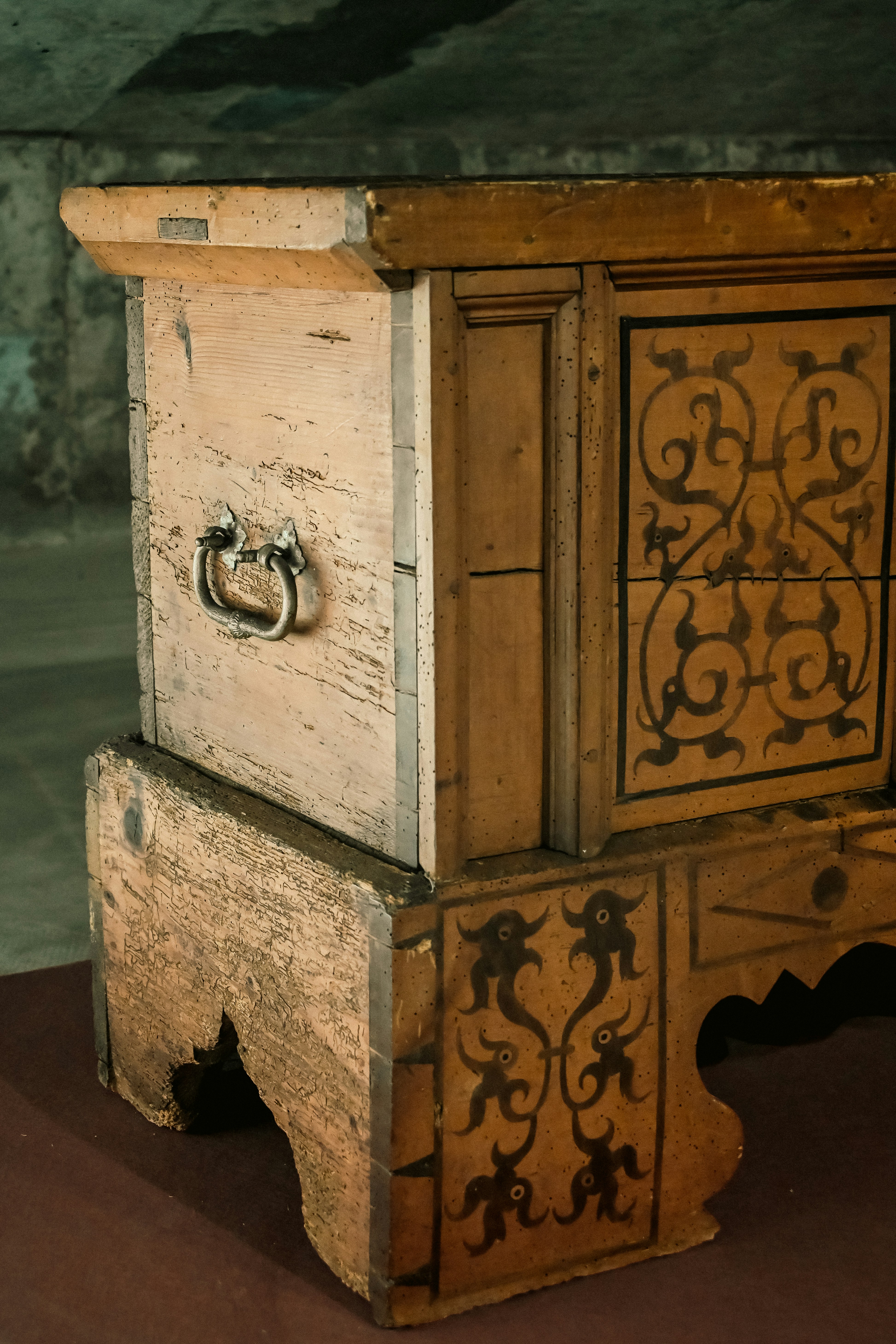
Antique Furniture Style Identification: Periods, Woods and Construction
You are standing in a preview hall. Around you, catalogues fan out on white-draped tables and a Bernaerts specialist murmurs into a phone. In front of you sits a chest-on-stand that someone has consigned as "17th-century Flemish." The veneer is rich, the mounts are impressive, and the price estimate is substantial. But something does not quite add up. The proportions feel a generation too late. The feet look replaced. You have forty seconds before the viewing closes. This guide exists for that forty seconds.
Why Antique Furniture Style Identification Requires Multiple Signals
The first mistake most buyers make is searching for the single clue that settles everything. A dated maker's label, a royal inventory number, a provenance sticker from a famous estate sale. Those things exist, but they are the exception. The average piece that comes to auction at Christie's, Bonhams or a regional house like Bernaerts arrives without any of them. What it does bring is a constellation of physical evidence, and reading that constellation is what antique furniture style identification actually means in practice.
Period furniture was not made in isolation from its time. The tools available to a craftsman in 1680 were fundamentally different from those available in 1840. The woods fashionable at court in 1720 had not yet arrived in provincial workshops by 1730. The hardware a locksmith could supply in 1760 changed completely by 1800. Each of these historical constraints left marks on the furniture that cannot be easily faked in their entirety. A reproduction can copy the visual style. It cannot simultaneously fake the right wood species, the correct saw-mark pattern, the appropriate nail chemistry and the period-correct glue failure all at once.
The discipline of furniture dating therefore works by accumulation. You form a hypothesis based on the visual style, then you test it against the wood, the construction, the hardware and any marks. If all four layers agree, your confidence rises. If one layer contradicts the others, you have a problem to explain, whether that is a later restoration, a composite piece, or an outright reproduction.
The four-layer test: Style (visual period indicators) + Wood (species and figuring) + Construction (joinery, saw marks, tool marks) + Hardware (nails, pulls, locks). All four should point to the same generation. Disagreement between layers is the most important finding in any furniture examination.
The Major European Furniture Periods and Their Hallmarks
What follows is a working guide to the periods you will encounter most often in the European saleroom and in private collections. Dates are approximate; regional workshops lagged behind court fashions by a decade or more, and revival pieces complicate every boundary.
Baroque / Louis XIV: 1640 to 1715
The furniture of the Sun King's France and its European contemporaries is characterized above all by weight and symmetry. These are pieces that announce power. Cabinets and commodes stand on massive bun feet or heavy turned legs connected by carved stretchers at floor level. Surfaces carry deep, architectural relief carving: acanthus leaves, sunbursts, grotesque masks, military trophies. Gilding is generous.
The signature technique of the French royal workshops under Andre-Charles Boulle is the marquetry that bears his name: brass and tortoiseshell (or pewter and horn) cut together as a sandwich and separated, producing mirror-image panels called premiere-partie and contre-partie. Genuine Boulle marquetry from the period is identifiable by the fineness of the brass fillets, the quality of the tortoiseshell (thick, translucent, dyed red or green beneath) and the characteristic way the brass oxidizes to a deep brown-gold rather than the bright yellow of later brass. Later 19th-century Boulle revival pieces are common and can be very fine, but the tortoiseshell is typically thinner, the brass crisper and harder-looking.
Ebony and ebonized fruitwood are the prestige veneers. Solid oak or walnut is the carcase wood underneath. Upholstery where present is in cut velvet, brocade or tapestry, with visible brass-headed tacks along the seat rail. The overall silhouette is rectilinear: straight legs, flat tops, vertical proportions.
Regence and Rococo / Louis XV: 1715 to 1774
The death of Louis XIV in 1715 released French taste from its architectural severity. What followed over the next sixty years is the most immediately recognizable of all furniture styles: the Rococo. The straight line disappears. Everything curves. Legs adopt the S-shaped cabriole profile. Carcases bow outward on the front and sides (the "bombe" form). Ornament becomes asymmetric for the first time in Western furniture history, with shells, water reeds, and irregular rock formations deployed without the bilateral symmetry that all previous decoration had assumed.
Key identification markers for authentic Louis XV pieces include the serpentine front, the sabots (cast metal shoes on the cabriole leg feet, typically in gilt bronze), the continuous curve from leg to apron without a break, and the use of kingwood, tulipwood and amaranth in parquetry veneer. Lacquer panels in the Chinese or Japanese taste (vernis Martin in the French version) are another period signature: flat, varnished surfaces imitating Asian lacquer, often in shades of green, red or black.
The drawer construction on genuine Louis XV commodes shows hand-cut dovetails at the sides and a characteristic dustboard between each drawer. The back panels are typically in secondary wood (oak or poplar) and show the rough, slightly uneven surface of hand-planing. Gilt-bronze mounts are cast, chased and gilded to a warm, slightly matte surface rather than the hard bright gilt of later electroplated hardware.
Neoclassicism / Louis XVI and English Georgian: 1774 to 1800
By the early 1770s, the excavations at Herculaneum and Pompeii had been producing illustrated publications for two decades, and European taste swung decisively back toward antiquity. The Rococo curve was abandoned. The straight line returned. Legs became round and tapered, often decorated with fluting (vertical grooves) or reeding (vertical ridges). Tops were flat. Ornament shifted to medallions, urns, swags of husks, ribbons and paterae (flat circular or oval rosettes).
In France this is the Louis XVI style, named for the king who was executed before most of it was made. In England it runs under several headings: Adam style (after the architect Robert Adam), Hepplewhite (from the posthumously published pattern book of 1788) and Sheraton (from Thomas Sheraton's pattern books of the 1790s). The English and French versions share the fundamental neoclassical grammar but differ in details: English work tends toward lighter scale, satinwood and painted decoration; French work maintains a grander scale and more elaborate gilt-bronze mounts.
Mahogany is the dominant wood in England from the 1730s onward and reaches its full expression in the Georgian period. Flame mahogany veneer on doors, satinwood crossbanding on drawer fronts, inlaid stringing lines in contrasting woods: these are the visual signatures. The tapered leg, whether in square section (Hepplewhite) or round-turned (Sheraton), is the fastest identification point for this period.
Empire, Directoire and Biedermeier: 1800 to 1840
Napoleon's campaigns in Egypt in 1798 triggered a wave of Egyptian motifs in European decorative arts: sphinx heads, lotus columns, crocodile feet, winged scarabs. Combined with Greek and Roman military references (fasces, lictors' axes, stars, laurel wreaths), this produced the Empire style, which spread across Europe with the French army and diplomatic influence.
The furniture is massive, architectural and deliberately imposing. Mahogany, often in large uninterrupted panels of book-matched veneer, is the primary surface wood. Secondary woods include light maple and fruitwood. Mounts are in gilt bronze, cast rather than chased, with harder, brighter gilding than the 18th century. Ormolu (mercury-gilded bronze) at its finest is an Empire period achievement.
In the German and Austro-Hungarian lands, the Empire style was absorbed and domesticated into Biedermeier (roughly 1815 to 1848): lighter in scale, using pale fruitwoods (cherry, pear, apple) and maple against dark ebonized columns or pilasters, with minimal bronze ornament replaced by shaped veneers doing decorative work on their own. The Biedermeier sofa with its scrolled ends and the writing desk with its fall-front are the defining forms. This is furniture for the prosperous bourgeoisie, not the court.
Victorian Eclecticism: 1837 to 1901
The Victorian period is the hardest to summarize because it contains multitudes. The Great Exhibition of 1851 put every historical style on display simultaneously, and British manufacturers spent the rest of the century mining the catalogue. You get Gothic revival chairs, Moorish smoking rooms, Japonesque cabinets, Elizabethan buffets and Renaissance sideboards, sometimes all in the same house.
A few consistent markers help. Walnut, which had fallen from fashion in the mid-18th century, returns as the prestige Victorian wood, now in burr and figured veneers on drawing-room furniture. Machine-cut veneers (post-1840) are thinner and more uniform than hand-cut veneers: under a raking light you can sometimes see the circular saw marks on the veneer face. Papier-mache furniture lacquered black and inlaid with mother-of-pearl is a specific Victorian signature (roughly 1840 to 1870). The balloon-back dining chair is another: its curved back rail and carved central splat are ubiquitous in Victorian interiors.
Upholstery changes significantly in this period. The coil spring, introduced around 1828 and in wide use by 1840, produces the characteristic deep-buttoned, tufted surface of Victorian seating. The springs sit in a webbed base and create the rounded, generous profile of Victorian sofas and armchairs that is quite different from the flatter, more architectural stuffing of 18th-century seats.
Arts and Crafts and Art Nouveau: 1880 to 1910
These two movements share a rejection of Victorian historicism but reach opposite conclusions from it. The Arts and Crafts movement, led in England by William Morris and his circle and in the United States by Gustav Stickley, turned back to the medieval workshop: visible joinery, unadorned oak, hand-hammered copper hardware, mortise-and-tenon construction left exposed as a design statement. The proportions are rectilinear and plain to the point of austerity. The through-tenon with its wedged key is the signature construction detail.
Art Nouveau, developed simultaneously in Belgium (Victor Horta), France (Emile Galle, Louis Majorelle), and across Europe under various national names, went in the opposite direction: organic, curving, botanical, often insisting on the unity of structure and ornament. Majorelle's furniture grows from the floor like plants. Galle's marquetry depicts dragonflies, seed pods and water lilies in dozens of species of wood. The whiplash line, asymmetric and sinuous, is the visual signature.
Both movements produced limited quantities compared to Victorian factory output, and both are now actively collected. Genuine Arts and Crafts pieces show the hand of the maker: slight irregularities in the tenon cuts, hand-hammered rather than cast copper hardware, genuine patina from oxidation rather than staining. Genuine Majorelle marquetry is extraordinarily fine and can be verified against his documented designs; a large body of later reproduction marquetry furniture circulates, often with correctly attributed signatures.
Art Deco: 1920 to 1940
The Paris Exposition of 1925 gave the style its name retroactively, but Art Deco furniture had been developing since before the First World War. The defining characteristics are geometric veneer work (sunbursts, fan patterns, stepped zigzags), the use of exotic and newly accessible woods (macassar ebony, amboyna, zebrawood, thuya burl), chrome or gilded metal details, and lacquer surfaces in black, red or ivory.
The great Parisian cabinetmakers of the period (Ruhlmann, Leleu, Dunand, Sue et Mare) produced signed, documented pieces that achieve high prices at Christie's and Sotheby's. Below that level, a large body of high-quality French and Belgian production furniture used the same design vocabulary without individual signatures. The construction quality of good Art Deco pieces is extremely high: tight veneers, clean lacquer, precise inlay. The wood itself often provides the dating: amboyna and macassar ebony were specifically fashionable in the 1920s and 1930s and their use in a modernist design context is a reliable period indicator.
Reading the Wood as Dating Evidence
The wood species in a piece of furniture is not merely a material choice. It is a historical signal. Different woods came into fashion at specific moments, and the fashion history is well documented.
Oak was the dominant furniture wood in northern Europe from the medieval period through the late 17th century. Finding thick, heavy oak as the primary show wood in a piece with Baroque or earlier ornament is consistent with pre-1700 dating. Oak also returned in the Gothic revival of the 1840s to 1870s and again in Arts and Crafts work from 1880 onward, so oak alone is not sufficient. You need to combine it with construction evidence.
Walnut had two great eras. The first was roughly 1660 to 1740, when it displaced oak in court furniture across France and England, providing a finer, more workable surface for carving and marquetry. It was then largely superseded by mahogany. The second era is Victorian, from about 1850 onward, when figured burr walnut became the prestige wood for drawing-room furniture. The grain character differs: 17th and early 18th-century walnut is typically straight-grained or gently figured; Victorian burr walnut has the highly blistered, irregular figuring that comes from the root zone.
Mahogany from Cuba and Honduras became available in England after about 1730 when import restrictions were relaxed. Its large figure, stability and workability made it immediately dominant in fine cabinet work. A piece in solid mahogany or Cuban mahogany veneer with Georgian-period design is consistent with post-1730 dating for England. For continental Europe, the timeline runs a decade or two later. Mahogany is also the dominant wood of the Empire period, often in very large book-matched panels.
Rosewood in European furniture is primarily associated with the Regency period (roughly 1811 to 1830) in England and the concurrent Restoration and early Victorian period on the continent. The distinctive dark, purple-brown grain with black streaks is immediately recognizable. It returns in Victorian work and in Art Deco, but the Regency period produced a specific form, the sofa table on trestle legs or the circular library table, where rosewood appears almost universally.
Satinwood is a Georgian marker in England, specifically the Adam and Sheraton period of the 1770s to 1800s. Its pale, silky luster was used in veneered panels often combined with painted decoration. Later satinwood Edwardian revival pieces reproduce this aesthetic closely enough that construction examination becomes essential.
Secondary woods matter too. The wood used for drawer linings, back panels and internal framing was a practical choice, not a stylistic one, and it followed regional workshop traditions. French cabinetmakers typically used oak or poplar for secondary work; English craftsmen favored oak; American makers often used tulip poplar or white pine. Matching the secondary wood to the expected regional tradition is another layer of confirmation.
Construction Details as Dating Evidence
No single area of furniture examination provides more reliable dating evidence than the construction of joints, the marks left by tools, and the way wood surfaces were finished before assembly. These details are largely invisible from the front of a piece and are rarely faked in reproductions because the effort required to fake them correctly exceeds the commercial logic of forgery at most price levels.
Dovetail joints
The dovetail joint, used to connect drawer sides to drawer fronts and backs, is one of the most informative dating tools available. Before approximately 1840, all dovetails were cut by hand. The cabinetmaker scribed the joint, sawed the tails freehand and chopped the pins with a chisel. The result is functional but slightly irregular: the tails vary fractionally in width, the spacing is not perfectly equal, and close examination under good light shows chisel marks at the base of each pin socket.
Machine-cut dovetails, which arrived with factory production in the 1840s and were widespread by 1860, are perfectly uniform. Every tail is identical. The spacing is mathematically even. The saw marks are circular rather than straight (early machines used rotating saw blades). These two signatures, uniformity and circular saw marks, are the diagnostic markers of post-1840 production.
A third type, the router-cut dovetail of 20th-century factory furniture, is even more distinctive: the tails have a slightly rounded profile at the base rather than the crisp 90-degree angle of hand or machine cutting, because a spinning router bit cannot produce a perfectly sharp inside corner.
Saw marks on secondary surfaces
The back panels, drawer bottoms, internal shelving and dustboards of a piece of furniture carry saw marks from the original processing of the timber. Before about 1830, wood was sawn in a pit saw (vertical two-man saw) or a water-powered frame saw. Both produce straight, slightly irregular saw marks on the cut surface: parallel lines running across the grain, spaced at roughly 2 to 4 millimeters depending on the set of the blade.
The circular saw was patented in the early 19th century and in wide use in cabinet shops by the 1840s. Circular saw marks are arcs, not straight lines. When you look at the back panel of a drawer or the underside of a shelf, you are effectively looking at a record of the technology used to cut that wood. Straight marks mean pre-industrial, or deliberately hand-processed revival work. Curved marks mean post-1840 at the earliest.
Hand planes and surface preparation
Surfaces that were dressed by hand with a bench plane have a characteristic rippled texture visible under raking light: the slight undulation left by each successive stroke of the plane iron. This texture is consistent across the surface but not perfectly flat. Machine-sanded surfaces from post-1860 production are flat but show the scratches of abrasive paper, often in a swirl pattern. The two textures are quite different in appearance and touch.
The inside surfaces of carcases, the backs of doors, the undersides of tops: all of these should show hand-plane marks on a genuinely pre-industrial piece. Finding machine-sanded surfaces inside an "18th-century" case piece is a strong indicator of later work.
Hardware as Dating Evidence
The brasses and ironwork on period furniture were made by specialist craftsmen and their methods changed significantly over the centuries. Examining hardware carefully, and comparing it with the rest of the piece, is essential to a complete assessment.
Nails and fasteners
Hand-forged iron nails, used in furniture construction before approximately 1800, are irregular in cross-section and taper unevenly toward the point. The head is slightly domed, struck by hammer, and often off-center. Cut nails, produced mechanically from flat iron plate from about 1790 onward, have a rectangular cross-section that tapers in only one plane, and their heads are more regular. Wire nails in the modern cylindrical form arrived in the 1880s and were universal by 1900. Finding wire nails in a purportedly 18th-century piece is a definitive anachronism.
Bail pulls and drawer hardware
The bail pull, the swinging brass handle on a drawer, went through a well-documented sequence of forms. The earliest type, from the William and Mary period (1689 to 1702), has a split-tail backplate (the "butterfly" or "bat's wing" shape) with a looped wire bail. Queen Anne period pulls (1702 to 1714) use a more elaborate engraved backplate. Chippendale-period pulls (1750s to 1780s) favor a shaped fretwork backplate with a heavier bail. The Federal and Sheraton periods brought pressed brass oval backplates with ball-end bails. Victorian work introduces turned wooden knobs and, later, machine-pressed brass escutcheons.
The texture of the brass itself is telling. Cast brass finished by hand-chasing has a slightly soft, hand-worked quality on the surface detail. Pressed or stamped brass has a harder, more mechanical quality. You can feel the difference with your thumb even before you look closely.
Lock mechanisms and escutcheons
Period furniture locks are hand-made mechanisms with slightly irregular internal components. The escutcheon, the keyhole surround, changed from a simple cut-out in early work to a separate applied plate in the 18th century, often in engraved brass, bone or ivory. Victorian furniture used stamped brass escutcheons with standardized keyhole shapes. The keyhole shape itself follows period conventions: earlier keyholes are larger and more irregular; later standardized locks produce the familiar small oval over rectangular form.
Upholstery Evidence
The upholstery on a period seat is rarely original. The outer fabric and padding are typically replaced every generation. But the substructure beneath the fabric can survive, and it tells a precise story.
Before approximately 1828, the stuffing of furniture seats was in curled horsehair, grass, or moss, supported by webbing straps interwoven across the seat frame and tacked to the rails. The profile of this flat-stuffed construction is relatively low and slightly firm. There are no springs beneath the stuffing.
The coil spring, introduced around 1828 and in wide general use by 1840, transformed upholstered furniture. Springs are tied down to the webbing, covered with a layer of canvas, and then stuffed above. The resulting profile is dramatically higher and more rounded than flat stuffing. If you press down on a Victorian sofa cushion and feel the give of springs beneath your hand, you are confirming a post-1828 construction date. A flat, firm resistance without spring-give is consistent with 18th-century construction, though re-stuffing may have removed the springs.
The tacks holding the fabric to the show rails are also informative. Hand-forged tacks (pre-1800) are irregular; cut tacks (post-1800) have the mechanical cut-nail profile. The presence of a large number of extra tack holes in the show rail of an 18th-century piece typically indicates multiple re-upholsterings over the years, which is itself a form of provenance evidence.
Labels, Stamps and Guild Marks
Documentary evidence is rare but, when present, highly reliable. Knowing what to look for can make the difference between a good attribution and a confirmed one.
French royal workshops from the mid-17th century onward operated under strict guild control. The guild of Parisian cabinetmakers (the Corporation des Menuisiers-Ebenistes) required members to stamp their work with an identified punch mark from 1743 onward. These stamps, typically initials and a surname abbreviation followed by the letters JME (for Jurande des Menuisiers-Ebenistes), appear on inconspicuous surfaces: the back of a leg, the inside of a drawer, the underside of a shelf. Reference books document hundreds of these stamps and the active dates of the craftsmen who used them. Finding a legible guild stamp narrows the possible dating to the working career of a specific named craftsman.
English furniture makers of the Georgian period did not operate under a comparable guild stamp system, but retail labels were common. These are paper labels printed with the maker's or retailer's name and address, typically pasted inside a drawer or on the back of a piece. When undisturbed and consistent with the construction, they provide a terminus post quem (earliest possible date) based on the address given: London street directories allow the dates of a particular address to be confirmed. Christie's and Bonhams both maintain research libraries where such labels can be traced.
German and Austrian Biedermeier furniture sometimes carries stamped or burned-in marks identifying the workshop, though these are less systematic than the French guild marks. Belgian and Dutch cabinet work from the 17th and 18th centuries may carry city guild marks similar to those used by silversmiths, though furniture marks are less comprehensively documented than silver hallmarks.
On label authenticity: Labels can be transplanted. A genuine Georgian label removed from a destroyed piece and applied to a later reproduction is a known form of deception. The label must be consistent with the surrounding surfaces (same age patina, same adhesive type, no signs of recent application) to carry evidential weight. When a label appears suspiciously clean on an otherwise aged piece, treat it with caution.
How AntiqBot's FurnitureCheck Identifies Period and Value from Photos
Handling a piece in person remains the gold standard for furniture assessment. But most collectors encounter most objects through photographs, whether browsing Catawiki, reviewing a private-sale listing or examining images from a country-house clearance before deciding whether to attend the viewing.
AntiqBot's FurnitureCheck module was built to work from photographs by combining visual style recognition with construction analysis. The module processes a set of key photographs: a full front view showing overall proportions and silhouette, a close-up of at least one leg showing foot type and any carved or turned ornament, a close-up of hardware showing pull style and escutcheon, a view of the back or underside showing construction, and a detail of any applied ornament or veneer pattern.
From these images, FurnitureCheck identifies the style period using the visual markers described throughout this guide, cross-references the construction details visible in the photos against known period practices, and flags any anachronisms where the different layers disagree. The output includes a period attribution with confidence level, an explanation of the identifying markers that drove the attribution, and an estimated market range drawn from comparable sold lots on Catawiki, Invaluable and major auction house databases.
The analysis does not replace physical examination for a high-value purchase. But it performs the first-pass triage that determines whether a piece merits the cost and effort of a specialist consultation. For the common scenario of the auction preview with forty seconds to spare, or the estate sale with forty lots and forty minutes, it compresses hours of research into a few minutes.
For a detailed explanation of what photographs work best for furniture analysis, see our guide to dating antique furniture from construction evidence. For context on how AI-assisted valuation fits within a complete appraisal process, our guide to antique valuation from photos covers the methodology and its limits.
Identify Your Furniture Period in Minutes
Upload photos to AntiqBot's FurnitureCheck and receive a period attribution, style identification and estimated market value based on comparable auction results.
Sign up and get 1 free credit for your first analysis. After that, buy credit packs starting from €0.60 per analysis.
Start Your Free AnalysisFrequently Asked Questions
What is the easiest way to identify antique furniture periods?
Start with the wood species, then examine the joinery. Hand-cut dovetails that are slightly irregular in spacing indicate pre-1840 construction. Combine this with leg shape, hardware type and any decorative motifs. No single clue is definitive; the convergence of multiple signals gives you a reliable period attribution. If the wood, the dovetails, the leg form and the hardware all point to the same generation, your hypothesis is strong. If any layer contradicts the others, investigate further before forming a conclusion.
How can I tell if dovetails are hand-cut or machine-cut?
Hand-cut dovetails show slight irregularities: pins and tails vary fractionally in width and spacing because each was marked and cut individually. Machine-cut dovetails from post-1840 factory production are perfectly uniform. Under a loupe you may also see the fine circular saw marks left by early machinery, rather than the straight chisel marks of hand work. The easiest comparison is to look at two adjacent tails on the same drawer: if they are precisely identical in width, the joint was cut by machine.
Which wood species indicates the earliest antique furniture?
Oak is the primary wood for European furniture made before 1700. Heavy, slow-growing English and French oak was the standard for court and church furniture throughout the Renaissance and early Baroque. After 1660 walnut became fashionable, and after 1730 mahogany from the Caribbean displaced both for fine cabinet work. Finding oak in a piece with Baroque ornament is a strong period indicator, though you must also check whether the oak is old-growth (slow growth rings, dense) or faster-grown revival material.
Can I identify antique furniture style from a photo?
Yes, with good photographs. The key shots are: a full front view, a close-up of one leg, a close-up of any hardware, a shot of the back showing construction, and a detail of any applied ornament. AntiqBot's FurnitureCheck module analyses these images against period construction databases and returns a period attribution, style identification and estimated market value. Physical examination remains necessary for high-value purchases, but photo analysis provides reliable first-pass identification for most pieces.
What is the difference between Louis XV and Louis XVI furniture?
Louis XV (Rococo, roughly 1715 to 1774) is defined by curved lines, asymmetric ornament, cabriole legs and naturalistic motifs such as shells and flowers. Louis XVI (Neoclassical, roughly 1774 to 1793) reacts against that playfulness with straight tapered legs, geometric fluting, medallion ornament and strict symmetry. The transition from curve to straight line is the fastest visual test. A secondary check is the leg foot: Louis XV cabriole legs typically end in a saboted scroll; Louis XVI legs end in a small turned foot or a cube foot called a toupie.