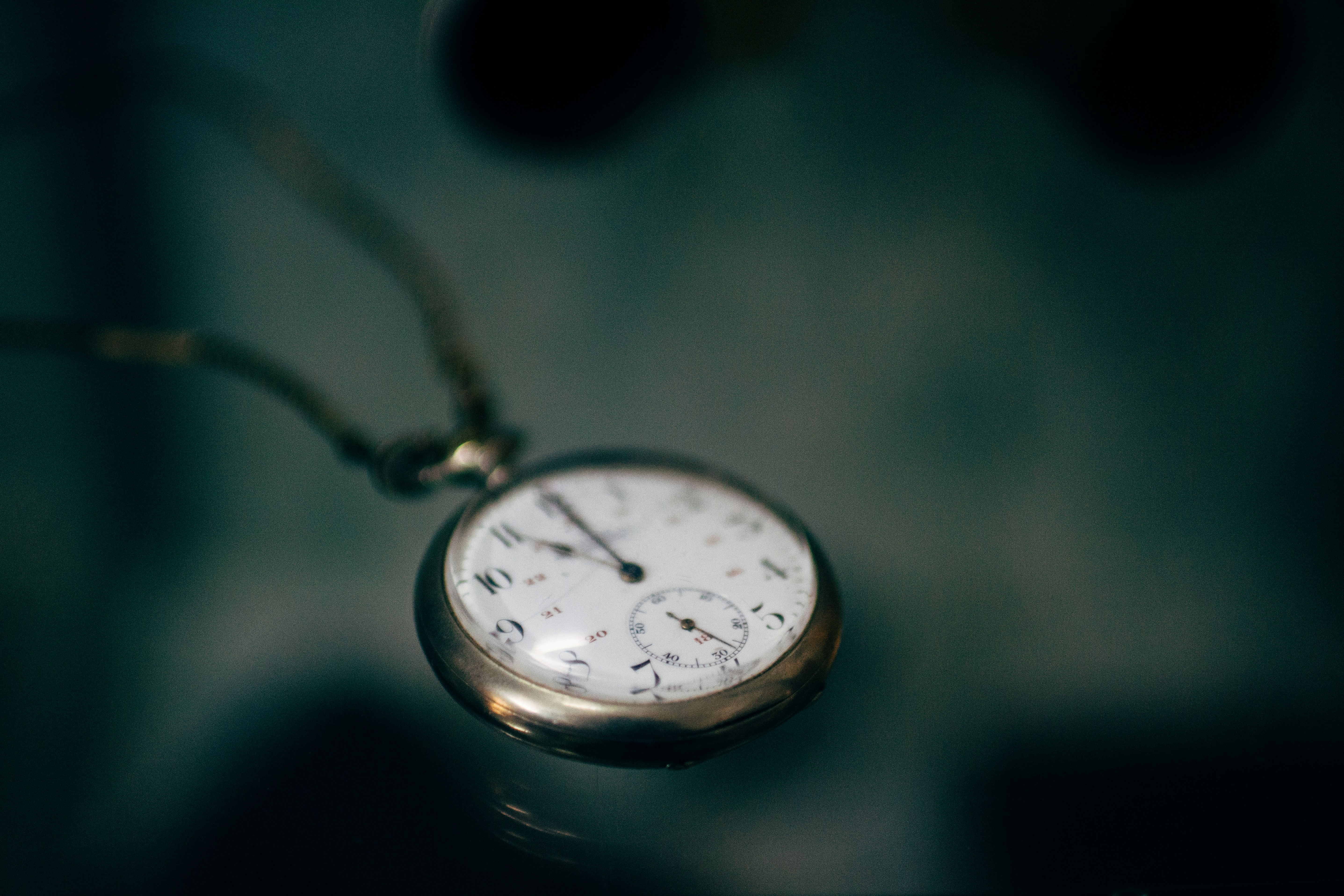
How to Identify Antique Watches: Pocket Watches, Movements and Hallmarks
Antique pocket watches are the most consistently undervalued category in the estate market. A watch that should fetch EUR 2,000 at Bonhams sells for EUR 20 at a general clearance sale because the seller, and sometimes the buyer, cannot read what the movement is saying. This guide teaches you to read it.
The Undervalued Category: Why Pocket Watches Get Overlooked
Walk through any provincial house sale or estate clearance and you will find pocket watches in a glass case, usually lumped together, priced by weight and condition of the case alone. The dealer pricing them has often never opened the back. A Swiss cylinder-escapement movement in a silver hunting case goes for EUR 15. A railroad-grade Hamilton 992B in a gold-filled open-face case with original dial goes for EUR 40. Neither price is defensible once you know what you are looking at.
The contrast with the top end of the market is stark. A Patek Philippe minute repeater in an original 18-carat gold case hammered for CHF 380,000 at Christie's Geneva in November 2024. A Vacheron Constantin pocket chronograph from 1890 with a signed enamel dial achieved EUR 47,000 at Bonhams London. The gap between these results and the EUR 20 estate sale price is not explained by rarity alone. It is explained by identification. Every serious collector started somewhere. The collectors who do well started by learning to read movements.
This guide covers every step: defining what "antique" means for watches, reading case hallmarks, dating movements by serial number, recognising complications that drive value, distinguishing original pieces from marriages, and understanding where early wristwatches fit into the picture.
The single most important rule in antique watch identification: open the back before you form an opinion. The case tells you about the metal. The movement tells you about the watch.
Antique vs. Vintage: Defining the Terms for Watches
In most antique markets, the word "antique" is reserved for objects more than 100 years old. Applied rigidly, that places the current antique threshold at approximately 1926. The watch trade uses this definition loosely but consistently enough to be useful. A watch made before 1920 is almost universally described as antique. A watch made between 1920 and 1980 is vintage. After 1980, the term "pre-owned" or "used" applies.
The complication, and it is a genuine one, is that mechanism type matters more than date of manufacture in determining how a piece is treated by serious collectors and auction specialists. A fully hand-finished Swiss lever escapement movement with a gilded three-quarter plate, a swan-neck regulator, and a signed dial, made in 1922, will be handled by a specialist as antique. A mass-produced cylinder escapement movement from 1900 in a base-metal case will not receive the same treatment despite being technically older.
Key Period Markers
- Pre-1860: Key-wind and key-set movements are the norm. No crown. A stem on the watch winds and sets hands only through a separate hole or by removing the movement.
- 1860-1900: Keyless winding (crown wind) becomes standard. Swiss lever escapement replaces the older cylinder and verge escapements in quality work. American factory production begins in earnest.
- 1900-1920: High-water mark of pocket watch quality. Railroad-grade movements with 21 jewels, adjusted to five positions, are produced in large numbers by American manufacturers. Swiss makers produce their finest complicated pieces.
- 1920-1945: Wristwatches begin displacing pocket watches for everyday use. Pocket watch production continues but quality grades narrow. Trench watches from 1914-1918 represent the birth of the serious wristwatch.
- Post-1945: Pocket watches become dress accessories and presentation pieces rather than everyday instruments.
The Case: Reading Hallmarks on Watch Cases
The case is the first thing you see, but it is often the last thing that matters for value. A plain silver case with a superb movement is worth far more than a heavily engraved gold-filled case with a mediocre cylinder movement. That said, case hallmarks provide essential dating information and can confirm whether case and movement belong together.
British Hallmarks
British gold and silver watch cases carry a full hallmark sequence applied by one of the UK assay offices: London (a leopard's head), Birmingham (an anchor), Sheffield (a Yorkshire rose), or Edinburgh (a castle). The sequence includes a standard mark indicating metal and purity (a lion passant for sterling silver, a crown for 18-carat gold in the older system), a date letter indicating the year of assay, the assay office mark, and the maker's or sponsor's mark. British hallmarks are among the most rigorously documented in the world, and the date letter can pin a case to a specific 12-month period.
Gold fineness changed in the UK: before 1798, only 18 and 22 carat gold were legal standards. From 1798, 18 carat was the minimum. The 9 and 15 carat standards were introduced in 1854. Finding a 9-carat gold case therefore dates manufacture to after 1854. A 15-carat gold case was abolished in 1932 and replaced by 14-carat; a 15-carat mark therefore dates the case to between 1854 and 1932.
Continental Hallmarks on Imported Watches
Swiss and Continental watches entering the British market from 1876 onward were required to carry import marks applied by a British assay office. These are smaller than standard hallmarks and include the letter F (for foreign) alongside the standard purity mark. A Swiss movement in a Swiss gold case bearing a British import mark tells you the watch was imported to the UK after 1876 and assayed before sale. The import mark system changed in 1904: marks after that date are slightly different in style from those applied between 1876 and 1904, which allows further dating.
French cases carry an eagle's head for 18-carat gold and an owl for imported or lower-carat gold. Belgian silver carries a lion rampant. Dutch silver from before 1814 carries a lion with the letter of the assay town. German cases bear a crescent and crown for silver of at least 800 parts per 1,000 purity. Swiss cases from major makers were sometimes unmarked or carried only a maker's cartouche; Swiss federal hallmarking became consistent only after 1882.
Gold-Filled and Gold-Plated Cases
American pocket watch cases were frequently made in "gold-filled" construction: a layer of gold bonded to a base-metal core, guaranteed for a specific number of years of wear (typically 10, 20, or 25 years). The case back will be stamped with phrases such as "Guaranteed 20 Years" or "Warranted 14K Gold Filled" alongside the manufacturer's mark. These cases have no hallmark in the British or Continental sense. Gold-filled cases can be attractive and well-made, but they carry no investment premium. A solid 14-carat gold case is worth several times a gold-filled case of identical external appearance.
The Movement: The Heart of Identification
The movement is the watch. Everything else is housing. Open the case back, remove the movement by releasing the small click or screw that holds it, and place it face-down on a clean surface under a loupe. You are looking for three things: the maker's signature, the serial number, and the quality indicators built into the construction itself.
Movement Grades and Jewel Count
Jewels in a watch movement are synthetic rubies (and in older pieces, genuine rubies or garnets) used as bearings at the points of highest friction and wear. They reduce friction, resist oil degradation, and extend the life of the pivots. Jewel count is stamped or engraved on the movement plate, almost always with a number followed by the word "jewels" or the letter "J".
- 7 jewels: Minimum functional standard. The seven critical bearing points are jewelled. Found in low-grade Swiss and American movements.
- 11 jewels: Mid-grade. Additional jewels at the center wheel and third wheel.
- 15 jewels: Good standard grade. All running parts jewelled. The majority of quality Swiss and American production.
- 17 jewels: High grade. Additional jewels at the escape wheel and pallet stones. The standard for American railroad-grade movements.
- 21 jewels: Railroad grade in American terminology. Adjusted to five or six positions and to temperature. A 21-jewel movement with full railroad grade designations (position adjustment, temperature compensation) is the pinnacle of American production.
- 23 and more jewels: Found in very high-grade Swiss movements and some complications. Beyond 17 functional jewels, additional jewels are largely decorative ("jewelled to the barrel") but signal the highest finishing intentions.
Jewel count alone does not determine value. A 17-jewel Hamilton 992B is worth considerably more than a 17-jewel anonymous Swiss movement, because the Hamilton carries documented railroad certification, known production numbers, and an active collector base. But jewel count is the first filter: a 7-jewel movement in a heavily engraved gold case is a dress watch, not a horological instrument. A 21-jewel signed movement in a plain nickel case is the reverse.
Major Swiss Makers and Serial Number Dating
The Swiss industry produced hundreds of named houses and thousands of anonymous movements. For identification purposes, concentrate first on the signed makers where serial number tables exist and collector markets are active.
Patek Philippe (Geneva, founded 1839) signed movements from the earliest years. Serial numbers are well documented: number 1 dates to 1839, and by serial 200,000 you are in approximately 1900, by 700,000 in approximately 1940. Patek movements are characterised by the Geneva Seal (poincon de Geneve) stamped on the bridges, visible bevelling and polishing on all steel parts, and a generally restrained decoration that concentrates quality in the finishing rather than the engraving.
Vacheron Constantin (Geneva, founded 1755) holds the claim to the oldest continuously operating watch manufacturer. Their serial number table is published and reaches back to the 18th century. Quality indicators: the cross of the Canton of Geneva stamped on the movement (similar to the Geneva Seal), an exceptionally fine anglage (chamfering) on the bridges and plates.
IWC (International Watch Company) (Schaffhausen, founded 1868) produces movements with a distinctly different character from Geneva houses: larger, heavier, with an engineering precision that reflects the company's unusual founding by an American engineer. IWC serial numbers are published and reliable. Their Pallweber pocket watches with jumping digital hour display (1884-1887) are among the most sought-after complications in the category, achieving EUR 15,000 to 60,000 at auction.
Longines (Saint-Imier, founded 1832) has one of the most complete serial number archives of any Swiss manufacturer. Their database is publicly accessible and allows year-of-manufacture dating to within one to two years for virtually every movement produced. Longines movements are recognisable by their winged hourglass logo, the large calibre numbers engraved on the bridge, and a characteristic gilt finish that ages to a distinctive warm yellow. A signed Longines in original condition is always worth researching before pricing.
English Makers and the London Lever Tradition
English pocket watchmaking reached its peak between approximately 1750 and 1880, producing some of the finest movements ever made. The English lever escapement, developed in its final form by Thomas Mudge and refined by subsequent London makers, became the global standard. The London trade was structured around highly skilled individual craftsmen working for named firms.
Dent (London, active from the 1820s) supplied the movement for the Great Clock at Westminster (the clock containing Big Ben). Their pocket watches, signed on the dial and on the movement plate, are among the most recognisable in English horology. A signed Dent in an original case with original dial carries a strong collector premium at Bonhams and Christie's London.
Frodsham (London, the firm of Charles Frodsham, founded 1834) produced observatory-rated deck watches and high-grade pocket watches. Their movements are characterised by exceptional finish, fine chatons (jewel settings), and the characteristic Frodsham signature in full on the dial. A Frodsham lever movement with a rated certificate can achieve EUR 3,000 to 12,000 depending on complications.
Kullberg (London, the firm of Victor Kullberg, active 1851-1905) specialised in chronometers and rated instruments. His name on a pocket watch movement indicates a piece made for accuracy testing rather than casual wear. These are specialist collector items.
Beyond named makers, English movements can be identified by construction type. The full-plate movement (the entire back of the movement covered by a single plate, with the balance wheel visible from the top) is characteristically English. The three-quarter plate and the bridge construction are more typically Swiss or German. An English-style full-plate movement with a decorative cock (the ornate bridge over the balance wheel) is a strong indicator of 18th or early 19th-century London production.
American Pocket Watches: Waltham, Elgin, Hamilton
The American pocket watch industry, born in the 1850s, revolutionised watch production by applying factory methods to precision timekeeping. The three great names are Waltham (Massachusetts, founded 1850), Elgin (Illinois, founded 1864), and Hamilton (Lancaster, Pennsylvania, founded 1892). All three published serial number tables that are freely available online and allow year-of-manufacture dating to within one to two years.
Waltham was the first American factory watch manufacturer and dominated the mid-19th century market. Their movements are graded by name: the American Watch Company series, the Appleton Tracy series, the P.S. Bartlett series, the Vanguard series (their top railroad grade). The Vanguard 23-jewel movement adjusted to six positions is the finest American railroad movement produced and achieves EUR 400 to 1,200 depending on dial and case condition.
Elgin produced over 60 million movements across its history. Their railroad-grade B.W. Raymond movement in 21-jewel and 23-jewel versions is well regarded. Elgin movements can be identified by the name on the bridge plate alongside the jewel count and adjustment statement.
Hamilton became the pre-eminent American railroad watch maker in the 20th century. Their model 992B (21 jewels, adjusted to six positions and to temperatures) was the standard against which all railroad watches were measured. The 950 and 950B models in 23 jewels represent the absolute peak of Hamilton production. A 950B with original Montgomery dial in a gold-filled railroad case typically achieves EUR 600 to 2,000 at Invaluable or Catawiki.
Complications as Value Drivers
A complication in horology is any function beyond simple time display. Complications add to cost, to rarity, and substantially to value. Identifying them requires knowing what to look for.
Minute repeaters are mechanisms that chime the time on demand when a slide on the case is activated: hours, quarter hours, and minutes are sounded on two gongs tuned to different pitches. A pocket minute repeater in good working order by a recognised maker is among the most valuable categories in the entire antique watch market. Even unsigned repeaters in silver cases achieve EUR 1,500 to 5,000 at auction. A signed Patek or Vacheron minute repeater in gold can reach six figures.
Chronographs add a seconds-recording function operated by a pusher or slide. Single-button chronographs (one pusher controls start, stop, and reset) are characteristically pre-1930. Split-seconds (rattrapante) chronographs, which allow two simultaneous timings, are rarer still. A working antique chronograph by a known maker in original case achieves a strong premium over a plain time-only piece of identical date.
Perpetual calendars display day, date, month, and moon phase while automatically accounting for months of different lengths. A pocket perpetual calendar is extremely rare and correspondingly expensive. Partly because of their mechanical complexity and partly because they were made in small numbers even by the largest houses.
Tourbillons are rotating cage mechanisms designed to compensate for the effects of gravity on the balance wheel when the watch is held upright. Invented by Abraham-Louis Breguet in 1801, they were applied to pocket watches throughout the 19th and early 20th centuries. A 19th-century tourbillon pocket watch in running condition by any named maker is a museum-grade object. Even by lesser Swiss houses, a working tourbillon pocket watch achieves EUR 20,000 to 100,000 at specialist auction.
A repeater or chronograph that does not work is worth a fraction of its working equivalent. Before concluding a watch is non-functional, have it examined by a specialist. The cost of restoration can be EUR 500 to 2,000; the resulting increase in value can be EUR 5,000 to 20,000.
The Dial: Enamel Types, Subsidiary Dials, and Signed Dials
The dial is the face of the watch. Antique dials are almost always enamel: a glass-like material fired onto a metal base, typically copper. Enamel dials are identified by their characteristic depth of colour, slight convexity, and the way they chip rather than crack under impact. A cracked dial is a significant value detractor; a chipped edge less so if the chapter ring (the hour scale) is intact.
Enamel Types
The most common antique dial enamel is white enamel with black painted numerals, fired to create a permanent, luminous surface. This type dominated from roughly 1750 to 1930. Coloured enamel dials (blue, green, and rare polychrome painted scenes) appear on high-grade and decorative pieces and command significant premiums. A painted enamel miniature scene on the dial of a Swiss gold case watch can alone be worth several thousand euros regardless of the movement.
Porcelain (hardpaste) dials appear on some American watches and some Continental pieces and are identifiable by their thicker, heavier construction. They are more prone to hairline cracks than enamel and are generally considered less desirable than a sound enamel dial. A hairline crack on a porcelain dial is less severe than it sounds; what matters is whether the crack is visible under normal viewing conditions and whether it crosses the chapter ring or numerals.
Subsidiary Dials and Signature Dials
A seconds subsidiary dial (a small seconds display at the 6 o'clock position, or at 9 o'clock on some movements) is a standard feature on quality antique pocket watches. Its presence confirms the watch has a separately running seconds train, which is associated with better movement grades. A running seconds display at the centre of the dial (a centre-seconds hand) appears on some railroad watches and is associated with specific movement designs.
Signed dials, where the maker or retailer's name is painted or printed on the enamel, are significant in two ways. A prestigious retailer signature (Tiffany & Co., Asprey, Cartier, Garrard) on an otherwise standard movement dramatically increases the retail collector market. Conversely, a dial signed with a name that does not match the movement signature is the first red flag for a marriage piece or a recase.
The Hands and Crown: Period Indicators
Watch hands are made of blued steel, gold, or gilt metal. Blued steel hands (steel heated until the surface oxidises to a characteristic blue-black colour) are the standard on quality antique movements from approximately 1750 to 1930. Their presence indicates either original hands or a skilled replacement. Brass or gilt hands on a movement that should carry blued steel are a sign of replacement, which reduces value modestly.
Hand Styles by Period
Beetle and poker hands (a stylised beetle shape for the hour, a simple straight rod for the minutes) are associated with English work from the 18th and early 19th centuries. Breguet hands (hollow diamond or lozenge cutouts near the tip) appear on high-grade Swiss work from approximately 1800 onward and continue to be used as a quality indicator. Louis XV hands (elaborately scrolled) appear on decorative French and Swiss pieces. Spade and moon hands are American industry standards from the 1860s onward.
The crown (the winding and setting knob at the 12 o'clock position) evolved significantly. A watch without a crown uses key-wind and key-set mechanisms and predates approximately 1860 for most makers. A pendant-set watch (the crown pushed in to wind, pulled out to the first click to set) is standard from roughly 1860 to 1910. A lever-set movement (a separate lever inside the case, behind the dial, operates the setting mechanism) was specifically required for American railroad use after 1908 and is a dating and grading marker.
Distinguishing Original Pieces from Marriage Pieces
A marriage piece is a watch assembled from components that did not leave the factory together. The most common form is a good movement placed into a later or more decorative case to make the combination more saleable. Marriage pieces are not fakes in the criminal sense; both components may be entirely genuine antiques. But they are worth substantially less than an original combination, and a buyer who pays original prices for a marriage piece has made a mistake.
The checklist for detecting a marriage is straightforward:
- Date comparison: Use the movement serial number to date the movement. Compare with the case hallmark date. A discrepancy of more than 10 years requires explanation. Some legitimate explanations exist (a movement replaced after damage, a new case ordered later) but all deserve scrutiny.
- Dial and movement signature match: If the dial is signed "A. Lange & Sohne" and the movement is signed by a Swiss ebauche house, one of the two is a replacement.
- Case fit: A movement that fits its case perfectly, with no marks from different pillars or removed movement holders, is more likely original. A movement that sits loosely, or shows marks from multiple case-fitting operations, has been recased.
- Dust band and case back wear: The inner case back (dust band) of an original combination will show a wear pattern matching the movement dimensions exactly. A movement that is slightly smaller or larger than the wear ring has been placed in a foreign case.
- Casemaker's mark inside the band: Some premium Swiss makers stamped their casemaker's mark on the inside of the movement rim of the case. If the movement is by Patek Philippe and the case has no Patek casemaker's mark but instead carries a separate casemaker's cartouche, the case may be a later acquisition.
At Christie's and Sotheby's, catalogue entries for pocket watches specifically note whether the piece is described as "movement and case en suite" or simply list case and movement separately. The distinction in the catalogue is the auction house's own acknowledgement of a possible marriage.
Early Wristwatches: Trench Watches, Wire Lugs, and Conversion Pieces
The wristwatch as a serious instrument is generally dated to the First World War. Officers in the trenches needed to synchronise attacks without revealing their position by raising a pocket watch, and the demand for wrist-worn timepieces with luminous dials exploded between 1914 and 1918. These "trench watches" are genuinely antique and frequently underpriced.
The earliest wristwatches are conversion pieces: small pocket watch movements fitted with wire lugs (thin metal bars soldered to the case at 12 and 6 o'clock) to accept a leather strap. Wire lug construction is the defining feature of the earliest wristwatches (roughly 1910 to 1925) and distinguishes them from later pieces where the lugs are integral to the case. Integral lugs became standard from approximately 1920 onward and dominate all post-1925 production.
What to look for in a genuine trench watch:
- Wire lugs soldered or riveted to the case, typically round in cross-section.
- Hinged, wired, or snap-on protective grilles or guards over the crystal, used to protect the glass in field conditions.
- Radium-painted luminous hands and numerals (a creamy, slightly yellowish patina on the lume is consistent with genuine radium paint from before approximately 1960; bright white lume on a "trench watch" is a later replacement).
- Small case sizes by later standards: 30 to 36mm, often with a round or cushion form.
- Movement signed by a known maker (Longines, IWC, Omega, Zenith, and minor Swiss houses all produced trench watch movements).
A signed Longines trench watch in original condition with functioning movement regularly achieves EUR 800 to 3,000 at Catawiki or Bonhams. An identical piece with an unsigned Swiss movement achieves EUR 80 to 250. The movement signature is the entire value.
Conversion pieces (pocket watch cases fitted with wire lugs rather than purpose-built wristwatch cases) are a subset of early wristwatches. They are genuine antiques and historically important, but they carry a modest discount compared to original wristwatch cases of the same period, because the conversion was typically done after the watch left the factory.
How AntiqBot's WatchCheck Identifies Antique Watches from Photos
Identifying an antique watch from photographs is a task that requires reading multiple simultaneous signals: the case shape and hallmark positions, the movement plate layout, the dial style and any visible signature, the hand style, and the crown type. AntiqBot's WatchCheck module is built to process exactly this combination of signals from a set of uploaded photographs.
The module works best with four photographs: the dial (12 o'clock aligned, straight on), the open case back showing the movement plate, a close-up of any visible hallmarks on the case band or back, and a side profile showing the crown and case thickness. With these four images, WatchCheck can typically identify the approximate period of manufacture, the movement grade, the case metal, and whether the combination is likely original or a marriage.
The output follows AntiqBot's five-tier verdict system, from Authentic through to Not Authentic, with a written analysis explaining each indicator. For watches where a serial number is visible in the movement photograph, the analysis references published serial number databases for the identified maker to provide a specific year-of-manufacture range. The analysis also flags any inconsistencies between case date, movement date, and dial style that suggest a marriage piece.
WatchCheck uses the same external reference base as the other AntiqBot authentication modules: auction results from Christie's, Sotheby's, Bonhams, Catawiki, and Invaluable provide the market context for valuations. Published serial number tables from Longines, Hamilton, Waltham, Elgin, IWC, and other documented makers provide the dating basis. The combination of visual analysis and reference data makes the module considerably more reliable than comparing the watch to Google Images, which returns results without context.
Analyse Your Watch with AntiqBot
Upload four photos of your pocket watch or early wristwatch. WatchCheck reads the movement, the hallmarks, and the dial and returns a structured authentication verdict with a value range.
Sign up and get 1 free credit for your first analysis. After that, buy credit packs starting from €0.60 per analysis.
Start Your Free AnalysisWhat Antique Watches Are Worth: A Practical Value Guide
Antique watch values span a wider range than almost any other category of antique. A cylinder-escapement movement in a silver case from 1880 is worth EUR 30 to 80. A Patek Philippe minute repeater from the same decade is worth EUR 100,000 to 400,000. Understanding what drives the premium allows you to identify where in that range a specific piece sits.
Factors That Drive Value Upward
- Maker's signature on movement: The single largest value driver. A signed Patek, Vacheron, IWC, Longines, Dent, Frodsham, or Hamilton movement in a given condition is worth 5 to 20 times an equivalent unsigned movement.
- Complications: Minute repeater, chronograph, perpetual calendar, tourbillon. Each genuine working complication multiplies value.
- Original combination: Case and movement matching by date, maker, and fit. Documented provenance of the pairing adds further.
- Enamel dial condition: A perfect enamel dial without chips, cracks, or restoration contributes substantially. A cracked or refinished dial is a significant detractor.
- Solid gold case: An 18-carat gold case adds material value (typically EUR 300 to 1,500 in metal alone) plus collector premium for the intact combination.
- Jewelled tourbillon or observable complications: Movements with visible complications under a display caseback or open-face case achieve premiums over identical closed-case equivalents.
Approximate Value Ranges (2025-2026 Market)
The following ranges are drawn from auction results at Catawiki, Invaluable, Bonhams, and Christie's:
- Anonymous cylinder escapement, silver case, working: EUR 30 to 150.
- Named Swiss maker (Longines, Omega, Zenith), original case, good enamel: EUR 200 to 800.
- American railroad grade (Hamilton 992B, Waltham Vanguard, Elgin B.W. Raymond), original case, original dial: EUR 300 to 1,200.
- English signed lever movement (Dent, Frodsham), original gold case, fine condition: EUR 1,500 to 8,000.
- Swiss complication (chronograph or repeater), signed, original case: EUR 3,000 to 25,000.
- Patek Philippe, Vacheron, IWC time-only, original gold case, documented: EUR 5,000 to 40,000.
- Patek Philippe or Vacheron complications (minute repeater, perpetual calendar, tourbillon): EUR 30,000 to 400,000+.
The estate sale price of EUR 20 for a signed railroad Hamilton reflects a failure of identification rather than a market reality. The same watch, correctly identified and catalogued by a specialist, sells for EUR 400 to 600 at a watched auction. That gap is the cost of not knowing what you are looking at.
If you own watches from an estate or have purchased pieces without fully identifying them, the first step is always the same: open the case back, find the serial number, and check it against the published tables. For pieces where the movement is complex or the hallmarks are difficult to read, a photograph-based analysis returns results in minutes rather than requiring a trip to a specialist dealer.
For more on using photographs for identification across multiple antique categories, see our guide to free antique valuation from photos. For the specific techniques used to read silver hallmarks (which apply directly to silver watch cases), see our guide to silver hallmark identification from photographs.
Frequently Asked Questions
How do I tell if a pocket watch is antique or just old?
The threshold most auction houses and specialist dealers use is 1920. A pocket watch made before 1920 is generally classified as antique; one made between 1920 and 1980 is vintage. More practically, the mechanism type matters as much as the date: a fully hand-finished lever escapement movement with a gilded plate signed by the maker is treated as antique regardless of whether it was assembled in 1918 or 1922. Open-face hunter cases, key-wind mechanisms, and movements lacking shock-protection devices all point toward pre-1920 production.
What do the numbers on the inside of a pocket watch case mean?
A case can carry several different numbers. The hallmark sequence (a shield, assay office mark, date letter, and maker's initials on British pieces) identifies the metal, year of assay, and casemaker. Separately, a case serial number stamped by the manufacturer dates the case itself. The movement serial number, stamped on the plate or pillar plate, dates the movement. These three numbers often belong to different years, which is entirely normal: casemakers bought movements from separate suppliers. A major discrepancy of more than five to ten years between case and movement serial dates suggests a marriage piece.
How do I find the serial number on a pocket watch movement?
Open the case back, remove the movement, and look at the gilded or nickel plate (the back plate of the movement). The serial number is almost always engraved or stamped there, often near the balance wheel. On American watches (Waltham, Elgin, Hamilton) the number is large and easy to find. On Swiss pieces it may be smaller and located on the bridge rather than the full plate. Enter the number into the maker's published serial number table (freely available online for Waltham, Elgin, Longines, IWC, and others) to get the year of manufacture.
What is a marriage piece in antique watches, and why does it matter for value?
A marriage piece is a watch assembled from components that were never sold together: typically a movement from one watch placed into a case originally belonging to a different watch. Marriage pieces are common and sometimes done historically for practical reasons. They matter for value because a collector paying for a signed Dent movement in an original engraved gold hunter case is paying for authenticity and completeness. If the case dates to 1880 and the movement to 1910, or if the dial signature does not match the movement signature, the premium evaporates. At Christie's, a documented original movement-case pairing can command two to four times the price of the same movement in a later replacement case.
Are early wristwatches valuable as antiques?
Yes, and they are frequently undervalued at general antique sales. Trench watches made between roughly 1914 and 1918 with wire lugs soldered or riveted to a small pocket watch movement are among the most historically significant wristwatches. Conversion pieces (pocket movements fitted with soldered lugs) made between 1910 and 1925 are genuinely antique but often sell for far less than equivalent pocket watches simply because buyers do not recognise them. A signed Longines or IWC trench watch in original condition regularly achieves EUR 800 to 3,000 at Catawiki or Bonhams, while similar pieces with unidentified movements sell for EUR 80 to 200.