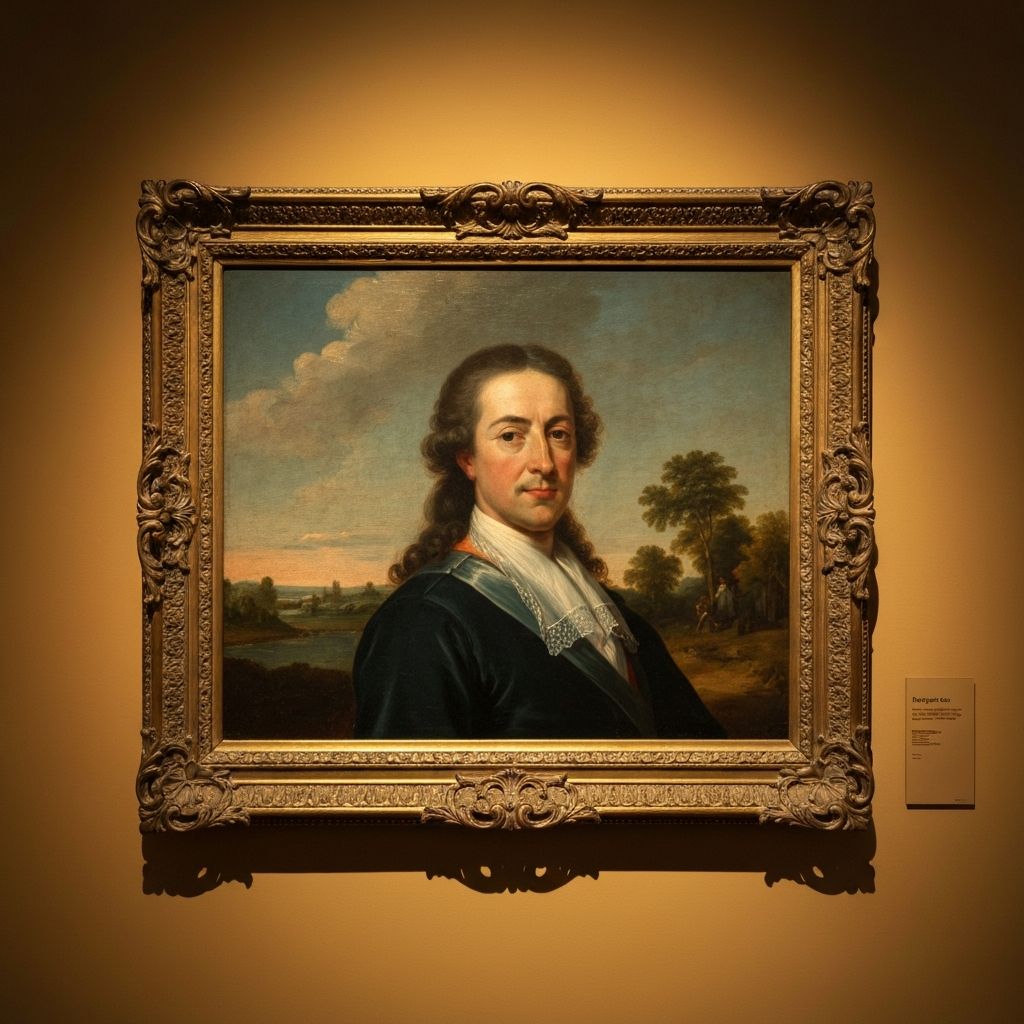
How to Tell If a Painting Is Valuable: 8 Expert Indicators
You found a painting. It might be at an estate sale, tucked behind a wardrobe in an inherited house, or leaning against a wall at a weekend brocante. Something about it holds your attention. The question that follows is one that every collector, dealer, and curious heir has asked at least once: is this painting worth money, or is it a competent reproduction that will sell for thirty euros at the next flea market?
This guide walks you through the eight indicators that appraisers, auction specialists, and experienced dealers actually use when they encounter an unfamiliar painting. These are not romantic shortcuts. They are systematic observations drawn from the practices used at houses like Christie's, Sotheby's, and Bonhams, and from the reference literature used at RKD (Rijksbureau voor Kunsthistorische Documentatie) in The Hague. By the end, you will know what to look for, what questions to ask, and when to take the next step.
Why Most People Guess Wrong
There is a persistent cultural mythology around attic discoveries and hidden masterpieces. Television programmes dedicated to this genre have conditioned a generation of viewers to believe that valuable paintings are routinely overlooked and that the family portrait hanging over the mantelpiece for eighty years is probably a Flemish master waiting to be identified.
The reality is different. The vast majority of old paintings in domestic settings are copies, reproductions, decorative works by unknown artists, or pieces produced in large quantities for the interior trade. That does not make them without interest, but it does mean that romantic assumptions are an unreliable starting point.
A second common error is to treat a painting's age as synonymous with value. A nineteenth-century copy of a seventeenth-century Flemish interior is old, but it is still a copy. Age establishes that a work is not a recent forgery, but it does not establish authorship, quality, or market demand. A mediocre work from 1880 is still mediocre. Value follows from who painted it, how well, and whether collectors are competing for it.
A third mistake is to conflate rarity with value. Every painting is unique in some literal sense, but uniqueness is not the same as desirability. The market for minor decorative works of the nineteenth century is broad but shallow. The market for a documented work by a named artist with auction history is deep and competitive. The difference matters enormously when you are trying to answer whether your painting is worth money.
With those caveats in place, here are the eight indicators that allow you to move from guessing to informed assessment.
Indicator 1: The Signature
The signature is the first thing most people check, and it is also the indicator most commonly misread. A signature is a starting point for research, not a conclusion. A genuine signature by a known artist is significant. A forged signature by a known artist on a copy is a criminal matter and reduces the work's value to near zero once discovered. An illegible or absent signature on an original work by a minor master is entirely normal.
Where to look
Signatures appear in the lower right corner in the majority of Western painting conventions, but this is not universal. Check all four corners, the upper edges, and the back of the canvas or panel. Some painters signed on the verso only. Others signed on the frame. Signatures that appear to have been added over a layer of varnish warrant immediate scepticism, because a genuine signature is applied to the paint surface before varnishing and should therefore sit under the yellowed varnish layer, not on top of it.
What a genuine signature looks like
Under magnification (a 10x loupe is sufficient for preliminary work), a genuine signature shows the same craquelure pattern as the surrounding paint and integrates with the paint surface. It was applied by the artist's hand, which means it has variation in pressure, a consistent rhythm, and the natural irregularity of handwriting. A copied signature often looks too clean, too deliberate, or too closely matched to a known reference. Reference databases such as the Art Signature Dictionary (artsignaturedictionary.com) and the RKD artist files at rkd.nl allow you to compare against documented examples.
When the signature leads to a name, research it. Artprice and Invaluable aggregate auction records globally. The RKD database covers Dutch, Flemish, and Belgian artists comprehensively. Bénézit's dictionary of artists remains the standard reference for Western painting. If the artist is not in any of these sources and the signature is otherwise unremarkable, the work is probably by a minor decorative painter with little auction history. That is not a disaster. It simply calibrates your expectations.
For a deeper guide on reading and verifying signatures, see our article on how to identify a painting signature online.
Indicator 2: The Support and Materials
The physical materials of a painting carry age information that is difficult to fake convincingly at scale. Canvas, panel, stretcher, ground layer, and pigment all degrade and transform in ways that follow documented timelines. Examining the support is one of the most reliable preliminary steps because it does not require specialist equipment beyond a good light source and a loupe.
Canvas: linen versus cotton
Linen canvas was the standard for European oil painting from the sixteenth century onward. It has an irregular, slightly uneven weave visible to the naked eye when examined from the back. Cotton canvas became widely available in the late nineteenth century and dominates the commercial market from roughly 1900 onward. Cotton weave is more regular and uniform. A work presented as seventeenth or eighteenth century but painted on cotton canvas has a serious problem that no other indicator can resolve. This single observation rules out whole categories of romantic claims.
Panel supports
Panel paintings from before approximately 1700 in the Flemish and Dutch tradition are almost universally on oak. The oak planks were typically joined vertically (parallel to the grain) and secured with cradles or crossbars on the back. Poplar was standard for Italian panels. Baltic oak with characteristic tight growth rings is a feature of Flemish panels that has been studied extensively by dendrochronologists. A panel on chipboard, MDF, or softwood with very wide grain rings is modern. A panel on well-seasoned, tight-grained hardwood with hand-tooled marks on the back is a genuine candidate for further examination.
Stretcher construction
The stretcher (the wooden frame over which the canvas is stretched) evolved in ways that specialists can date approximately. Early stretchers (before roughly 1850) were fixed and had no expansion mechanism. Keyed or wedged stretchers that allow the canvas to be tightened by driving small wedges into the corner joints became standard from the mid-nineteenth century onward. Machine-cut, perfectly right-angled stretcher members in uniform softwood are consistent with commercial production from 1880 to the present. Hand-cut, slightly irregular members with mortise and tenon joints suggest earlier construction. None of this is absolute, but taken together with other indicators, the stretcher construction contributes meaningfully to the picture.
Craquelure
Age cracking in the paint and ground layers is one of the most discussed and most misunderstood features in painting authentication. Genuine age craquelure develops slowly over decades and centuries as paint layers dry, contract, and respond to temperature and humidity cycles. The cracks penetrate through the paint into the ground layer and follow the directional tensions of the weave or wood grain. Under a loupe, the edges of genuine cracks are rounded and slightly worn, and the valleys between cracks accumulate old dirt and varnish residue.
Artificially induced craquelure (a technique used by forgers) tends to show angular, regular cracking patterns that do not penetrate the ground layer, and the crack valleys are clean because they have not had decades to accumulate grime. Rolling the canvas or applying rapid heat can produce convincing surface effects from a distance, but not under magnification. If the craquelure looks photogenic and uniform rather than subtly chaotic, treat it as a warning sign.
Indicator 3: The Back of the Painting
Experienced dealers habitually flip a painting to examine the verso before they look at the front. The back is the painting's biographical record. It has not been cleaned, restored, or repainted. Everything there is original to the history of the object.
Labels, stamps, and stickers
Auction house labels from Christie's, Sotheby's, Bonhams, Bernaerts, or Drouot are significant finds. They confirm that the work passed through a professional sales process at a specific date. The lot number printed on the label can be traced back to the original sale catalogue, which in turn provides title, medium, dimensions, estimated value at the time, and the hammer price. This is provenance documentation in its simplest form, and it is worth considerable effort to trace.
Gallery labels from named dealers or exhibiting institutions are equally useful. A label from a Brussels gallery of the 1920s or a Ghent exhibition of 1935 places the work in a verifiable commercial or institutional context. Frame shops, conservation studios, and customs stickers are secondary but still useful for establishing geographic movement and rough dating.
Inscriptions and old writing
Hand-written inscriptions on the stretcher or canvas back can be in the artist's hand, a dealer's inventory number, a collector's notation, or a title and attribution added by an estate. A number in paint or pencil often corresponds to an archival numbering system. Old brown paper labels with typewritten text are characteristic of mid-twentieth century gallery practice and can sometimes be traced to specific dealer archives that still exist. Even partial, faded, or damaged inscriptions are worth photographing and researching.
Wax seals and customs stamps
Wax seals on canvas backs are associated with certain collecting and dealing practices from the late eighteenth through early twentieth centuries. Some major collections applied their own seals. Customs and excise stamps, particularly for works that crossed national borders, can establish a rough timeline for the movement of the work and sometimes identify the country of origin.
Indicator 4: Paint Layers and Technique
The single most reliable way to distinguish a hand-painted original from a mechanical reproduction is to examine the surface under raking light. Raking light means positioning a single light source (a lamp or even a phone torch) at a low angle to the picture surface so that shadows are cast by any physical relief. On an original oil painting, the brushstrokes create physical texture: ridges of impasto, the depression left by a brush loaded with medium, the distinctive marks of a palette knife. This relief is visible in raking light as a landscape of tiny shadows.
A printed reproduction, no matter how high its resolution, is physically flat. The printed surface may have been given a textured coating to simulate brushwork, but under raking light the coating texture is random and unrelated to the image, while in an authentic painting the paint application follows the forms being depicted. The highlight in an eye is built up with loaded paint; the shadow in a fold of drapery is thin and transparent. This correspondence between technique and image is one of the clearest distinctions between a hand-painted work and a reproduction.
The loupe test for mechanical printing
Under a 10x loupe, the surface of any commercially printed reproduction reveals the regular dot matrix of the printing process. Even high-resolution giclée prints on canvas have a visible dot or pixel structure. A hand-painted work has no such regularity. The pigment particles are irregular, layered, and physically present in three dimensions. If you see dots under the loupe, the work is a print.
Glazing, underdrawing, and pentimenti
Advanced examination may reveal glazing layers (thin, transparent colour washes applied over dried paint to modify tone), evidence of underdrawing visible in infrared reflectography, or pentimenti (visible traces of the artist rethinking a compositional element). Pentimenti, in particular, are strong authenticity indicators because forgers copying a finished composition have no reason to include them. The arm that was repositioned, the curtain that was shifted two centimetres: these are marks of a working mind, not a copying hand.
Indicator 5: Provenance Documentation
Provenance is the ownership and exhibition history of a work from its creation to the present. A complete, documented provenance chain is the single most powerful value driver in the art market, above and beyond the work's inherent quality. Gaps in provenance are not automatically disqualifying, but they reduce value and increase buyer risk. For works that might have passed through Europe during the Second World War, provenance gaps between approximately 1933 and 1945 require specific documentation under international agreements on looted cultural property.
What counts as provenance documentation
- Original purchase receipts or invoices from dealers or auction houses
- Exhibition catalogues listing the work by title, artist, lender, and catalogue number
- Reproductions in published books, monographs, or critical reviews
- Estate inventories listing the work among a collector's possessions
- Family letters or diaries that describe or mention the work
- Insurance valuations or appraisal documents from named assessors
- Bequest or inheritance records naming the work specifically
Not all of these have equal weight. A publication in a scholarly catalogue raisonné (the definitive listing of an artist's works) carries more authority than a family letter, which in turn carries more authority than an undated dealer sticker. But any documentation is better than none, and multiple sources that corroborate each other substantially increase confidence and value.
How to research provenance
Start with what is physically attached to the work: labels, stamps, inscriptions, and old frames. Then move to the auction databases (Artprice, Invaluable, Catawiki's past results) to see if the work or comparable works by the same artist have traded recently. For Belgian and Dutch artists, the RKD in The Hague holds the most comprehensive archive of documentation, exhibition history, and sale records in the region. If the artist is listed in RKD, the database entry often includes bibliography, museum holdings, and known sale history that can intersect with what you have in hand.
Indicator 6: Subject Matter and Composition
What the painting depicts and how the composition is structured provides information about where it sits in the hierarchy of original, copy, or school work. These are important distinctions because they carry very different market values.
Original versus "after"
An "original" is a first-hand creation by the named artist. An "after" is a copy made by a different hand of a known composition by a named artist. The phrase "after Rubens" or "after Rembrandt" in an auction catalogue is not pejorative: it is precise description. A competent seventeenth-century copy after a Flemish master can still be a valuable work, sometimes worth tens of thousands of euros, but it is a fundamentally different object from the prototype.
The giveaway with copies is often a slight stiffness in handling, a mechanical approach to the most challenging parts of the composition (hands, faces, drapery folds), and, occasionally, a reversal of the composition because the copyist worked from a print or mirror image of the original. Comparison with the known prototype in museum databases (the Rijksmuseum online collection, the RKD image archive, museum collection databases) will reveal whether your work corresponds to a known composition.
"School of" versus workshop production
Works described as "school of" or "circle of" a named master were produced in or around the named artist's environment, typically by students, assistants, or close followers using the master's methods and models. Workshop production, strictly defined, means the master may have had a hand in the work (perhaps the face or the principal figures) while assistants completed the background and secondary passages. These distinctions matter for value. A Flemish seventeenth-century work sold as "circle of Jan Brueghel the Elder" at Bonhams in 2024 achieved a different price from one sold as a workshop piece from the Rubens studio. Both were valuable; neither was cheap.
Decorative works and genre painting
The nineteenth and early twentieth centuries produced enormous quantities of technically competent genre painting: pastoral scenes, interiors, flower pieces, and portrait studies by artists who are documented in Bénézit and the RKD but rarely sell above a few thousand euros because the market for their work is thin. These works are original, they are old, and they are not valuable in any significant sense. Subject matter alone cannot tell you this, but knowing the market demand for the specific type of work prevents false optimism.
Indicator 7: Frame Evidence
The frame is often treated as a decorative afterthought, but it carries substantial dating and attribution information. Original period frames increase a work's appeal and value. Frames that are clearly inconsistent with the apparent age of the painting invite questions about the work's history.
Period frames and their construction
Frames made before approximately 1830 were constructed from solid wood (typically lime or poplar for carved frames) with applied gesso and either oil gilding or water gilding with burnished highlights. The construction is visible at the corners, which were joined with wooden pegs or cut nails rather than machine screws. The gesso builds up organically and shows genuine wear at the high points of the ornament: the places where hands have lifted the frame, where the frame has rested against a wall, where the gilding has been touched repeatedly over generations.
Water gilding over gesso produces a warm, slightly warm-toned gold that develops a mellow patina with age. Modern gold spray paint or gold-coloured tape used to fill repairs is visually different: cooler, more uniform, and often too bright. Under raking light, the texture of a carved gesso frame is complex and layered, while a pressed or cast composition frame from the commercial interior trade is more mechanical.
Old nails and corner keys
The nails securing the canvas to the stretcher, and the nails or screws used to assemble the frame, are secondary dating indicators. Cut nails (rectangular cross-section) were standard before roughly 1840. Wire nails (circular cross-section) are post-1870. Machine-threaded screws are post-1850 at the earliest. A frame assembled with modern Phillips-head screws on a work claimed to be from the eighteenth century is not a problem with the painting itself, but it suggests the frame was replaced at some point, which in turn raises the question of why.
Rebate and canvas dimensions
The rebate (the channel in the inner edge of the frame that holds the canvas) should match the canvas dimensions closely on an original pairing. If the canvas has been trimmed to fit a smaller frame, or if the frame has been modified to accommodate a larger canvas, this indicates the pairing is not original. A mismatch between frame period and canvas period is worth noting and investigating.
Indicator 8: Auction Record Research
Auction records are the closest thing the art market has to objective pricing data. Unlike dealer asking prices (which reflect optimism and margin) or insurance valuations (which reflect replacement value), hammer prices at auction represent what a buyer actually paid in open competition on a specific date. They are imperfect data, but they are the best data available.
How to search effectively
Start with Artprice, which aggregates results from over 6,000 auction houses globally and covers records back several decades. Invaluable and Mutualart offer similar coverage. Search the artist's name in all known spelling variants (French and Flemish artists are particularly subject to variant spelling across national databases). Filter by medium (oil on canvas, oil on panel, watercolour) and use the size range filter where available, because small works by a given artist typically command different prices from large ones.
For Belgian and Dutch artists specifically, the Bernaerts auction house in Antwerp has a searchable results database and has handled a significant volume of Flemish and Dutch works over many decades. Their results reflect the regional market and are often more relevant benchmarks than global aggregates for works of that school.
What "bought in" means
An auction result that shows a lot "bought in" (also recorded as "passed", "withdrawn", or "unsold") means the bidding did not reach the reserve price (the confidential minimum set by the seller). This is not a neutral event. It means the market, on that day, did not agree with the seller's valuation. Repeated bought-in results for works by the same artist, especially at major houses, is a meaningful signal about market depth. It is not a reason to abandon research, but it recalibrates expectations significantly.
Estimate ranges and hammer multiples
The pre-sale estimate published in auction catalogues reflects the specialist's view of likely market interest, based on comparable sales and condition. When a work sells at two or three times the high estimate (a strong "multiple"), it indicates competitive bidding, often from more than one serious buyer, and genuine market demand. When a work sells at or just above the low estimate, demand was present but not exceptional. These distinctions matter when you are trying to understand whether a painting is valuable in a deep, competitive way or valuable in a thin, occasional way.
Using AntiqBot to Check All 8 Indicators at Once
The eight indicators above require systematic application. In practice, a thorough preliminary assessment of an unfamiliar painting takes time, access to multiple databases, and familiarity with what you are looking for in the physical object. AntiqBot's ArtCheck module was built to structure exactly this process.
You upload clear photographs covering the front, the signature detail, the reverse of the canvas or panel, and any frame labels or inscriptions. The ArtCheck module cross-references the visual information against external authoritative references including RKD (for Dutch, Flemish, and Belgian artists), Artprice and Invaluable (for auction market context), and artsignaturedictionary.com (for signature comparison). The output follows AntiqBot's five-tier verdict system, from Authentic to Not Authentic, with a structured analysis of each indicator and the reasoning behind the overall assessment.
The module does not replace a physical examination by a conservator or a full scholarly attribution, but it provides a structured, documented starting point that is far more reliable than guesswork, and far faster than manual research across multiple databases. It is particularly useful for the first pass: separating the works that merit further investment of time and money from those that do not.
For oil paintings with unclear valuations, the same analysis feeds into a market context assessment that draws on comparable auction records. This addresses the related question covered in our article on how to find out what an oil painting is worth.
Analyse Your Painting with ArtCheck
Upload your photographs and get a structured assessment covering all 8 indicators. Sign up and get 1 free credit for your first analysis. After that, buy credit packs starting from €0.60 per analysis.
Start Your Free AnalysisWhen to Act on Your Own Assessment vs. When to Call an Expert
The eight indicators above are tools for informed preliminary assessment. They are not a substitute for professional examination in every case. Knowing when to stop self-research and engage a specialist is part of the skill.
When self-assessment is sufficient
If the preliminary indicators are consistently negative (cotton canvas on a claimed seventeenth-century work, printed dot matrix under the loupe, no labels or documentation, artist name not found in RKD or Bénézit), the probability of significant value is low. In these cases, the cost of a professional appraisal is unlikely to be recovered through a higher sale price. The rational decision is to price the work at the decorative level and sell it accordingly through Catawiki, a local auction house, or a brocante dealer.
If the indicators are mixed or ambiguous, a preliminary ArtCheck analysis through AntiqBot provides a structured second opinion before you commit to the cost and time of a physical consultation.
When to engage a specialist
Engage a specialist when multiple indicators are strongly positive and the potential value justifies the cost. This means: the support materials are consistent with the claimed period, the signature matches reference examples, there is auction history for the artist, and there is at least one piece of documentary provenance. In these circumstances, a physical examination by a conservator and a formal attribution opinion from a specialist in the relevant period or school is the appropriate next step.
For Flemish and Dutch works, the RKD in The Hague is the first point of contact for attribution questions on works of significance. Christie's, Sotheby's, and Bonhams all offer preliminary auction estimates and condition reports as part of their consignment process, at no charge, when you are considering bringing a work to sale. For Belgian works specifically, Bernaerts in Antwerp has specialists in nineteenth and twentieth-century Belgian painting who handle consignment assessments.
The key principle is proportion: invest in professional assessment at the level justified by the potential return. A work that might sell for five hundred euros does not warrant a two-thousand-euro provenance research project. A work that might sell for fifty thousand euros does.
The question of insurance and estate settlement
For insurance purposes and estate settlement, a formal written appraisal by a certified appraiser is required regardless of the work's apparent market value. The appraisal for insurance uses replacement value (what it would cost to acquire a comparable work), which is typically higher than auction market value. For estate distribution, fair market value (what a willing buyer would pay a willing seller in an open market) is the relevant standard. These two valuations often produce different numbers for the same work, and the difference matters legally and fiscally.
Frequently Asked Questions
How do I know if a painting is an original or a print?
Under raking light (a single lamp held at a low angle to the surface), an original oil painting shows texture, brushstroke ridges, and impasto. A printed reproduction is flat. A magnifying glass or loupe reveals the regular dot matrix of mechanical printing. If the surface is uniformly smooth and dots are visible, it is a print, not a hand-painted original.
Is my painting worth money if it has no signature?
Yes. Many valuable works are unsigned or signed on the back, or the signature has been overpainted during a past lining. Provenance documents, exhibition labels, and stylistic analysis can establish authorship even without a legible signature. Unsigned works by minor masters still trade actively at Bernaerts, Catawiki, and Drouot.
What auction records should I check first?
Start with Artprice and Invaluable, which aggregate results from hundreds of auction houses. For Belgian and Dutch artists, also check Bernaerts and VAN HAM. Search the artist name with variant spellings and filter by medium and approximate size. Note whether lots sold or were bought in, and what the estimate range was.
Does craquelure prove a painting is old?
Craquelure is a strong indicator of age but not proof on its own. Forgers can induce artificial cracking through rapid heating or chemical treatment. Authentic age craquelure is random, follows the weave direction of the canvas, and penetrates through the paint layers into the ground. Freshly induced cracks often show angular regularity and do not reach the ground.
What does a Christie's or Sotheby's provenance sticker mean for value?
A major auction house sticker on the stretcher or frame confirms the work has passed through a vetted sales process and was examined by specialists. It also establishes a price anchor and ownership chain. Works with consecutive major-house records typically command a 20 to 40 percent premium over comparable works sold only at regional houses, because the documentation reduces buyer risk.